Showing posts with label Diseases. Show all posts

Wednesday, December 23, 2015

Ever wonder if there are any measurable health issues or problems from exposure to Smart Meters and the electromagnetic frequencies they emit? The answer is , YES!


Activist Post

Interrupt Your Regularly Scheduled Program


Red Blood Cells and Smart Meters


smart_meter_blood

By Catherine J. Frompovich For those who wonder if there are any health issues or problems from exposure to Smart Meters and the electromagnetic frequencies they emit, here is a short video which shows three samples of blood examined using a Darkfield Microscope.


https://www.youtube.com/watch?feature=player_detailpage&v=y4JDEspdx58#t=5

 
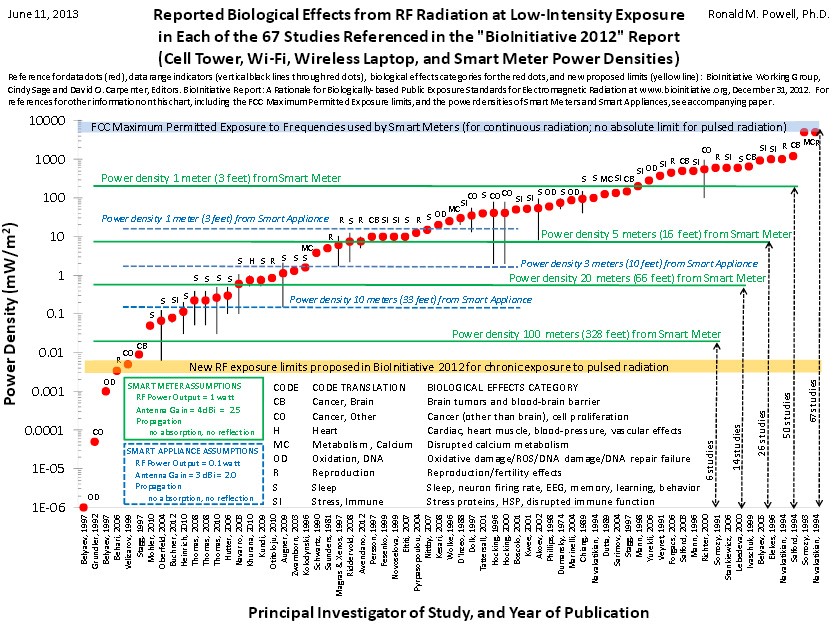
The video is self-explanatory, as the samples clearly show morphological responses or reactions. That kind of constant exposure with apparent human cellular morphological reactions—as will happen when a Smart Meter is placed on a dwelling—undoubtedly occurs, as EMFs/RFs are emitted 24/7/365. Consequently, it will be only a matter of time, depending upon each individual’s electromagnetic sensitivities threshold, before adverse health consequences materialize. Below is a chart created by EMF researcher Ronald M. Powell, PhD, which is self-explanatory? [3]

 
exposure chart    

The above graphic shows that 67 peer-reviewed, repeated studies show significant health issues (e.g. cancer, tumors, infertility) at levels far below the government safety standards (gray line). The yellow line is what the standards should be if public safety is considered. Source  


In another paper, “Electronicmagnetic Field Interactions With the Human Body: Observed Effects and Theories,” (NASA, April 1981) presented to the Goddard Space Flight Center, Greenbelt, Maryland 20771, on page 23, we find this:


Adverse, Benign, and Curious Effects The effects listed and/or discussed in this section relate to at least three of the five senses (touch, hearing, and sight) and nearly every system of the human body (including circulatory, digestive, nervous, and muscular). Many of them are temporary; however, some result in death and persistent disease. Some are better understood and more widely accepted than others. [1] [CJF emphasis added]


In 1981, NASA knew of numerous health problems, which are now classified as “Non-Thermal Health Effects,” which were cited on page 30 of that report:


  • Headaches
  • Eyestrain
  • Fatigue
  • Dizziness
  • Disturbed sleep at night
  • Sleepiness in daytime
  • Moodiness
  • Irritability
  • Unsociability
  • Hypochondriac reactions
  • Feelings of fear
  • Nervous tension
  • Mental depression
  • Memory impairment
  • Pulling sensation in the scalp and brow
  • Loss of hair
  • Pain in muscles and heart region
  • Breathing difficulties
  • Increased perspiration of extremities
  • Difficulty with sex life


 Read More Here

 .............................................................................................  


How to Make A Smart Meter Cover

  ..........     ..........
Published on Mar 20, 2014
This video will show you how to make a Smart Meter Cover if you have concerns about the health and safety standards of Smart Meter radiation. This faraday cage will significantly decrease the power level signals coming out the front and back of the smart meter. Using a mesh screen (aluminum or galvanized steel) will allow enough of the signal to pass so that your utility company can still read the meter.
  ..........

Wednesday, December 16, 2015

The court of appeals in Lyon, France, has found agribusiness giant Monsanto guilty of poisoning a man named Paul François.


Waking Times
 
 
By December 14, 2015
 

Court Finds Monsanto Responsible for Poisoning French Farmer


monsanto failAlex Pietrowski, Staff.
 
Waking Times
 

The court of appeals in Lyon, France, has found agribusiness giant Monsanto guilty of poisoning a man named Paul François. François is a farmer who claimed that he suffered a multitude of ailments, including headaches, memory loss, neurological problems and stammering, after he unintentionally inhaled Monsanto’s herbicide, Lasso.

François used Lasso for over 15 years, and in 2004 accidentally inhaled the product. After the incident, the farmer began getting severe headaches and experienced moments of mental absence and an inability to speak.

The chemical’s effects on François were so severe that he fainted, was hospitalized and fell into a coma. François was diagnosed with monochlorobenzene poisoning by his doctors, who found that the chemical permanently damaged his brain. Monochlorobenzene makes up 50% of the herbicide Lasso.
It is worth noting that the herbicide was prohibited in France and the rest of the European Union in 2007, and at the time of the incident, it was already banned in Canada (since 1985), Great Britain and Belgium (since 1992).

During the court hearing, Monsanto’s attorneys repeatedly claimed that the herbicide Lasso was not dangerous. François claimed that the company was aware of the toxic nature of the herbicide but failed to adequately warn about the potential health risks.


Read More Here

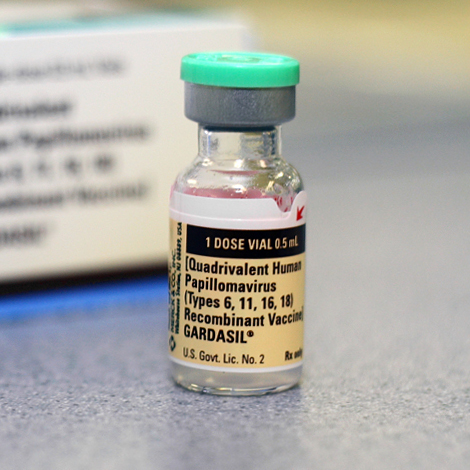
THOUSANDS of adverse reactions to the HPV vaccine are being recorded by health chiefs every year,. The FDA oblivious as it continues to expabd Gardasil use.

  
File:Gardasil vaccine and box new.jpg
Gardasil vaccine       Wikipedia.org
Jan Christian @ www.ambrotosphotography.com

.......................................................................................................

Health Nut News

gardasil-dangersEighteen Irish teenage girls have recently come forward claiming to be suffering acute physical side-effects from the controversial HPV anti-cervical cancer vaccine administered in their schools. Parents came forward after the Sunday Independent revealed similar claims of suffering from 131 young women a weekend ago.


These new allegations have surfaced since a doctor in Denmark (where Gardasil is no longer used) linked some chronic symptoms to the vaccination. In Denmark, one in 500 girls display a range of side-effects, there are 143 Irish teenagers are now suffering debilitating health issues, and we know girls in the US are suffering as well. Because of this, expert petitions are underway in France and Spain to ban its use, and Japan has stopped recommending the vaccine all together.


Read More Here


.........................................................................................

sundaypost.com

How safe is the HPV vaccine? Thousands of adverse reactions to cervical cancer jab recorded annually

By Andrew Picken, 4 December 2015 4.51pm.
THOUSANDS of adverse reactions to the lifesaving cervical cancer jab are being recorded by health chiefs every year, The Sunday Post can reveal.

Campaigners last night said the vaccine should no longer be given to schoolgirls until more is found out about the side-effects of the Human Papilloma Virus (HPV) vaccine.

The Post’s figures show more than 6,000 suspected adverse reactions to the jab have been recorded across the UK since 2012, including 340 in Scotland.

However, campaigners claim this is just the tip of the iceberg as health chiefs estimate they only receive reports about 10% of all suspected adverse reactions, suggesting tens of thousands could have suffered similarly.

More than eight million HPV jabs have been given to girls aged 12 and 13 in the UK since 2008 and the vaccination programme is credited with saving 400 lives every year.
But pressure is growing for the authorities to get a better understanding of the side-effects as the figures obtained by The Post show one person south of the Border died this year as a result of a suspected adverse reaction to the HPV jab.

MSPs on Holyrood’s petitions committee agreed to ask SNP ministers for their view on campaigners’ calls to hold a roundtable discussion on the safety of the vaccine, involving medical and scientific experts from both sides of the debate.


Read More Here

...........................................................................................


 The Inquisitr


Controversial HPV Vaccine Gardasil: Allegations That 18 Teenage Girls Suffer Acute Side Effects Surface, International Concern Is Growing

Gardasil, a vaccine for the Human Papillomavirus (HPV), has been labeled as a controversial since it has been made available. Although beneficial in preventing cancer within the girls that receive the vaccine, the side effects that some are experiencing can be debilitating for many girls. Those side effects have many wondering if the drug is safe enough for human use.
Common side effects of being vaccinated with Gardasil include nausea, headaches, and even fainting at the time of the vaccination, or shortly after, according to the Independent. However, more extreme side effects are more serious and longer lasting, often times permanent. They include chronic fatigue, chronic regional pain syndrome, postural tachycardia syndrome, and fibromyalgia, according to Jesper Mehlsen of the Frederiksberg Hospital in Denmark.

Mehlsen was quick to point out that the conditions have not been proven to be caused by Gardasil, but there is a growing trend among girls that have received the vaccine and are experiencing the exact same conditions over time.

“We have noted a pattern of symptoms in a relatively large group of patients and that these symptoms seem to have a temporal association to the vaccination.”


Cervical Cancer Vaccine
[Photo by Russell Kirk/Merck & Co. via Getty Images]
A
 
Recently, 18 teenage girls came forward to report debilitating side effects after taking Gardasil, joining the growing number of teens across the world that have experienced harmful side effects after taking Gardasil. In Ireland, about 131 girls have been identified, and in Denmark, over 1,100 hundred girls suffer from Gardasil side effects, according to the Independent. The number of reported drastic side effects in America vary depending on the study that is read. However, reports of negative and debilitating side effects from around the world have led nearly 40 percent of American parents to not vaccinate their children from HPV.

Read More and Watch Video Here

...........................................................................................


Merck's 9-valent HPV vaccine wins expanded FDA approval

SmartBrief · 14 hours ago
Sanofi Pasteur MSD received authorization from the European Commission to market its nine-valent human


FDA expands Gardasil 9 HPV vaccine approval to boys, young men

Healio · 15 hours ago
The FDA expanded the age indication for Gardasil 9 HPVvaccine to include boys and men aged 16 to 26 years, according to a press release …

Infection with certain "germs" confers significant health benefits, research finds.


The Healing Power of Germs?


Posted on:
Wednesday, December 9th 2015 at 5:15 pm
Written By:
Sayer Ji, Founder

 
Fears surrounding exposure to microbes are omnipresent, which is why it may come as a surprise to find research showing infection with certain "germs" confers significant health benefits.
We live in a day and age where germ theory has undergone a sort of apotheosis, assuming an almost Godlike power to affect and permeate every area of our lives with the fear of infection.

Not only are external institutions increasingly attaining the authority to force us to inject ourselves and children with preparations purported to defend us against germs, but even our inner thoughts are often infected uncontrollably with fears about exposure to them. Even the CDC has declared itself impotent against so-called "nightmare" bacteria, adding to the sense of powerlessness so many feel about their health destinies.

What makes this situation all the more surreal is the relatively recent discovery of the microbiome, namely, the 100 trillion viruses, bacteria, fungi, parasites, which outnumber our own cells 10-1, and which proves that we are more "germ" than "human," and in many respects, would not be alive without them: e.g. about 8% of our genome is retroviral in origin, 90% of our immune system depends on bacteria in our gut. How, then, can these microorganisms be as deadly as we are told, while at the same time be responsible for making possible our life itself?

The cognitive dissonance generated by these diverging, if not diametrically opposed paradigms -- "microbes as deadly" versus "microbes as essential to life" -- is enough to drive the non-fluoridated mind a bit crazy. But so much is riding on belief in one narrative over another. If germs are not as deadly as we are told, how would we justify the 60+ vaccines in the childhood vaccination schedule, and the 250+ in the developmental pipeline? Clearly, there are biopolitical and economic motivations pushing the germ-centric ideology forward, even in the face of an accumulating body of contrary evidence.

One such recent academic challenge to the germ theory can be found in a study published this year in Atherosclerosis titled, "Association of measles and mumps with cardiovascular disease: The Japan Collaborative Cohort (JACC) study," which found that exposure to common infections during childhood could decrease risk of atherosclerotic cardiovascular disease (CVD).


Read More Here

Sunday, December 13, 2015

Hawaii Recalls Korean Raw Oysters After Reports of Norovirus Illnesses

Norwalk.jpg
Transmission electron micrograph of Norwalk virus. The white bar = 50 nm
EPA  ...Wikipedia.org
.............................................................................................

Food Safety News


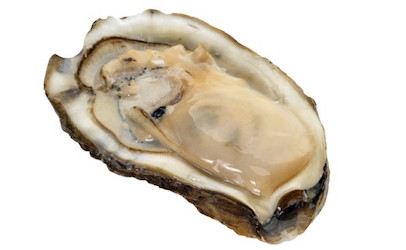
Raw oysters imported from Korea and sold in bulk to distributors and food establishments in Hawaii are being recalled.
 
The Hawaii State Department of Health (DOH) said the individually quick frozen (IQF) packaged under the Dai One Food Company label, with shellfish harvest dates of Feb. 10 -13, 2015, with shellfish tags on all shellfish cases are subject to the recall.
rawoyster_406x250


The department has already conducted product tracebacks and embargoed all of the suspect product on Nov. 24 at various local shellfish distributors and restaurants, said Peter Oshiro.

“Although this product is not sold directly to the public, a recall has been issued as an additional safeguard to further notify anyone who may possess the product that it is unsafe and should be destroyed,” he said.


Read More Here

Friday, December 11, 2015

A pesticide that was present in milk in the early 1980s may be linked to signs of Parkinson's disease that are showing up in people today, according to a new study.


Pesticide In Milk May Be Linked To Parkinson's Disease

The pesticide is commonly used in Hawaii.

  • Agata Blaszczak Boxe LiveScience.com
12/11/2015 11:00 am ET

MIB Pictures via Getty Images
 
By: Agata Blaszczak Boxe
Published: 12/11/2015 10:03 AM EST on LiveScience

A pesticide that was present in milk in the early 1980s may be linked to signs of Parkinson's disease that are showing up in people today, according to a new study.

The researchers looked at Japanese-American men in Hawaii, where the pesticide was frequently used, and found that those who drank more than two cups of milk daily at the start of the study had 40 percent fewer brain cells in an area of the brain called the substantia nigra 30 years later, on average, compared with similar men who drank less than two cups of milk per day.

The loss of brain cells in this area of the brain may be an early sign of Parkinson's disease, and can start decades before any visible symptoms of the disease occur, the researchers said. The study included men whose average age was 54 at the start of the study.

The link between the higher consumption of milk and the loss of cells in this brain area was not found among the men in the study who had ever smoked cigarettes, the researchers noted. Previous research has shown that people who smoke cigarettes may have a lower risk of developing Parkinson's disease, the researchers said. [10 Things You Didn't Know About the Brain]

The researchers also found that residues of the pesticide, called heptachlor epoxide, were present in the brains of 90 percent of the men who drank the most milk, compared with 63 percent of those who did not drink any milk.

High levels of the pesticide were found in the milk supply in the early 1980s in Hawaii, where the chemical was used for insect control in the pineapple industry. The commercial sale of the pesticide in agriculture was banned in the United States by 1988, according to the U.S. Environmental Protection Agency. However, a related compound can still be used today for controlling fire ants in electrical grid machinery, according to the Agency for Toxic Substances & Disease Registry.


Read More Here

Biological Hazard - New Zealand, [Wellington, Motueka, Kaikoura and Christchurch] South Island : Measles


..........
..........
Biological Hazard in New Zealand on December 11 2015 01:43 PM (UTC).
 

Base data

EDIS NumberBH-20151211-51213-NZL
Event typeBiological Hazard
Date/TimeDecember 11 2015 01:43 PM (UTC)
Last updateDecember 11 2015 01:46 PM (UTC)
Cause of event 
Damage levelIs not or not known Damage level

Geographic information

ContinentAustralia - New-Zealand
CountryNew Zealand
County / StateSouth Island
AreaWellington, Motueka, Kaikoura and Christchurch
Settlement 
Coordinate41° 7.443,173° 0.059

Number of affected people / Humanities loss

Dead person(s)0
Injured person(s)0
Missing person(s)0
Evacuated person(s)0
Affected person(s)0
Foreign people0

Biohazard information

Biohazard level
Disease, agent nameMeasles
Infected person(s)0
SpeciesHuman
Statussuspected
...........
A measles warning has been issued in several areas after an infected tourist traveled the country. A 28-year-old European man carrying the virus traveled from Wellington, to Motueka, Kaikoura and Christchurch from December 3 to 11. The Canterbury District Health Board now is asking anyone who may have come in contact with him and is now presenting symptoms to call their doctor. He is believed to have contracted the highly-infectious virus while in Australia and is in private accommodation in Christchurch until the end of his infectious period. Canterbury medical officer Alistair Humphrey said it was a particularly risky time for the tourism industry. "Over the next few years there is a heightened risk of measles as a result of the decision by parents in the 1990s not to get their children immunized," he said. Where He Stayed: December 3-5: Comfort Hotel, Cuba Street, Wellington,5 December 5: BlueBridge Ferry,December 5-7: Motueka Holiday Top 10,December 8-10: Lazy Shag Backpackers, Kaikoura,December 11: Travels to residence outside Christchurch
............

news

Sick tourist prompts measles warning


NZ Newswire
Measles is untreatable but easily preventagle through vaccinations© Getty Images Measles is untreatable but easily preventable through vaccinations A measles warning has been issued in several areas after an infected tourist traveled the country.

A 28-year-old European man carrying the virus traveled from Wellington, to Motueka, Kaikoura and Christchurch from December 3 to 11.The Canterbury District Health Board now is asking anyone who may have come in contact with him and is now presenting symptoms to call their doctor.
He is believed to have contracted the highly-infectious virus while in Australia and is in private accommodation in Christchurch until the end of his infectious period.

Read More Here
 
............

Thursday, December 10, 2015

"This flu comes from beyond our borders, But every year it becomes wilder and more resistant" to treatment : Tehran, Health Minister Hassan Hashemi


PressTV News Videos PRESS TV

Mon Dec 7, 2015 7:18PM
A digital rendering of the H1N1 virus
At least 33 people have lost their lives following an outbreak of swine flu mainly in two southeastern Iranian provinces in the past three weeks, Iran’s deputy health minister says.

Ali Akbar Sayyari said on Monday that the flu left 28 people dead in Kerman Province and five, including four pregnant women, in Sistan and Baluchestan.

He added that there are more cases of infection across the country.


Read More Here

.......................................................................................................

Swine flu outbreak nears Tehran as Iran death toll tops 40

AFP
 
The World Health Organisation declared the swine flu pandemic over in August 2010
.
View photo
The World Health Organisation declared the swine flu pandemic over in August 2010 (AFP Photo/Sam Panthaky)
 
Tehran (AFP) - An outbreak of swine flu in Iran has claimed 42 lives since mid-November, including in a province neighbouring Tehran, Health Minister Hassan Hashemi said Thursday.

Hashemi, quoted by ISNA news agency, said 33 deaths from the H1N1 virus were recorded in Kerman and five in Sistan-Baluchistan, both provinces in southeastern Iran.

The other four deaths were in three northern provinces, including one in Karaj, near the capital, he said in an update recording nine new fatalities since Monday.

Hashemi has said the number of deaths from flu was similar to previous years, but that it was becoming harder to treat.

"This flu comes from beyond our borders, especially from Sistan-Baluchistan" near Pakistan, the minister said Monday. "But every year it becomes wilder and more resistant" to treatment.


Read More Here

As many as 200 people have gotten sick in a norovirus outbreak at a downtown Seattle office building, health officials reported Monday.


As Many As 200 Sickened In Seattle Tower Norovirus Outbreak

Norovirus is highly contagious and causes nausea, vomiting and diarrhea.

12/08/2015 05:18 pm ET

ASSOCIATED PRESS
 
SEATTLE (AP) -- As many as 200 people have gotten sick in a norovirus outbreak at a downtown Seattle office building, health officials reported Monday.

Illness at the Russell Investments Center grew exponentially after a catered event in the building, but several cases were reported before the event last Tuesday, according to Public Health-Seattle & King County, which is still investigating the outbreak that began last week.

Between 175 and 200 cases have been reported to the health department either independently or through a survey of people who went to the catered event in the building.

"We anticipate that number is probably low," said Dr. Meagan Kay, medical epidemiologist for communicable diseases with the Seattle and King County Public Health Department.

Two people spent one night in a hospital because of norovirus, and another eight people were treated in emergency rooms during the past week.


Read More Here

Tuesday, December 8, 2015

Flesh-eating skin disease grips ISIS-controlled areas in Syria (GRAPHIC)


The collapse of medical services in terrorist-controlled parts of Syria has caused the spread of a flesh-eating virus transmitted by parasites munching on corpses dumped in the streets.
“As a result of abominable acts by ISIS that included the killing of innocent people and dumping their corpses in streets, this is the leading factor behind the rapid spread of Leishmanisis disease,” Dilqash Isa, the head of the Kurdish Red Crescent told the Kurdish Rudaw news.

Kurdish fighters in Syria claimed the disease, spread by sand flies, was not noticed until Islamic State (IS, formerly ISIS/ISIL) influence and atrocities spread across Syria. Leishmaniasis, which is rarely deadly but leads to disfiguring lesions on the skin, was particularly bad in war-torn parts of Syria, one unnamed militant told the publication.

“We have been fighting on the battlefield for almost four years and this disease basically generated from embattled areas of Tal Hamis, Hon and Qosa,” he claimed.
.....

 
 .....
“It is very possible in the area where there is a lot of military activity and population movement, those are circumstances in which an outbreak of the leishmaniasis can occur,” Dr. William Schaffner (MD) told RT.

Read More Here

Sunday, December 6, 2015

Just weeks after the discovery in China of bacteria resistant to all known forms of treatment, the same strain has been found in Denmark. Except Denmark's has been around since 2012.

Bacteria containing mcr-1 gene resistant to all known antibiotics found in Denmark


Lethal tummy bug ... A strain of the common e. coli bacteria resistant to all known treatments has been found in Denmark.

Network WritersNews Corp Australia Network

JUST weeks after the discovery in China of bacteria resistant to all known forms of treatment, the same strain has been found in Denmark. Worse: It’s been there since 2012.

Late last week researchers at the Technical University of Denmark announced they had found the feared ‘invulnerability’ gene among E. coli bacteria samples taken from humans and food.
The scientists had been conducting a review of a genetic database of some 3000 different E. coli samples taken since 2009.

Specifically they were seeking the mcr-1 gene, a mutation which gives bacteria a frightening resistance to the last effective family of antibiotics — colistin.


..................................................................................................

NewsMax Health

New Superbug Resistant to Last-line Antibiotics: Study


Sunday, 06 Dec 2015 11:19 AM


......................................................................................
 

Agricultural Use Of Antibiotics Could Create Health Crisis, Experts Warn China’s use of thousands of tons of antibiotics in agriculture is a major cause for concern.


Asian Scientist Newsroom | November 24, 2015 | In the Lab
 
AsianScientist (Nov. 24, 2015) - Two medical experts from The University of Queensland are urging China to curb its use of antibiotics in animals to avoid what could be a ‘major health catastrophe’ for humans, following their research published in The Lancet Infectious Diseases.
 
Polymyxin antibiotic class is a “last-defence” antibiotic for patients, including in intensive care units, but its extensive use in agriculture in China was leading to resistance in humans, warned Professor David Paterson, Head of the Infection and Immunity group at UQ Center for Clinical Research.
 
“It will be very dangerous if people stop responding to this treatment. A key part of many intensive treatments relies on antibiotic success to fight life-threatening infection and keep further infections at bay. However, resistance to this antibiotic is now becoming widespread in chickens, pigs and other animals across Asia, and has now been detected in humans,” cautioned Paterson.
 
In the report, Paterson said the resistance was directly linked to agricultural use of the antibiotic in the food-chain. “When humans eat the food derived from these animals fed with antibiotics, this leads to antibiotic resistance. By the end of 2015, China is projected to use thousands of tonnes of polymyxins. Chinese leaders needed to take urgent and decisive action to curb this use.” Paterson said.


.....................................................................................
 
MNT home

New antibiotic resistance gene that breaches 'last line of defense' found in China

Published: Thursday 19 November 2015 at 3am PST

A new gene that makes bacteria resistant to polymyxins - the last-resort antibiotics for treating infections - is widespread in a large family of bacteria sampled from pigs and people in South China, says a new study published in The Lancet Infectious Diseases.
 
 
Bacteria
The researchers first found evidence of transferable resistance to the polymyxin drug colistin in bacteria isolated from a pig on an intensive farm in China.
 
The researchers say some of the bacterial strains that have acquired the new resistance gene - called MCR-1 - also have epidemic potential.

The discovery is particularly alarming because the researchers found the new gene on plasmids - a mobile form of DNA that is easily shared and spread among different bacteria via horizontal gene transfer.

It echoes an earlier discovery in India a few years ago of the resistance gene NDM-1 that makes bacteria resistant to nearly all antibiotics, including the last-resort antibiotics carbapenems.
In their study, the researchers, led by members from South China Agricultural University, Guangzhou, conclude:

"The emergence of MCR-1 heralds the breach of the last group of antibiotics, polymyxins, by plasmid-mediated resistance. Although currently confined to China, MCR-1 is likely to emulate other global resistance mechanisms such as NDM-1."

Co-author Jian-Hua Liu, a professor specializing in antimicrobial resistance in animals, says the results are "extremely worrying" because the polymyxins were "the last class of antibiotics in which resistance was incapable of spreading from cell to cell."

Polymyxin resistance transferring readily among common bacteria


Read More Here

Monday, November 30, 2015

Currently about 50 million Americans meet the USDA criteria for food insecurity. About 15 million of them are children.


(Brandon Warren / Flickr)

American Hunger-Related Healthcare Costs Exceeded $160 Billion in 2014, According to New Study

Food insecurity, especially for children, remains near record high despite the Great Recession’s official end.

BY Elizabeth Grossman
Currently about 50 million Americans meet the USDA criteria for food insecurity. About 15 million of them are children.

While the official end of the Great Recession is a full five years behind us, there are now nearly 12 million more Americans who lack enough resources to access adequate food than there were in 2007, a number that has only improved slightly since United States food insecurity peaked at over 21 percent in 2009. These statistics alone are disturbing. But as detailed in a new study released today as part of Bread for the World Institute’s 2016 Hunger Report, absence of food security in the U.S. carries enormous healthcare costs, more than $160 billion in 2014.

Using data from the U.S. Department of Agriculture (USDA), Census Bureau and research on food security published in peer-reviewed academic journals between 2005 and 2015, a team of researchers led by Boston University School of Medicine associate professor of pediatrics John Cook, estimated these health care costs by looking at the costs of treating diseases and health conditions associated with household food insecurity plus earnings lost when people took time off work because of these illnesses or to care for family members with illnesses related to food insecurity.

As Cook, who is also research scientist and principal investigator with Children’s Health Watch, explained to In These Times, lack of access to adequate food does not necessarily directly cause a particular illness but “plays a role in that disease occurring.” Years of research consistently shows food insecurity increases the risk for a range of health problems. These risks are particularly great for children but poor and inadequate nutrition also increases risk for adult health problems, including obesity and chronic diseases, among them diabetes, hypertension and cardiovascular disease. It also exacerbates illness duration and severity–in some cases simply because people lack money for medication–and therefore treatment costs.

Putting this in a broader economic context, Bread for the World Institute points out that the U.S. “spends more per capita on health care than any other high-income country but compares poorly with these others on key population health indicators such as life expectancy and child survival. This is due,” report authors, “in part to our tolerance as a nation, for higher levels of poverty and hunger.”

Currently about 50 million Americans meet the USDA criteria for food insecurity. About 15 million of them are children. In 2014, 19.2 percent of U.S. households with children were food 
insecure–about a third higher than households without. The Boston University research team found if the costs of special education for children whose learning abilities are adversely affected by food insecurity are factored in along with related education impacts for high-schoolers, the $160 billion rose by an additional  nearly $18 billion. This brings a total estimate of direct and indirect health care costs of U.S. food insecurity in 2014 to $178.93 billion.


Read More Here

Roughly 80 Norwegian college students have reportedly contracted mumps. Many of which had been previously vaccinated with the MMR vaccine.


http://drugline.org/img/term/vaccination-mumps-15714_0.jpg
Drugs Information Online
............................................................................................................

Vaccinated Norwegians Get Mumps During “Outbreak”


Roughly 80 Norwegian college students have reportedly contracted mumps. Of the 80, many reportedly were previously vaccinated with the MMR vaccine, which, by all logical and reasonable accounts, should have protected them. However, Norwegian health officials are making excuses over the matter.

According to OutBreakNewsToday.

Several of those who are now sick with mumps are Norwegian students who have previously received two doses of MMR vaccine is recommended.
It is possible to get sick with mumps even if you have been fully vaccinated against the disease, confirming Margrethe Greve-Isdahl, chief physician at the Department of vaccine, Public Health (FHI).


Read More Here


.....................................................................................................

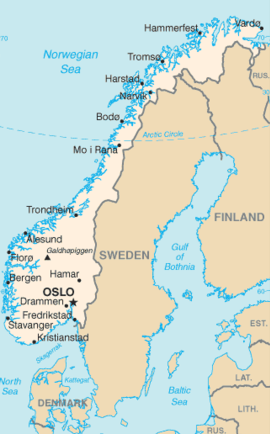
The Norway Institute for Public Health, or Folkehelseinstituttet has announced a mumps outbreak, primarily among university students. The first reported cases were in the Trondheim area–the Norwegian technical and University of Science and Technology (NTNU) and the University College of Sør-Trøndelag (HIST) in late October.

Norway/CIA
Norway/CIA

Now the case count hovers around 80 and health officials expect the cases to increase in coming weeks.

Several of those who are now sick with mumps are Norwegian students who have previously received two doses of MMR vaccine is recommended.

It is possible to get sick with mumps even if you have been fully vaccinated against the disease, confirming Margrethe Greve-Isdahl, chief physician at the Department of vaccine, Public Health (FHI).
 
In Norway, the vaccine against mumps in the MMR vaccine (measles, mumps and rubella) offered in the childhood immunization. First dose offered to children at 15 months of age and second dose at 11 years of age (6th grade). FHI generally recommend that all who have not received two doses of MMR vaccine are eligible for this. This also applies to students who come to Norway. Upon initial vaccination is recommended that at least three months between doses, but there is a benefit to the immune response if it goes longer.


Read More Here

Neoliberal Ebola: The Ag Independent Science News | Food, Health and Agriculture Bioscience News July 27, 2015 by Rob Wallace The notion of a neoliberal Ebola is so beyond the pale as to send leading lights in ecology and health into apoplectic fits. Here’s one of bestseller David Quammen’s five tweets denouncing my hypothesis that neoliberalism drove the emergence of Ebola in West Africa. I’m an “addled guy” whose “loopy [blog] post” and “confused nonsense” Quammen hopes “doesn’t mislead credulous people.” Scientific American’s Steve Mirksy joked that he feared “the supply-side salmonella”. He would walk that back when I pointed out the large literature documenting the ways and means by which the economics of the egg sector is driving salmonella’s evolution. The facts of the Ebola outbreak similarly turn Quammen’s objection on its head. Guinea Forest Region in 2014 Guinea Forest Region in 2014 (Photo Credit Daniel Bausch) The virus appears to have been spilling over for years in West Africa. Epidemiologist Joseph Fair’s group found antibodies to multiple species of Ebola, including the very Zaire strain that set off the outbreak, in patients in Sierra Leone as far back as five years ago. Phylogenetic analyses meanwhile show the Zaire strain Bayesian-dated in West Africa as far back as a decade. An NIAID team showed the outbreak strain as possessing no molecular anomaly, with nucleotide substitution rates typical of Ebola outbreaks across Africa. That result begs an explanation for Ebola’s ecotypic shift from intermittent forest killer to a protopandemic infection infecting 27,000 and killing over 11,000 across the region, leaving bodies in the streets of capital cities Monrovia and Conakry. Explaining the rise of Ebola The answer, little explored in the scientific literature or the media, appears in the broader context in which Ebola emerged in West Africa. The truth of the whole, in this case connecting disease dynamics, land use and global economics, routinely suffers at the expense of the principle of expediency. Such contextualization often represents a threat to many of the underlying premises of power. In the face of such an objection, it was noted that the structural adjustment to which West Africa has been subjected the past decade included the kinds of divestment from public health infrastructure that permitted Ebola to incubate at the population level once it spilled over. The effects, however, extend even farther back in the causal chain. The shifts in land use in the Guinea Forest Region from where the Ebola epidemic spread were also connected to neoliberal efforts at opening the forest to global circuits of capital. Daniel Bausch and Lara Schwarz characterize the Forest Region, where the virus emerged, as a mosaic of small and isolated populations of a variety of ethnic groups that hold little political power and receive little social investment. The forest’s economy and ecology are also strained by thousands of refugees from civil wars in neighboring countries. The Region is subjected to the tandem trajectories of accelerating deterioration in public infrastructure and concerted efforts at private development dispossessing smallholdings and traditional foraging grounds for mining, clear-cut logging, and increasingly intensified agriculture. The Ebola hot zone as a whole comprises a part of the larger Guinea Savannah Zone the World Bank describes as “one of the largest underused agricultural land reserves in the world.” Africa hosts 60% of the world’s last farmland frontier. And the Bank sees the Savannah best developed by market commercialization, if not solely on the agribusiness model. As the Land Matrix Observatory documents, such prospects are in the process of being actualized. There, one can see the 90 deals by which U.S.-backed multinationals have procured hundreds of thousands of hectares for export crops, biofuels and mining around the world, including multiple deals in Sub-Saharan Africa. The Observatory’s online database shows similar land deals pursued by other world powers, including the UK, France, and China. Under the newly democratized Guinean government, the Nevada-based and British-backed Farm Land of Guinea Limited secured 99-year leases for two parcels totaling nearly 9000 hectares outside the villages of N’Dema and Konindou in Dabola Prefecture, where a secondary Ebola epicenter developed, and 98,000 hectares outside the village of Saraya in Kouroussa Prefecture. The Ministry of Agriculture has now tasked Farm Land Inc to survey and map an additional 1.5 million hectares for third-party development. While these as of yet undeveloped acquisitions are not directly tied to Ebola, they are markers of a complex, policy-driven phase change in agroecology that our group hypothesizes undergirds Ebola’s emergence. The role of palm oil in West Africa Our thesis orbits around palm oil, in particular. Palm is a vegetable oil of highly saturated fats derived from the red mesocarp of the African oil palm tree now grown around the world. The fruit’s kernel also produces its own oil. Refined and fractionated into a variety of byproducts, both oils are used in an array of food, cosmetic and cleaning products, as well as in some biodiesels. With the abandonment of trans fats, palm oil represents a growing market, with global exports totaling nearly 44 million metric tons in the 2014 growing season. Oil palm plantations, covering more than 17 million hectares worldwide, are tied to deforestation and expropriation of lands from indigenous groups. We see from this Food and Agriculture Organization map that while most of the production can be found in Asia, particularly in Indonesia, Malaysia and Thailand, most of the suitable land left for palm oil can be found in the Amazon and the Congo Basin, the two largest rainforests in the world. Palm oil represents a classic case of Lauderdale’s paradox. As environmental resources are destroyed what’s left becomes more valuable. A decaying resource base, then, is no due cause for agribusiness turning into good global citizens, as industry-funded advocates have argued. On the contrary, agribusiness seeks exclusive access to our now fiscally appreciating, if ecologically declining, landscapes. Food production didn’t start that way in West Africa, of course. Natural and semi-wild groves of different oil palm types have long served as a source of red palm oil in the Guinea Forest Region. Forest farmers have been raising palm oil in one or another form for hundreds of years. Fallow periods allowing soils to recover, however, were reduced over the 20th century from 20 years in the 1930s to 10 by the 1970s, and still further by the 2000s, with the added effect of increasing grove density. Concomitantly, semi-wild production has been increasingly replaced with intensive hybrids, and red oil replaced by, or mixed with, industrial and kernel oils. Other crops are grown too, of course. Regional shade agriculture includes coffee, cocoa and kola. Slash-and-burn rice, maize, hibiscus, and corms of the first year, followed by peanut and cassava of the second and a fallow period, are rotated through the agroforest. Lowland flooding supports rice. In essence, we see a move toward increased intensification without private capital but still classifiable as agroforestry. But even this kind of farming has since been transformed. The Guinean Oil Palm and Rubber Company (with the French acronym SOGUIPAH) began in 1987 as a parastatal cooperative in the Forest but since has grown to the point it is better characterized a state company. It is leading efforts that began in 2006 to develop plantations of intensive hybrid palm for commodity export. SOGUIPAH economized palm production for the market by forcibly expropriating farmland, which to this day continues to set off violent protest. International aid has accelerated industrialization. SOGUIPAH’s new mill, with four times the capacity of one it previously used, was financed by the European Investment Bank. The mill’s capacity ended the artisanal extraction that as late as 2010 provided local populations full employment. The subsequent increase in seasonal production has at one and the same time led to harvesting above the mill’s capacity and operation below capacity off-season, leading to a conflict between the company and some of its 2000 now partially proletarianized pickers, some of whom insist on processing a portion of their own yield to cover the resulting gaps in cash flow. Pickers who insist on processing their own oil during the rainy season now risk arrest. The new economic geography has also initiated a classic case of land expropriation and enclosure, turning a tradition of shared forest commons toward expectations whereby informal pickers working fallow land outside their family lineage obtain an owner’s permission before picking palm. Palm oil and Ebola What does all this have to do with Ebola? Fig. 1 Palm Oil and Ebola Fig. 1 Palm Oil and Ebola The figure at top left (of Fig. 1) shows an archipelago of oil palm plots in the Guéckédou area, the outbreak’s apparent ground zero. The characteristic landscape is a mosaic of villages surrounded by dense vegetation and interspersed by crop fields of oil palm (in red) and patches of open forest and regenerated young forest. The general pattern can be discerned at a finer scale as well, above, west of the town of Meliandou, where the index cases appeared. The landscape embodies a growing interface between humans and frugivore bats, a key Ebola reservoir, including hammer-headed bats, little collared fruit bats and Franquet’s epauletted fruit bats. Nur Juliani Shafie and colleagues document a variety of disturbance-associated fruit bats attracted to oil palm plantations. Bats migrate to oil palm for food and shelter from the heat while the plantations’ wide trails also permit easy movement between roosting and foraging sites. Bats aren’t stupid. As the forest disappears they shift their foraging behavior to what food and shelter are left. Bush meat hunting and butchery are one means by which subsequent spillover may take place. But to move away from the kinds of Western ooga booga epidemiology that wraps outbreaks in such ‘dirty’ cultural cloth, agricultural cultivation may be enough. Fruit bats in Bangladesh transmitted Nipah virus to human hosts by urinating on the date fruit humans cultivated. Almudena Marí Saéz and colleagues have since proposed the initial Ebola spillover occurred outside Meliandou when children, including the putative index case, caught and played with Angolan free-tailed bats in a local tree. The bats are an insectivore species also previously documented as an Ebola virus carrier. Whatever the specific reservoir source, shifts in agroeconomic context still appear a primary cause. Previous studies show the free-tailed bats also attracted to expanding cash crop production in West Africa, including of sugar cane, cotton, and macadamia. Indeed, every Ebola outbreak appears connected to capital-driven shifts in land use, including back to the first outbreak in Nzara, Sudan in 1976, where a British-financed factory spun and wove local cotton. When Sudan’s civil war ended in 1972, the area rapidly repopulated and much of the local rainforest—and bat ecology—was reclaimed for subsistence farming, with cotton returning as the area’s dominant cash crop. Are New York, London and Hong Kong as much to blame? Clearly such outbreaks aren’t merely about specific companies. We have started working with University of Washington’s Luke Bergmann to test whether the world’s circuits of capital as they relate to husbandry and land use are related to disease emergence. Bergmann and Holmberg’s maps, still in preparation, show the percent of land whose harvests are consumed abroad as agricultural goods or in manufactured goods and services for croplands, pastureland and forests. The maps show landscapes are globalized by circuits of capital. In this way, the source of a disease may be more than merely the country in which it may first appear and indeed may extend as far as the other side of the world. We need to identify who funded the development and deforestation to begin with. Such an epidemiology begs whether we might more accurately characterize such places as New York, London and Hong Kong, key sources of capital, as disease ‘hot spots’ in their own right. Diseases are relational in their geographies, and not solely absolute, as the ecohealth cowboys chronicled by David Quammen claim. Similarly, such a new approach ruins the neat dichotomy between emergency responses and structural interventions. Some disease hounds who acknowledge global structural issues tend to still focus on the immediate logistics of any given outbreak. Emergency responses are needed, of course. But we need to acknowledge that the emergency arose from the structural. Indeed, such emergencies are used as a means by which to avoid talking about the bigger picture driving the emergence of new diseases. The forest may be its own cure There’s another false dichotomy to unpack—this one between the forest’s ecosystemic noise and deterministic effect. The environmental stochasticity at the center of forest ecology isn’t synonymous with random noise. Here a bit of math can help. A simple stochastic differential model of exponential pathogen population growth can include fractional white noise of an index 0 to 1 defined by a covariance relationship across time and space. An Ito expansion produces a classic result in population growth: When below a threshold, the noise exponent is small enough to permit a pathogen population to explode in size. When above the threshold, the noise is large enough to control an outbreak, frustrating efforts on the part of the pathogen to string together a bunch of susceptibles to infect. Never mind the technical details. The important point is that disease trajectories, even in the deepest forest, aren’t divorced from their anthropogenic context. That context can impact upon the forest’s environmental noise and its effects on disease. How exactly in Ebola’s case? It’s been long known that if you can lower an outbreak below an infection Allee threshold—say by a vaccine or sanitary practices—an outbreak, not finding enough susceptibles, can burn out on its own. But commoditizing the forest may have lowered the region’s ecosystemic threshold to such a point where no emergency intervention can drive the Ebola outbreak low enough to burn out on its own. The virus will continue to circulate, with the potential to explode again. In short, neoliberalism’s structural shifts aren’t just a background on which the emergency of Ebola takes place. The shifts are the emergency as much as the virus itself. In contrast to Nassim Taleb’s Black Swan—history as shit happens—we have here an example of stochasticity’s impact arising out of deterministic agroeconomic policy—a phenomenon I’ve taken to calling the Red Swan. Here, sudden switches in land use may explain Ebola’s emergence. Deforestation and intensive agriculture strip out traditional agroforestry’s stochastic friction that until this point had kept the virus from stringing together enough transmission. Under certain conditions, the forest may act as its own epidemiological protection. We risk the next deadly pandemic when we destroy that capacity. Rob Wallace is an evolutionary biologist and public health phylogeographer currently visiting the Institute of Global Studies at the University of Minnesota. He also blogs at Farming Pathogens. roeconomic Origins of the Ebola Outbreak


July 27, 2015
 
by Rob Wallace

The notion of a neoliberal Ebola is so beyond the pale as to send leading lights in ecology and health into apoplectic fits.

Here’s one of bestseller David Quammen’s five tweets denouncing my hypothesis that neoliberalism drove the emergence of Ebola in West Africa. I’m an “addled guy” whose “loopy [blog] post” and “confused nonsense” Quammen hopes “doesn’t mislead credulous people.”


Scientific American’s Steve Mirksy joked that he feared “the supply-side salmonella”. He would walk that back when I pointed out the large literature documenting the ways and means by which the economics of the egg sector is driving salmonella’s evolution.

The facts of the Ebola outbreak similarly turn Quammen’s objection on its head.

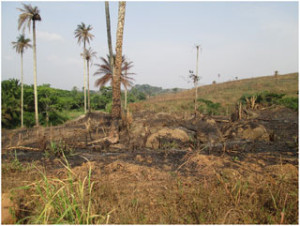
Guinea Forest Region in 2014
Guinea Forest Region in 2014 (Photo Credit Daniel Bausch)


The virus appears to have been spilling over for years in West Africa. Epidemiologist Joseph Fair’s group found antibodies to multiple species of Ebola, including the very Zaire strain that set off the outbreak, in patients in Sierra Leone as far back as five years ago. Phylogenetic analyses meanwhile show the Zaire strain Bayesian-dated in West Africa as far back as a decade.

An NIAID team showed the outbreak strain as possessing no molecular anomaly, with nucleotide substitution rates typical of Ebola outbreaks across Africa.

That result begs an explanation for Ebola’s ecotypic shift from intermittent forest killer to a protopandemic infection infecting 27,000 and killing over 11,000 across the region, leaving bodies in the streets of capital cities Monrovia and Conakry.

Explaining the rise of Ebola


The answer, little explored in the scientific literature or the media, appears in the broader context in which Ebola emerged in West Africa.

The truth of the whole, in this case connecting disease dynamics, land use and global economics, routinely suffers at the expense of the principle of expediency. Such contextualization often represents a threat to many of the underlying premises of power.

In the face of such an objection, it was noted that the structural adjustment to which West Africa has been subjected the past decade included the kinds of divestment from public health infrastructure that permitted Ebola to incubate at the population level once it spilled over.

The effects, however, extend even farther back in the causal chain. The shifts in land use in the Guinea Forest Region from where the Ebola epidemic spread were also connected to neoliberal efforts at opening the forest to global circuits of capital.

Daniel Bausch and Lara Schwarz characterize the Forest Region, where the virus emerged, as a mosaic of small and isolated populations of a variety of ethnic groups that hold little political power and receive little social investment. The forest’s economy and ecology are also strained by thousands of refugees from civil wars in neighboring countries.

The Region is subjected to the tandem trajectories of accelerating deterioration in public infrastructure and concerted efforts at private development dispossessing smallholdings and traditional foraging grounds for mining, clear-cut logging, and increasingly intensified agriculture.
The Ebola hot zone as a whole comprises a part of the larger Guinea Savannah Zone the World Bank describes as “one of the largest underused agricultural land reserves in the world.” Africa hosts 60% of the world’s last farmland frontier. And the Bank sees the Savannah best developed by market commercialization, if not solely on the agribusiness model.

As the Land Matrix Observatory documents, such prospects are in the process of being actualized. There, one can see the 90 deals by which U.S.-backed multinationals have procured hundreds of thousands of hectares for export crops, biofuels and mining around the world, including multiple deals in Sub-Saharan Africa. The Observatory’s online database shows similar land deals pursued by other world powers, including the UK, France, and China.

Under the newly democratized Guinean government, the Nevada-based and British-backed Farm Land of Guinea Limited secured 99-year leases for two parcels totaling nearly 9000 hectares outside the villages of N’Dema and Konindou in Dabola Prefecture, where a secondary Ebola epicenter developed, and 98,000 hectares outside the village of Saraya in Kouroussa Prefecture. The Ministry of Agriculture has now tasked Farm Land Inc to survey and map an additional 1.5 million hectares for third-party development.

While these as of yet undeveloped acquisitions are not directly tied to Ebola, they are markers of a complex, policy-driven phase change in agroecology that our group hypothesizes undergirds Ebola’s emergence.

The role of palm oil in West Africa


Our thesis orbits around palm oil, in particular.

Palm is a vegetable oil of highly saturated fats derived from the red mesocarp of the African oil palm tree now grown around the world. The fruit’s kernel also produces its own oil. Refined and fractionated into a variety of byproducts, both oils are used in an array of food, cosmetic and cleaning products, as well as in some biodiesels. With the abandonment of trans fats, palm oil represents a growing market, with global exports totaling nearly 44 million metric tons in the 2014 growing season.

Oil palm plantations, covering more than 17 million hectares worldwide, are tied to deforestation and expropriation of lands from indigenous groups. We see from this Food and Agriculture Organization map that while most of the production can be found in Asia, particularly in Indonesia, Malaysia and Thailand, most of the suitable land left for palm oil can be found in the Amazon and the Congo Basin, the two largest rainforests in the world.

Palm oil represents a classic case of Lauderdale’s paradox. As environmental resources are destroyed what’s left becomes more valuable. A decaying resource base, then, is no due cause for agribusiness turning into good global citizens, as industry-funded advocates have argued. On the contrary, agribusiness seeks exclusive access to our now fiscally appreciating, if ecologically declining, landscapes.

Food production didn’t start that way in West Africa, of course.

Natural and semi-wild groves of different oil palm types have long served as a source of red palm oil in the Guinea Forest Region. Forest farmers have been raising palm oil in one or another form for hundreds of years. Fallow periods allowing soils to recover, however, were reduced over the 20th century from 20 years in the 1930s to 10 by the 1970s, and still further by the 2000s, with the added effect of increasing grove density. Concomitantly, semi-wild production has been increasingly replaced with intensive hybrids, and red oil replaced by, or mixed with, industrial and kernel oils.
Other crops are grown too, of course. Regional shade agriculture includes coffee, cocoa and kola. Slash-and-burn rice, maize, hibiscus, and corms of the first year, followed by peanut and cassava of the second and a fallow period, are rotated through the agroforest. Lowland flooding supports rice. In essence, we see a move toward increased intensification without private capital but still classifiable as agroforestry.

But even this kind of farming has since been transformed.

The Guinean Oil Palm and Rubber Company (with the French acronym SOGUIPAH) began in 1987 as a parastatal cooperative in the Forest but since has grown to the point it is better characterized a state company. It is leading efforts that began in 2006 to develop plantations of intensive hybrid palm for commodity export. SOGUIPAH economized palm production for the market by forcibly expropriating farmland, which to this day continues to set off violent protest.

International aid has accelerated industrialization. SOGUIPAH’s new mill, with four times the capacity of one it previously used, was financed by the European Investment Bank.

The mill’s capacity ended the artisanal extraction that as late as 2010 provided local populations full employment. The subsequent increase in seasonal production has at one and the same time led to harvesting above the mill’s capacity and operation below capacity off-season, leading to a conflict between the company and some of its 2000 now partially proletarianized pickers, some of whom insist on processing a portion of their own yield to cover the resulting gaps in cash flow. Pickers who insist on processing their own oil during the rainy season now risk arrest.

The new economic geography has also initiated a classic case of land expropriation and enclosure, turning a tradition of shared forest commons toward expectations whereby informal pickers working fallow land outside their family lineage obtain an owner’s permission before picking palm.

Palm oil and Ebola

What does all this have to do with Ebola?
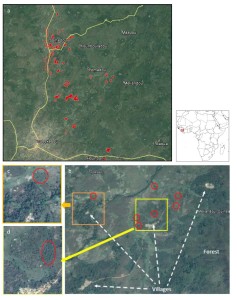
Fig. 1 Palm Oil and Ebola

Fig. 1 Palm Oil and Ebola
The figure at top left (of Fig. 1) shows an archipelago of oil palm plots in the Guéckédou area, the outbreak’s apparent ground zero. The characteristic landscape is a mosaic of villages surrounded by dense vegetation and interspersed by crop fields of oil palm (in red) and patches of open forest and regenerated young forest.

The general pattern can be discerned at a finer scale as well, above, west of the town of Meliandou, where the index cases appeared.

The landscape embodies a growing interface between humans and frugivore bats, a key Ebola reservoir, including hammer-headed bats, little collared fruit bats and Franquet’s epauletted fruit bats.
Nur Juliani Shafie and colleagues document a variety of disturbance-associated fruit bats attracted to oil palm plantations. Bats migrate to oil palm for food and shelter from the heat while the plantations’ wide trails also permit easy movement between roosting and foraging sites.

Bats aren’t stupid. As the forest disappears they shift their foraging behavior to what food and shelter are left.

Bush meat hunting and butchery are one means by which subsequent spillover may take place. But to move away from the kinds of Western ooga booga epidemiology that wraps outbreaks in such ‘dirty’ cultural cloth, agricultural cultivation may be enough. Fruit bats in Bangladesh transmitted Nipah virus to human hosts by urinating on the date fruit humans cultivated.

Almudena Marí Saéz and colleagues have since proposed the initial Ebola spillover occurred outside Meliandou when children, including the putative index case, caught and played with Angolan free-tailed bats in a local tree. The bats are an insectivore species also previously documented as an Ebola virus carrier.

Whatever the specific reservoir source, shifts in agroeconomic context still appear a primary cause. Previous studies show the free-tailed bats also attracted to expanding cash crop production in West Africa, including of sugar cane, cotton, and macadamia.

Indeed, every Ebola outbreak appears connected to capital-driven shifts in land use, including back to the first outbreak in Nzara, Sudan in 1976, where a British-financed factory spun and wove local cotton. When Sudan’s civil war ended in 1972, the area rapidly repopulated and much of the local rainforest—and bat ecology—was reclaimed for subsistence farming, with cotton returning as the area’s dominant cash crop.

Are New York, London and Hong Kong as much to blame?


Clearly such outbreaks aren’t merely about specific companies.

We have started working with University of Washington’s Luke Bergmann to test whether the world’s circuits of capital as they relate to husbandry and land use are related to disease emergence. Bergmann and Holmberg’s maps, still in preparation, show the percent of land whose harvests are consumed abroad as agricultural goods or in manufactured goods and services for croplands, pastureland and forests.

The maps show landscapes are globalized by circuits of capital. In this way, the source of a disease may be more than merely the country in which it may first appear and indeed may extend as far as the other side of the world. We need to identify who funded the development and deforestation to begin with.

Such an epidemiology begs whether we might more accurately characterize such places as New York, London and Hong Kong, key sources of capital, as disease ‘hot spots’ in their own right. Diseases are relational in their geographies, and not solely absolute, as the ecohealth cowboys chronicled by David Quammen claim.

Similarly, such a new approach ruins the neat dichotomy between emergency responses and structural interventions.

Some disease hounds who acknowledge global structural issues tend to still focus on the immediate logistics of any given outbreak. Emergency responses are needed, of course. But we need to acknowledge that the emergency arose from the structural. Indeed, such emergencies are used as a means by which to avoid talking about the bigger picture driving the emergence of new diseases.

The forest may be its own cure


There’s another false dichotomy to unpack—this one between the forest’s ecosystemic noise and deterministic effect.

The environmental stochasticity at the center of forest ecology isn’t synonymous with random noise.
Here a bit of math can help. A simple stochastic differential model of exponential pathogen population growth can include fractional white noise of an index 0 to 1 defined by a covariance relationship across time and space. An Ito expansion produces a classic result in population growth:
When below a threshold, the noise exponent is small enough to permit a pathogen population to explode in size. When above the threshold, the noise is large enough to control an outbreak, frustrating efforts on the part of the pathogen to string together a bunch of susceptibles to infect.
Never mind the technical details. The important point is that disease trajectories, even in the deepest forest, aren’t divorced from their anthropogenic context. That context can impact upon the forest’s environmental noise and its effects on disease.

How exactly in Ebola’s case?

It’s been long known that if you can lower an outbreak below an infection Allee threshold—say by a vaccine or sanitary practices—an outbreak, not finding enough susceptibles, can burn out on its own. But commoditizing the forest may have lowered the region’s ecosystemic threshold to such a point where no emergency intervention can drive the Ebola outbreak low enough to burn out on its own. The virus will continue to circulate, with the potential to explode again.

In short, neoliberalism’s structural shifts aren’t just a background on which the emergency of Ebola takes place. The shifts are the emergency as much as the virus itself.

In contrast to Nassim Taleb’s Black Swan—history as shit happens—we have here an example of stochasticity’s impact arising out of deterministic agroeconomic policy—a phenomenon I’ve taken to calling the Red Swan.

Here, sudden switches in land use may explain Ebola’s emergence. Deforestation and intensive agriculture strip out traditional agroforestry’s stochastic friction that until this point had kept the virus from stringing together enough transmission.

Under certain conditions, the forest may act as its own epidemiological protection. We risk the next deadly pandemic when we destroy that capacity.

Rob Wallace is an evolutionary biologist and public health phylogeographer currently visiting the Institute of Global Studies at the University of Minnesota. He also blogs at Farming Pathogens.