Showing posts with label Research. Show all posts

Monday, November 30, 2015

Neoliberal Ebola: The Ag Independent Science News | Food, Health and Agriculture Bioscience News July 27, 2015 by Rob Wallace The notion of a neoliberal Ebola is so beyond the pale as to send leading lights in ecology and health into apoplectic fits. Here’s one of bestseller David Quammen’s five tweets denouncing my hypothesis that neoliberalism drove the emergence of Ebola in West Africa. I’m an “addled guy” whose “loopy [blog] post” and “confused nonsense” Quammen hopes “doesn’t mislead credulous people.” Scientific American’s Steve Mirksy joked that he feared “the supply-side salmonella”. He would walk that back when I pointed out the large literature documenting the ways and means by which the economics of the egg sector is driving salmonella’s evolution. The facts of the Ebola outbreak similarly turn Quammen’s objection on its head. Guinea Forest Region in 2014 Guinea Forest Region in 2014 (Photo Credit Daniel Bausch) The virus appears to have been spilling over for years in West Africa. Epidemiologist Joseph Fair’s group found antibodies to multiple species of Ebola, including the very Zaire strain that set off the outbreak, in patients in Sierra Leone as far back as five years ago. Phylogenetic analyses meanwhile show the Zaire strain Bayesian-dated in West Africa as far back as a decade. An NIAID team showed the outbreak strain as possessing no molecular anomaly, with nucleotide substitution rates typical of Ebola outbreaks across Africa. That result begs an explanation for Ebola’s ecotypic shift from intermittent forest killer to a protopandemic infection infecting 27,000 and killing over 11,000 across the region, leaving bodies in the streets of capital cities Monrovia and Conakry. Explaining the rise of Ebola The answer, little explored in the scientific literature or the media, appears in the broader context in which Ebola emerged in West Africa. The truth of the whole, in this case connecting disease dynamics, land use and global economics, routinely suffers at the expense of the principle of expediency. Such contextualization often represents a threat to many of the underlying premises of power. In the face of such an objection, it was noted that the structural adjustment to which West Africa has been subjected the past decade included the kinds of divestment from public health infrastructure that permitted Ebola to incubate at the population level once it spilled over. The effects, however, extend even farther back in the causal chain. The shifts in land use in the Guinea Forest Region from where the Ebola epidemic spread were also connected to neoliberal efforts at opening the forest to global circuits of capital. Daniel Bausch and Lara Schwarz characterize the Forest Region, where the virus emerged, as a mosaic of small and isolated populations of a variety of ethnic groups that hold little political power and receive little social investment. The forest’s economy and ecology are also strained by thousands of refugees from civil wars in neighboring countries. The Region is subjected to the tandem trajectories of accelerating deterioration in public infrastructure and concerted efforts at private development dispossessing smallholdings and traditional foraging grounds for mining, clear-cut logging, and increasingly intensified agriculture. The Ebola hot zone as a whole comprises a part of the larger Guinea Savannah Zone the World Bank describes as “one of the largest underused agricultural land reserves in the world.” Africa hosts 60% of the world’s last farmland frontier. And the Bank sees the Savannah best developed by market commercialization, if not solely on the agribusiness model. As the Land Matrix Observatory documents, such prospects are in the process of being actualized. There, one can see the 90 deals by which U.S.-backed multinationals have procured hundreds of thousands of hectares for export crops, biofuels and mining around the world, including multiple deals in Sub-Saharan Africa. The Observatory’s online database shows similar land deals pursued by other world powers, including the UK, France, and China. Under the newly democratized Guinean government, the Nevada-based and British-backed Farm Land of Guinea Limited secured 99-year leases for two parcels totaling nearly 9000 hectares outside the villages of N’Dema and Konindou in Dabola Prefecture, where a secondary Ebola epicenter developed, and 98,000 hectares outside the village of Saraya in Kouroussa Prefecture. The Ministry of Agriculture has now tasked Farm Land Inc to survey and map an additional 1.5 million hectares for third-party development. While these as of yet undeveloped acquisitions are not directly tied to Ebola, they are markers of a complex, policy-driven phase change in agroecology that our group hypothesizes undergirds Ebola’s emergence. The role of palm oil in West Africa Our thesis orbits around palm oil, in particular. Palm is a vegetable oil of highly saturated fats derived from the red mesocarp of the African oil palm tree now grown around the world. The fruit’s kernel also produces its own oil. Refined and fractionated into a variety of byproducts, both oils are used in an array of food, cosmetic and cleaning products, as well as in some biodiesels. With the abandonment of trans fats, palm oil represents a growing market, with global exports totaling nearly 44 million metric tons in the 2014 growing season. Oil palm plantations, covering more than 17 million hectares worldwide, are tied to deforestation and expropriation of lands from indigenous groups. We see from this Food and Agriculture Organization map that while most of the production can be found in Asia, particularly in Indonesia, Malaysia and Thailand, most of the suitable land left for palm oil can be found in the Amazon and the Congo Basin, the two largest rainforests in the world. Palm oil represents a classic case of Lauderdale’s paradox. As environmental resources are destroyed what’s left becomes more valuable. A decaying resource base, then, is no due cause for agribusiness turning into good global citizens, as industry-funded advocates have argued. On the contrary, agribusiness seeks exclusive access to our now fiscally appreciating, if ecologically declining, landscapes. Food production didn’t start that way in West Africa, of course. Natural and semi-wild groves of different oil palm types have long served as a source of red palm oil in the Guinea Forest Region. Forest farmers have been raising palm oil in one or another form for hundreds of years. Fallow periods allowing soils to recover, however, were reduced over the 20th century from 20 years in the 1930s to 10 by the 1970s, and still further by the 2000s, with the added effect of increasing grove density. Concomitantly, semi-wild production has been increasingly replaced with intensive hybrids, and red oil replaced by, or mixed with, industrial and kernel oils. Other crops are grown too, of course. Regional shade agriculture includes coffee, cocoa and kola. Slash-and-burn rice, maize, hibiscus, and corms of the first year, followed by peanut and cassava of the second and a fallow period, are rotated through the agroforest. Lowland flooding supports rice. In essence, we see a move toward increased intensification without private capital but still classifiable as agroforestry. But even this kind of farming has since been transformed. The Guinean Oil Palm and Rubber Company (with the French acronym SOGUIPAH) began in 1987 as a parastatal cooperative in the Forest but since has grown to the point it is better characterized a state company. It is leading efforts that began in 2006 to develop plantations of intensive hybrid palm for commodity export. SOGUIPAH economized palm production for the market by forcibly expropriating farmland, which to this day continues to set off violent protest. International aid has accelerated industrialization. SOGUIPAH’s new mill, with four times the capacity of one it previously used, was financed by the European Investment Bank. The mill’s capacity ended the artisanal extraction that as late as 2010 provided local populations full employment. The subsequent increase in seasonal production has at one and the same time led to harvesting above the mill’s capacity and operation below capacity off-season, leading to a conflict between the company and some of its 2000 now partially proletarianized pickers, some of whom insist on processing a portion of their own yield to cover the resulting gaps in cash flow. Pickers who insist on processing their own oil during the rainy season now risk arrest. The new economic geography has also initiated a classic case of land expropriation and enclosure, turning a tradition of shared forest commons toward expectations whereby informal pickers working fallow land outside their family lineage obtain an owner’s permission before picking palm. Palm oil and Ebola What does all this have to do with Ebola? Fig. 1 Palm Oil and Ebola Fig. 1 Palm Oil and Ebola The figure at top left (of Fig. 1) shows an archipelago of oil palm plots in the Guéckédou area, the outbreak’s apparent ground zero. The characteristic landscape is a mosaic of villages surrounded by dense vegetation and interspersed by crop fields of oil palm (in red) and patches of open forest and regenerated young forest. The general pattern can be discerned at a finer scale as well, above, west of the town of Meliandou, where the index cases appeared. The landscape embodies a growing interface between humans and frugivore bats, a key Ebola reservoir, including hammer-headed bats, little collared fruit bats and Franquet’s epauletted fruit bats. Nur Juliani Shafie and colleagues document a variety of disturbance-associated fruit bats attracted to oil palm plantations. Bats migrate to oil palm for food and shelter from the heat while the plantations’ wide trails also permit easy movement between roosting and foraging sites. Bats aren’t stupid. As the forest disappears they shift their foraging behavior to what food and shelter are left. Bush meat hunting and butchery are one means by which subsequent spillover may take place. But to move away from the kinds of Western ooga booga epidemiology that wraps outbreaks in such ‘dirty’ cultural cloth, agricultural cultivation may be enough. Fruit bats in Bangladesh transmitted Nipah virus to human hosts by urinating on the date fruit humans cultivated. Almudena Marí Saéz and colleagues have since proposed the initial Ebola spillover occurred outside Meliandou when children, including the putative index case, caught and played with Angolan free-tailed bats in a local tree. The bats are an insectivore species also previously documented as an Ebola virus carrier. Whatever the specific reservoir source, shifts in agroeconomic context still appear a primary cause. Previous studies show the free-tailed bats also attracted to expanding cash crop production in West Africa, including of sugar cane, cotton, and macadamia. Indeed, every Ebola outbreak appears connected to capital-driven shifts in land use, including back to the first outbreak in Nzara, Sudan in 1976, where a British-financed factory spun and wove local cotton. When Sudan’s civil war ended in 1972, the area rapidly repopulated and much of the local rainforest—and bat ecology—was reclaimed for subsistence farming, with cotton returning as the area’s dominant cash crop. Are New York, London and Hong Kong as much to blame? Clearly such outbreaks aren’t merely about specific companies. We have started working with University of Washington’s Luke Bergmann to test whether the world’s circuits of capital as they relate to husbandry and land use are related to disease emergence. Bergmann and Holmberg’s maps, still in preparation, show the percent of land whose harvests are consumed abroad as agricultural goods or in manufactured goods and services for croplands, pastureland and forests. The maps show landscapes are globalized by circuits of capital. In this way, the source of a disease may be more than merely the country in which it may first appear and indeed may extend as far as the other side of the world. We need to identify who funded the development and deforestation to begin with. Such an epidemiology begs whether we might more accurately characterize such places as New York, London and Hong Kong, key sources of capital, as disease ‘hot spots’ in their own right. Diseases are relational in their geographies, and not solely absolute, as the ecohealth cowboys chronicled by David Quammen claim. Similarly, such a new approach ruins the neat dichotomy between emergency responses and structural interventions. Some disease hounds who acknowledge global structural issues tend to still focus on the immediate logistics of any given outbreak. Emergency responses are needed, of course. But we need to acknowledge that the emergency arose from the structural. Indeed, such emergencies are used as a means by which to avoid talking about the bigger picture driving the emergence of new diseases. The forest may be its own cure There’s another false dichotomy to unpack—this one between the forest’s ecosystemic noise and deterministic effect. The environmental stochasticity at the center of forest ecology isn’t synonymous with random noise. Here a bit of math can help. A simple stochastic differential model of exponential pathogen population growth can include fractional white noise of an index 0 to 1 defined by a covariance relationship across time and space. An Ito expansion produces a classic result in population growth: When below a threshold, the noise exponent is small enough to permit a pathogen population to explode in size. When above the threshold, the noise is large enough to control an outbreak, frustrating efforts on the part of the pathogen to string together a bunch of susceptibles to infect. Never mind the technical details. The important point is that disease trajectories, even in the deepest forest, aren’t divorced from their anthropogenic context. That context can impact upon the forest’s environmental noise and its effects on disease. How exactly in Ebola’s case? It’s been long known that if you can lower an outbreak below an infection Allee threshold—say by a vaccine or sanitary practices—an outbreak, not finding enough susceptibles, can burn out on its own. But commoditizing the forest may have lowered the region’s ecosystemic threshold to such a point where no emergency intervention can drive the Ebola outbreak low enough to burn out on its own. The virus will continue to circulate, with the potential to explode again. In short, neoliberalism’s structural shifts aren’t just a background on which the emergency of Ebola takes place. The shifts are the emergency as much as the virus itself. In contrast to Nassim Taleb’s Black Swan—history as shit happens—we have here an example of stochasticity’s impact arising out of deterministic agroeconomic policy—a phenomenon I’ve taken to calling the Red Swan. Here, sudden switches in land use may explain Ebola’s emergence. Deforestation and intensive agriculture strip out traditional agroforestry’s stochastic friction that until this point had kept the virus from stringing together enough transmission. Under certain conditions, the forest may act as its own epidemiological protection. We risk the next deadly pandemic when we destroy that capacity. Rob Wallace is an evolutionary biologist and public health phylogeographer currently visiting the Institute of Global Studies at the University of Minnesota. He also blogs at Farming Pathogens. roeconomic Origins of the Ebola Outbreak


July 27, 2015
 
by Rob Wallace

The notion of a neoliberal Ebola is so beyond the pale as to send leading lights in ecology and health into apoplectic fits.

Here’s one of bestseller David Quammen’s five tweets denouncing my hypothesis that neoliberalism drove the emergence of Ebola in West Africa. I’m an “addled guy” whose “loopy [blog] post” and “confused nonsense” Quammen hopes “doesn’t mislead credulous people.”


Scientific American’s Steve Mirksy joked that he feared “the supply-side salmonella”. He would walk that back when I pointed out the large literature documenting the ways and means by which the economics of the egg sector is driving salmonella’s evolution.

The facts of the Ebola outbreak similarly turn Quammen’s objection on its head.

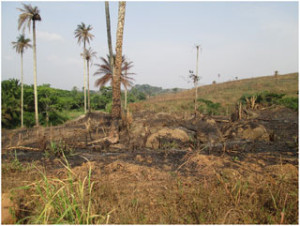
Guinea Forest Region in 2014
Guinea Forest Region in 2014 (Photo Credit Daniel Bausch)


The virus appears to have been spilling over for years in West Africa. Epidemiologist Joseph Fair’s group found antibodies to multiple species of Ebola, including the very Zaire strain that set off the outbreak, in patients in Sierra Leone as far back as five years ago. Phylogenetic analyses meanwhile show the Zaire strain Bayesian-dated in West Africa as far back as a decade.

An NIAID team showed the outbreak strain as possessing no molecular anomaly, with nucleotide substitution rates typical of Ebola outbreaks across Africa.

That result begs an explanation for Ebola’s ecotypic shift from intermittent forest killer to a protopandemic infection infecting 27,000 and killing over 11,000 across the region, leaving bodies in the streets of capital cities Monrovia and Conakry.

Explaining the rise of Ebola


The answer, little explored in the scientific literature or the media, appears in the broader context in which Ebola emerged in West Africa.

The truth of the whole, in this case connecting disease dynamics, land use and global economics, routinely suffers at the expense of the principle of expediency. Such contextualization often represents a threat to many of the underlying premises of power.

In the face of such an objection, it was noted that the structural adjustment to which West Africa has been subjected the past decade included the kinds of divestment from public health infrastructure that permitted Ebola to incubate at the population level once it spilled over.

The effects, however, extend even farther back in the causal chain. The shifts in land use in the Guinea Forest Region from where the Ebola epidemic spread were also connected to neoliberal efforts at opening the forest to global circuits of capital.

Daniel Bausch and Lara Schwarz characterize the Forest Region, where the virus emerged, as a mosaic of small and isolated populations of a variety of ethnic groups that hold little political power and receive little social investment. The forest’s economy and ecology are also strained by thousands of refugees from civil wars in neighboring countries.

The Region is subjected to the tandem trajectories of accelerating deterioration in public infrastructure and concerted efforts at private development dispossessing smallholdings and traditional foraging grounds for mining, clear-cut logging, and increasingly intensified agriculture.
The Ebola hot zone as a whole comprises a part of the larger Guinea Savannah Zone the World Bank describes as “one of the largest underused agricultural land reserves in the world.” Africa hosts 60% of the world’s last farmland frontier. And the Bank sees the Savannah best developed by market commercialization, if not solely on the agribusiness model.

As the Land Matrix Observatory documents, such prospects are in the process of being actualized. There, one can see the 90 deals by which U.S.-backed multinationals have procured hundreds of thousands of hectares for export crops, biofuels and mining around the world, including multiple deals in Sub-Saharan Africa. The Observatory’s online database shows similar land deals pursued by other world powers, including the UK, France, and China.

Under the newly democratized Guinean government, the Nevada-based and British-backed Farm Land of Guinea Limited secured 99-year leases for two parcels totaling nearly 9000 hectares outside the villages of N’Dema and Konindou in Dabola Prefecture, where a secondary Ebola epicenter developed, and 98,000 hectares outside the village of Saraya in Kouroussa Prefecture. The Ministry of Agriculture has now tasked Farm Land Inc to survey and map an additional 1.5 million hectares for third-party development.

While these as of yet undeveloped acquisitions are not directly tied to Ebola, they are markers of a complex, policy-driven phase change in agroecology that our group hypothesizes undergirds Ebola’s emergence.

The role of palm oil in West Africa


Our thesis orbits around palm oil, in particular.

Palm is a vegetable oil of highly saturated fats derived from the red mesocarp of the African oil palm tree now grown around the world. The fruit’s kernel also produces its own oil. Refined and fractionated into a variety of byproducts, both oils are used in an array of food, cosmetic and cleaning products, as well as in some biodiesels. With the abandonment of trans fats, palm oil represents a growing market, with global exports totaling nearly 44 million metric tons in the 2014 growing season.

Oil palm plantations, covering more than 17 million hectares worldwide, are tied to deforestation and expropriation of lands from indigenous groups. We see from this Food and Agriculture Organization map that while most of the production can be found in Asia, particularly in Indonesia, Malaysia and Thailand, most of the suitable land left for palm oil can be found in the Amazon and the Congo Basin, the two largest rainforests in the world.

Palm oil represents a classic case of Lauderdale’s paradox. As environmental resources are destroyed what’s left becomes more valuable. A decaying resource base, then, is no due cause for agribusiness turning into good global citizens, as industry-funded advocates have argued. On the contrary, agribusiness seeks exclusive access to our now fiscally appreciating, if ecologically declining, landscapes.

Food production didn’t start that way in West Africa, of course.

Natural and semi-wild groves of different oil palm types have long served as a source of red palm oil in the Guinea Forest Region. Forest farmers have been raising palm oil in one or another form for hundreds of years. Fallow periods allowing soils to recover, however, were reduced over the 20th century from 20 years in the 1930s to 10 by the 1970s, and still further by the 2000s, with the added effect of increasing grove density. Concomitantly, semi-wild production has been increasingly replaced with intensive hybrids, and red oil replaced by, or mixed with, industrial and kernel oils.
Other crops are grown too, of course. Regional shade agriculture includes coffee, cocoa and kola. Slash-and-burn rice, maize, hibiscus, and corms of the first year, followed by peanut and cassava of the second and a fallow period, are rotated through the agroforest. Lowland flooding supports rice. In essence, we see a move toward increased intensification without private capital but still classifiable as agroforestry.

But even this kind of farming has since been transformed.

The Guinean Oil Palm and Rubber Company (with the French acronym SOGUIPAH) began in 1987 as a parastatal cooperative in the Forest but since has grown to the point it is better characterized a state company. It is leading efforts that began in 2006 to develop plantations of intensive hybrid palm for commodity export. SOGUIPAH economized palm production for the market by forcibly expropriating farmland, which to this day continues to set off violent protest.

International aid has accelerated industrialization. SOGUIPAH’s new mill, with four times the capacity of one it previously used, was financed by the European Investment Bank.

The mill’s capacity ended the artisanal extraction that as late as 2010 provided local populations full employment. The subsequent increase in seasonal production has at one and the same time led to harvesting above the mill’s capacity and operation below capacity off-season, leading to a conflict between the company and some of its 2000 now partially proletarianized pickers, some of whom insist on processing a portion of their own yield to cover the resulting gaps in cash flow. Pickers who insist on processing their own oil during the rainy season now risk arrest.

The new economic geography has also initiated a classic case of land expropriation and enclosure, turning a tradition of shared forest commons toward expectations whereby informal pickers working fallow land outside their family lineage obtain an owner’s permission before picking palm.

Palm oil and Ebola

What does all this have to do with Ebola?
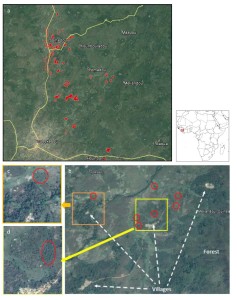
Fig. 1 Palm Oil and Ebola

Fig. 1 Palm Oil and Ebola
The figure at top left (of Fig. 1) shows an archipelago of oil palm plots in the Guéckédou area, the outbreak’s apparent ground zero. The characteristic landscape is a mosaic of villages surrounded by dense vegetation and interspersed by crop fields of oil palm (in red) and patches of open forest and regenerated young forest.

The general pattern can be discerned at a finer scale as well, above, west of the town of Meliandou, where the index cases appeared.

The landscape embodies a growing interface between humans and frugivore bats, a key Ebola reservoir, including hammer-headed bats, little collared fruit bats and Franquet’s epauletted fruit bats.
Nur Juliani Shafie and colleagues document a variety of disturbance-associated fruit bats attracted to oil palm plantations. Bats migrate to oil palm for food and shelter from the heat while the plantations’ wide trails also permit easy movement between roosting and foraging sites.

Bats aren’t stupid. As the forest disappears they shift their foraging behavior to what food and shelter are left.

Bush meat hunting and butchery are one means by which subsequent spillover may take place. But to move away from the kinds of Western ooga booga epidemiology that wraps outbreaks in such ‘dirty’ cultural cloth, agricultural cultivation may be enough. Fruit bats in Bangladesh transmitted Nipah virus to human hosts by urinating on the date fruit humans cultivated.

Almudena Marí Saéz and colleagues have since proposed the initial Ebola spillover occurred outside Meliandou when children, including the putative index case, caught and played with Angolan free-tailed bats in a local tree. The bats are an insectivore species also previously documented as an Ebola virus carrier.

Whatever the specific reservoir source, shifts in agroeconomic context still appear a primary cause. Previous studies show the free-tailed bats also attracted to expanding cash crop production in West Africa, including of sugar cane, cotton, and macadamia.

Indeed, every Ebola outbreak appears connected to capital-driven shifts in land use, including back to the first outbreak in Nzara, Sudan in 1976, where a British-financed factory spun and wove local cotton. When Sudan’s civil war ended in 1972, the area rapidly repopulated and much of the local rainforest—and bat ecology—was reclaimed for subsistence farming, with cotton returning as the area’s dominant cash crop.

Are New York, London and Hong Kong as much to blame?


Clearly such outbreaks aren’t merely about specific companies.

We have started working with University of Washington’s Luke Bergmann to test whether the world’s circuits of capital as they relate to husbandry and land use are related to disease emergence. Bergmann and Holmberg’s maps, still in preparation, show the percent of land whose harvests are consumed abroad as agricultural goods or in manufactured goods and services for croplands, pastureland and forests.

The maps show landscapes are globalized by circuits of capital. In this way, the source of a disease may be more than merely the country in which it may first appear and indeed may extend as far as the other side of the world. We need to identify who funded the development and deforestation to begin with.

Such an epidemiology begs whether we might more accurately characterize such places as New York, London and Hong Kong, key sources of capital, as disease ‘hot spots’ in their own right. Diseases are relational in their geographies, and not solely absolute, as the ecohealth cowboys chronicled by David Quammen claim.

Similarly, such a new approach ruins the neat dichotomy between emergency responses and structural interventions.

Some disease hounds who acknowledge global structural issues tend to still focus on the immediate logistics of any given outbreak. Emergency responses are needed, of course. But we need to acknowledge that the emergency arose from the structural. Indeed, such emergencies are used as a means by which to avoid talking about the bigger picture driving the emergence of new diseases.

The forest may be its own cure


There’s another false dichotomy to unpack—this one between the forest’s ecosystemic noise and deterministic effect.

The environmental stochasticity at the center of forest ecology isn’t synonymous with random noise.
Here a bit of math can help. A simple stochastic differential model of exponential pathogen population growth can include fractional white noise of an index 0 to 1 defined by a covariance relationship across time and space. An Ito expansion produces a classic result in population growth:
When below a threshold, the noise exponent is small enough to permit a pathogen population to explode in size. When above the threshold, the noise is large enough to control an outbreak, frustrating efforts on the part of the pathogen to string together a bunch of susceptibles to infect.
Never mind the technical details. The important point is that disease trajectories, even in the deepest forest, aren’t divorced from their anthropogenic context. That context can impact upon the forest’s environmental noise and its effects on disease.

How exactly in Ebola’s case?

It’s been long known that if you can lower an outbreak below an infection Allee threshold—say by a vaccine or sanitary practices—an outbreak, not finding enough susceptibles, can burn out on its own. But commoditizing the forest may have lowered the region’s ecosystemic threshold to such a point where no emergency intervention can drive the Ebola outbreak low enough to burn out on its own. The virus will continue to circulate, with the potential to explode again.

In short, neoliberalism’s structural shifts aren’t just a background on which the emergency of Ebola takes place. The shifts are the emergency as much as the virus itself.

In contrast to Nassim Taleb’s Black Swan—history as shit happens—we have here an example of stochasticity’s impact arising out of deterministic agroeconomic policy—a phenomenon I’ve taken to calling the Red Swan.

Here, sudden switches in land use may explain Ebola’s emergence. Deforestation and intensive agriculture strip out traditional agroforestry’s stochastic friction that until this point had kept the virus from stringing together enough transmission.

Under certain conditions, the forest may act as its own epidemiological protection. We risk the next deadly pandemic when we destroy that capacity.

Rob Wallace is an evolutionary biologist and public health phylogeographer currently visiting the Institute of Global Studies at the University of Minnesota. He also blogs at Farming Pathogens.

Friday, November 20, 2015

Biotech company Editas Medicine is planning to start human trials to genetically edit genes and reverse blindness


undefined
brian0918&#153
Wikipedia.org
.................................................................................

The Telegraph

First genetically modified humans could exist within two years

Biotech company Editas Medicine is planning to start human trials to genetically edit genes and reverse blindness 


Humans who have had their DNA genetically modified could exist within two years after a private biotech company announced plans to start the first trials into a ground-breaking new technique.
Editas Medicine, which is based in the US, said it plans to become the first lab in the world to ‘genetically edit’ the DNA of patients suffering from a genetic condition – in this case the blinding disorder ‘leber congenital amaurosis’.
The disorder prevents normal function of the retina; the light-sensitive layer of cells at the back of the eye. It appears at birth or in the first months of life and eventually sufferers can go completely blind.
“Hereditary eye disease in an obvious place to start given that there is already precedent in classical gene therapy"
 
Professor Darren Griffin, University of Kent
 
The rare inherited disease is caused by defects in a gene which instructs the creation of a protein that is essential to vision.

But scientists at Editas Medicine in the US believe they can fix the mutated DNA using the ground-breaking gene-editing technology Crispr.

Katrine Bosley, the chief executive of Editas Medicine, told a conference in the US that the company hopes to start trialling the technology on blind patients in 2017.

It would be the first time the technology has been used on humans. Gene editing is currently banned in the US, so the company would need special permission from health regulators.

“It feels fast, but we are going at the pace science allows,” Bosley told the EmTech conference in Cambridge, Massachusetts.


Read More Here

Thursday, November 19, 2015

Plastic for dinner: A quarter of fish sold at markets contain human-made debris


UC Davis Home Page
 
September 24, 2015

 
Man holding a big fish to the camera in a fish market with baskets of fish in the background

UC Davis researchers found plastic and fibrous debris in 25 percent of the fish sold in Indonesian and California markets. (Dale Trockel/photo)
 
Roughly a quarter of the fish sampled from fish markets in California and Indonesia contained human-made debris — plastic or fibrous material — in their guts, according to a study from the University of California, Davis, and Hasanuddin University in Indonesia.
The study, published today in the journal Scientific Reports, is one of the first to directly link plastic and human-made debris to the fish on consumers’ dinner plates.

“It’s interesting that there isn’t a big difference in the amount of debris in the fish from each location, but in the type — plastic or fiber,” said lead author Chelsea Rochman, a David H. Smith postdoctoral fellow in the Aquatic Health Program at the UC Davis School of Veterinary Medicine. “We think the type of debris in the fish is driven by differences in local waste management.”

‘Waiter, there’s some plastic in my fish’

The researchers sampled 76 fish from markets in Makassar, Indonesia, and 64 from Half Moon Bay and Princeton in California. All of the fragments recovered from fish in Indonesia were plastic. In contrast, 80 percent of the debris found in California fish was fibers, whereas not a single strand of fiber was found in Indonesian fish.


Read More Here

Wednesday, May 7, 2014

9 Natural mood stabilizers that help the body metabolize brain chemicals. They help improve mood, memory and cognition, without the long-term side effects associated with medication.


Prevent Disease


9 Essential Mood, Memory, and Cognitive Enhancers That Boost Brain Energy Metabolism

Mood-stabilizing drugs are purely antimanic agents, which are mainly for treating mania. However, natural mood stabilizers help the body metabolize brain chemicals which enhance mood, something drugs can never do due to specific metabolic pathways necessary to metabolize the chemical constituents. These ingredients not only improve mood, memory and cognition, but they do it without long-term side effects associated with medication. Here are 9 essential ingredients to look for in any supplement designed to boost your brain.


Just like any fine, multi-functional computer, your brain requires all its elements to perform correctly and fluidly. It is entirely electro-chemical in nature, and scientists are increasingly leaning to the conclusion that the roots of many psychiatric illnesses and mental health problems might be found in brain dysfunction. This just makes sense: a tiny piece of code can mess up a fine computer, but with the right code reinstalled, the computer resumes normal operation. The same can be said of the brain, its need for proper nutrition, and the concept of feeding the brain what it most needs, in order to restore and maintain the brain in its best possible condition.
Encouraging evidence exists for the use of omega-3 fatty acids, SAM-e, Kava Kava, R-Alpha Lipoic Acid, GABA, and l-tryptophan to enhance response within the brain.
Investigators are examining children with ADHD (attention deficit/hyperactivity disorder) and adults with bipolar disorder and depression, along with a variety of other psychiatric conditions and types of cognitive impairments. Conditions such as Parkinson’s, Alzheimer’s, ALS (Lou Gehrig's disease), MS (multiple sclerosis), MD (muscular dystrophy), all inhibit cell function and hinder the brain’s responsiveness to stimuli.
Brain energy metabolism is very important to normal brain function, so it’s no surprise to find that this factor is reduced in Alzheimer’s victims and other dementia patients: the greater the loss of energy, the more severe the dementia.
Ensuring optimal intake of key nutrients such as vitamins and antioxidants throughout one’s lifetime may be an important wellness strategy to help prevent brain diseases and prevent the decline in our cognitive abilities. Approximately 6-8% of all persons aged 65+ have developed Alzheimer’s disease, and the prevalence of this disease is increasing. The current research lends further support to the use of antioxidants and a vitamin enriched daily dietary supplement program to help support the brain function as we age.

9 Essential Mood, Memory, and Cognitive Enhancers That Boost Brain Energy Metabolism

1. ACETYL-L-CARNITINE:
In a 2010 Tokyo study, the aged rats were supplemented with Acetyl-L-Carnitine to determine its effects on memory, learning capacity, and brain synaptic functions. For 3 months, 344 rats were given Acetyl-L-Carnitine (100 mg/kg bodyweight). At the end of the study, the scientsists concluded that Acetyl-L-Carnitine increases synaptic neurotransmission in the brain and consequently improves learning capacity in aging rats.
2. R-ALPHA LIPOIC ACID (R-ALA):
R-ALA reduces cataract formation, and reduces oxidative stress in the heart muscle while raising levels in the heart and liver. It also lowers glucose levels by increasing insulin metabolism and decreases numbness in Diabetics, increases energy levels within the brain cells, can decrease LDL cholesterol and remove protein oxidation for a healthy heart, and inhibits free radicals more effectively than vitamin E.
3. L-THREONINE:
Threonine is an essential amino acid and not synthesized by humans. Threonine supports cardiovascular, liver, central nervous, and immune system function. Threonine combines with the amino acids aspartic acid and methionine to help liver digest fats and fatty acids. L-threonine has been tried for ALS because, like BCAAs, it affects glutamate metabolism. Open trials and one double-blind study have shown some short-term improvement in symptoms. The research also demonstrated that symptoms of Multiple Sclerosis (MS), another disease that affects nerve and muscle, are alleviated with threonine treatment. Threonine is an immunostimulant, which promotes the growth of thymus gland.
4. L-TYROSINE:
L-Tyrosine has been proposed as a treatment for various conditions in which mental function is impaired or slowed down, such as fatigue and depression. It has also been tried for attention deficit disorder (ADD). Preliminary evidence, including small, double-blind trials, suggests that tyrosine supplements may help fight fatigue and improve memory and mental function in people who are deprived of sleep or exposed to other forms of stress.
5. PANTOTHENIC ACID:
Pantothenic acid is used in the manufacture of hormones, red blood cells, and acetylcholine, an important neurotransmitter (a signal carrier between nerve cells).
6. CO ENZYME-Q-10:
C0-Q-10” prevents oxidation of the cell membrane and mitochondria within the cell, thereby preserving youthful neurological function, and protecting the capillaries from becoming fragile; it also enhances cerebral oxygenation.
7. METHYLCOBALAMIN:
The neurologically-active form of vitamin B-12, Methylcobalamin is effective in slowing the progression of untreatable diseases and neurological aging. Japan’s scientific literature reveals 334 published studies on methylcobalamin; the studies consider the treatment beneficial for any neurological disease. For example, in patients with MS their cynocobalamin is destroyed, and methylcobalamin attempts to reverse this process.
8. DIMETHYLGLYCINE (DMG):
DMG is a dietary supplement which supports the immune, circulatory, and cardiovascular systems. It is useful for controlling epileptic seizures, and for improving neurological functions, as well as muscle recovery and endurance. DMG is a nutrient that is found in the cells of both plants and animals. The human body produces DMG in very small amounts. Supplementing the diet with higher levels of DMG greatly improves the nutritional environment of the cell. DMG has been found effective in supporting immune system function and better utilization of oxygen at the cellular level.
9. GAMMA AMINO BUTYRIC ACID (GABA):
The ability of the limbic system and the rest of the brain to communicate in an orderly manner depends critically on inhibition. GABA inhibits the cells from firing, diminishing the anxiety-related messages from reaching the cortex. GABA, glutamine and glycine are vital for energy and the smooth running of the brain functions. B6 (pyridoxine) is GABA's most important partner.

Life Choice Neurotransmitter Support contains all 9 of the above ingredients which is why it's one of the best formulas available in the natural healthy industry. If you're not familiar with Life Choice, discover why few supplement brands compare in terms of quality, purity and effectiveness.
  • This formulation is a vast improvement over any other for its bioavailability with added the patented Sigma-Tau’s Acetyl-L-Carnitine with advanced delivery, complete with clinical studies showing the effectiveness of this material opposed to other forms of Acetyl-L-Carnitine.
  • Instead of using DL-Alpha Lipoic Acid, instead the Life Choice Neurotransmitter Support uses R-Alpha Lipoic acid. This formulation matches the same two principle ingredients used in the clinical Study of Berkley School of Medicine and from that stage Life Choice created an even more advanced delivery with the unknown amino acid L-Threonine, not to be confused with L-Theonine.
  • Through research and investigation, Life Choice have further advanced the relationships between neurological biochemistry and bioavailability for an ingestible supplement.
This isn't just any natural health supplement. Neurotransmitter Support’s precision formulation acts to improve brain energy metabolism, and with it, brain function. It's one of the most advanced formulas I've seen on the market that synergistically uses this 9 ingredients to effectively change the way the brain responds to the body and its environment.
Sources:
psych.med.nyu.edu
life-choice.net
science.gov
elavtoit.com

Dave Mihalovic
is a Naturopathic Doctor who specializes in vaccine research, cancer prevention and a natural approach to treatment.


Enhanced by Zemanta

Saturday, March 29, 2014

Fascinating New Study Shows How Emotions Are Mapped On The Human Body

Jan 7, 2014 by MICHAEL FORRESTER

Emotions coordinate our behavior and physiological states during survival-salient events and pleasurable interactions. Even though we are often consciously aware of our current emotional state, such as anger or happiness, the mechanisms giving rise to these subjective sensations have remained unresolved. Brilliant research by Finnish scientists has mapped the areas of our body that are experiencing an increase or decrease in sensory activity when we experience a particular emotion.
emotions In a new study, Finnish researchers have published visualizations describing how human emotions affect the body.  PNAS

Depending on whether we are happy, sad or angry, we have physiological sensations that are not located in different areas of the body. We overlook this reality from one day to the next (the famous "lump in the breast" generated by anxiety, the feeling of warmth that pervades our face and our cheeks particularly when we feel the shame...), and do not consciously realize how much the location of these body areas activated by our emotions and how they vary considerably depending on the nature of the emotion.
Researchers around the world are slowly integrating research on how our energetic and emotional states cause health and/or disease. How we connect emotionally to our overall wellness and wellbeing may indeed be more relevant than any supplement, food, exercise, medical intervention or health treatment.
Finnish scientists have for the first time mapped areas of the body activated according to each emotion (happiness, sadness, anger, etc). This map was compiled following a study of 700 Finnish, Swedish and Taiwanese volunteers.
They used a topographical self-report tool to reveal that different emotional states are associated with topographically distinct and culturally universal bodily sensations; these sensations could underlie conscious emotional experiences. Monitoring the topography of emotion-triggered bodily sensations brings forth a unique tool for emotion research and could even provide a biomarker for emotional disorders.
Read More Here
Enhanced by Zemanta

Monday, December 30, 2013

Strontium, PFOA and toxic chemicals found in one-third of U.S. water supply


Sunday, December 29, 2013 by: Ethan A. Huff, staff writer

water
(NaturalNews) You may want to think twice before further drinking or even bathing in unfiltered tap water, as a new report set to be published next year has found that a striking percentage of the U.S. water supply is contaminated with heavy metals, pesticides and other toxic chemicals. Researchers from the U.S. Geological Survey (USGS) and the U.S. Environmental Protection Agency (EPA) found that an astounding one-third of U.S. water systems contain traces of at least 18 unregulated and potentially hazardous contaminants, many of which are linked to causing endocrine disruption and cancer.

Based on a nationwide survey of 25 unnamed water utilities, scientists found traces of the herbicide metolachlor, for instance, a pesticide commonly applied to conventional corn, soy, cotton, safflower, potato and other crops, as well as the heavy metal strontium, which is linked to causing bone problems. Other chemicals identified include so-called perfluorinated compounds like perfluorooctanoic acid (PFOA), which numerous scientific studies have found can cause thyroid disease and various types of cancer.

"Traces of 18 unregulated chemicals were found in drinking water from more than one-third of U.S. water utilities in a nationwide sampling," reports Environmental Health News (EHN). "Included are 11 perfluorinated compounds, an herbicide, two solvents, caffeine, an antibacterial compound, a metal and an antidepressant."

More than 250 potential hazardous compounds detected in tap water

Among the 25 water samples, more than 250 chemicals, bacteria, viruses and microbes were identified, but only 134 of these were detected in treated drinking water. As many as eight of the treated water samples collected contained upwards of 113 chemicals. According to the researchers, water samples were taken from a range of water utilities, including both large and small plants and plants using varying treatment technologies.

"The good news is the concentrations are generally pretty low," stated Dana Kolpin, a research hydrologist from USGS who helped work on the study. "But there's still the unknown. Are there long-term consequences of low-level exposure to these chemicals?"

Read More Here
Enhanced by Zemanta

Thursday, June 13, 2013

Study: GMO Feed Harmful to Pigs

Pig stomachs gmo feed
Image source

****************************************************************************
Pigs eatingjpg Study: GMO Feed Harmful to Pigs


by GM Watch


A groundbreaking new study [1] shows that pigs were harmed by the consumption of feed containing genetically modified (GM) crops.
GM-fed females had on average a 25% heavier uterus than non-GM-fed females, a possible indicator of disease that requires further investigation. Also, the level of severe inflammation in stomachs was markedly higher in pigs fed on the GM diet. The research results were striking and statistically significant.
Lead researcher Dr Judy Carman, adjunct associate professor at Flinders University, Adelaide, Australia,[2] said: “Our findings are noteworthy for several reasons. First, we found these results in real on-farm conditions, not in a laboratory, but with the added benefit of strict scientific controls that are not normally present on farms.
“Second, we used pigs. Pigs with these health problems end up in our food supply. We eat them.
“Third, pigs have a similar digestive system to people, so we need to investigate if people are also getting digestive problems from eating GM crops.
“Fourth, we found these adverse effects when we fed the animals a mixture of crops containing three GM genes and the GM proteins that these genes produce. Yet no food regulator anywhere in the world requires a safety assessment for the possible toxic effects of mixtures. Regulators simply assume that they can’t happen.
“Our results provide clear evidence that regulators need to safety assess GM crops containing mixtures of GM genes, regardless of whether those genes occur in the one GM plant or in a mixture of GM plants eaten in the same meal, even if regulators have already assessed GM plants containing single GM genes in the mixture.”
The new study lends scientific credibility to anecdotal evidence from farmers and veterinarians, who have for some years reported reproductive and digestive problems in pigs fed on a diet containing GM soy and corn.[3]


Read Full Article Here