Showing posts with label Indonesia. Show all posts

Monday, November 30, 2015

41 kids die from mystery disease in Papua


VOA    Voice of America

Mysterious Illness Kills Dozens of Children in Indonesian Village


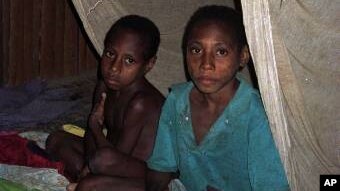
FILE – Mosquito nets helped control malaria after an outbreak in the late 1990s. Today, a mysterious illness initially thought to be malaria has hit Papua, killing at least 41 children within three weeks.
 
 
Fatiyah Wardah
A mysterious illness in Indonesia has killed dozens of children in a village in the remote eastern province of Papua in the past three weeks, leading to charges that the government has failed to take aggressive action.
Read More Here
...................................................................................................

41 kids die from mystery
disease in Papua


A large number of children, many below the age of seven, have died of an unexplained disease in Mbuwa district, Nduga regency, Papua, following the start of the rainy season in early November.
A medical team consisting of health workers from Nduga, Wamena and Jayawijaya regencies arrived at the location but have yet to ascertain the cause of the deaths.
“As many as 41 children have died, as of today. They present with a slight illness at first but die shortly after these initial signs. The medical team from Nduga Health Office, assisted by the Wamena Health Office may have returned home, but the cause of these deaths remains uncertain,” said Mbuwa district chief Erias Gwijangge, during a call to The Jakarta Post on Monday.
Erias said Nduga and surrounding areas had experienced drought and were exposed to haze from forest fires. Rain only fell in the past month. When the rain began, a number of livestock, such as pigs and poultry, also died abruptly.
“Many of the children died prior to the livestock but there was no report of child fatalities, only in the last three days,” said Erias.
When contacted by the Post, Wamena City community health clinic analysis member Yan Hubi, who joined the trip to Mbuwa district, said his clinic analyzed blood samples of the children to find out if the children had been infected by malaria, but all were negative.
Yan returned to Mbuwa on Nov. 17. A doctor and several other medical workers are also continuing to conduct medical treatment in Mbuwa.
 
Read More Here

Thursday, November 19, 2015

Plastic for dinner: A quarter of fish sold at markets contain human-made debris


UC Davis Home Page
 
September 24, 2015

 
Man holding a big fish to the camera in a fish market with baskets of fish in the background

UC Davis researchers found plastic and fibrous debris in 25 percent of the fish sold in Indonesian and California markets. (Dale Trockel/photo)
 
Roughly a quarter of the fish sampled from fish markets in California and Indonesia contained human-made debris — plastic or fibrous material — in their guts, according to a study from the University of California, Davis, and Hasanuddin University in Indonesia.
The study, published today in the journal Scientific Reports, is one of the first to directly link plastic and human-made debris to the fish on consumers’ dinner plates.

“It’s interesting that there isn’t a big difference in the amount of debris in the fish from each location, but in the type — plastic or fiber,” said lead author Chelsea Rochman, a David H. Smith postdoctoral fellow in the Aquatic Health Program at the UC Davis School of Veterinary Medicine. “We think the type of debris in the fish is driven by differences in local waste management.”

‘Waiter, there’s some plastic in my fish’

The researchers sampled 76 fish from markets in Makassar, Indonesia, and 64 from Half Moon Bay and Princeton in California. All of the fragments recovered from fish in Indonesia were plastic. In contrast, 80 percent of the debris found in California fish was fibers, whereas not a single strand of fiber was found in Indonesian fish.


Read More Here