Showing posts with label Epidemic Hazards. Show all posts

Friday, December 11, 2015

Biological Hazard - New Zealand, [Wellington, Motueka, Kaikoura and Christchurch] South Island : Measles


..........
..........
Biological Hazard in New Zealand on December 11 2015 01:43 PM (UTC).
 

Base data

EDIS NumberBH-20151211-51213-NZL
Event typeBiological Hazard
Date/TimeDecember 11 2015 01:43 PM (UTC)
Last updateDecember 11 2015 01:46 PM (UTC)
Cause of event 
Damage levelIs not or not known Damage level

Geographic information

ContinentAustralia - New-Zealand
CountryNew Zealand
County / StateSouth Island
AreaWellington, Motueka, Kaikoura and Christchurch
Settlement 
Coordinate41° 7.443,173° 0.059

Number of affected people / Humanities loss

Dead person(s)0
Injured person(s)0
Missing person(s)0
Evacuated person(s)0
Affected person(s)0
Foreign people0

Biohazard information

Biohazard level
Disease, agent nameMeasles
Infected person(s)0
SpeciesHuman
Statussuspected
...........
A measles warning has been issued in several areas after an infected tourist traveled the country. A 28-year-old European man carrying the virus traveled from Wellington, to Motueka, Kaikoura and Christchurch from December 3 to 11. The Canterbury District Health Board now is asking anyone who may have come in contact with him and is now presenting symptoms to call their doctor. He is believed to have contracted the highly-infectious virus while in Australia and is in private accommodation in Christchurch until the end of his infectious period. Canterbury medical officer Alistair Humphrey said it was a particularly risky time for the tourism industry. "Over the next few years there is a heightened risk of measles as a result of the decision by parents in the 1990s not to get their children immunized," he said. Where He Stayed: December 3-5: Comfort Hotel, Cuba Street, Wellington,5 December 5: BlueBridge Ferry,December 5-7: Motueka Holiday Top 10,December 8-10: Lazy Shag Backpackers, Kaikoura,December 11: Travels to residence outside Christchurch
............

news

Sick tourist prompts measles warning


NZ Newswire
Measles is untreatable but easily preventagle through vaccinations© Getty Images Measles is untreatable but easily preventable through vaccinations A measles warning has been issued in several areas after an infected tourist traveled the country.

A 28-year-old European man carrying the virus traveled from Wellington, to Motueka, Kaikoura and Christchurch from December 3 to 11.The Canterbury District Health Board now is asking anyone who may have come in contact with him and is now presenting symptoms to call their doctor.
He is believed to have contracted the highly-infectious virus while in Australia and is in private accommodation in Christchurch until the end of his infectious period.

Read More Here
 
............

Thursday, December 10, 2015

"This flu comes from beyond our borders, But every year it becomes wilder and more resistant" to treatment : Tehran, Health Minister Hassan Hashemi


PressTV News Videos PRESS TV

Mon Dec 7, 2015 7:18PM
A digital rendering of the H1N1 virus
At least 33 people have lost their lives following an outbreak of swine flu mainly in two southeastern Iranian provinces in the past three weeks, Iran’s deputy health minister says.

Ali Akbar Sayyari said on Monday that the flu left 28 people dead in Kerman Province and five, including four pregnant women, in Sistan and Baluchestan.

He added that there are more cases of infection across the country.


Read More Here

.......................................................................................................

Swine flu outbreak nears Tehran as Iran death toll tops 40

AFP
 
The World Health Organisation declared the swine flu pandemic over in August 2010
.
View photo
The World Health Organisation declared the swine flu pandemic over in August 2010 (AFP Photo/Sam Panthaky)
 
Tehran (AFP) - An outbreak of swine flu in Iran has claimed 42 lives since mid-November, including in a province neighbouring Tehran, Health Minister Hassan Hashemi said Thursday.

Hashemi, quoted by ISNA news agency, said 33 deaths from the H1N1 virus were recorded in Kerman and five in Sistan-Baluchistan, both provinces in southeastern Iran.

The other four deaths were in three northern provinces, including one in Karaj, near the capital, he said in an update recording nine new fatalities since Monday.

Hashemi has said the number of deaths from flu was similar to previous years, but that it was becoming harder to treat.

"This flu comes from beyond our borders, especially from Sistan-Baluchistan" near Pakistan, the minister said Monday. "But every year it becomes wilder and more resistant" to treatment.


Read More Here

As many as 200 people have gotten sick in a norovirus outbreak at a downtown Seattle office building, health officials reported Monday.


As Many As 200 Sickened In Seattle Tower Norovirus Outbreak

Norovirus is highly contagious and causes nausea, vomiting and diarrhea.

12/08/2015 05:18 pm ET

ASSOCIATED PRESS
 
SEATTLE (AP) -- As many as 200 people have gotten sick in a norovirus outbreak at a downtown Seattle office building, health officials reported Monday.

Illness at the Russell Investments Center grew exponentially after a catered event in the building, but several cases were reported before the event last Tuesday, according to Public Health-Seattle & King County, which is still investigating the outbreak that began last week.

Between 175 and 200 cases have been reported to the health department either independently or through a survey of people who went to the catered event in the building.

"We anticipate that number is probably low," said Dr. Meagan Kay, medical epidemiologist for communicable diseases with the Seattle and King County Public Health Department.

Two people spent one night in a hospital because of norovirus, and another eight people were treated in emergency rooms during the past week.


Read More Here

Tuesday, December 8, 2015

Flesh-eating skin disease grips ISIS-controlled areas in Syria (GRAPHIC)


The collapse of medical services in terrorist-controlled parts of Syria has caused the spread of a flesh-eating virus transmitted by parasites munching on corpses dumped in the streets.
“As a result of abominable acts by ISIS that included the killing of innocent people and dumping their corpses in streets, this is the leading factor behind the rapid spread of Leishmanisis disease,” Dilqash Isa, the head of the Kurdish Red Crescent told the Kurdish Rudaw news.

Kurdish fighters in Syria claimed the disease, spread by sand flies, was not noticed until Islamic State (IS, formerly ISIS/ISIL) influence and atrocities spread across Syria. Leishmaniasis, which is rarely deadly but leads to disfiguring lesions on the skin, was particularly bad in war-torn parts of Syria, one unnamed militant told the publication.

“We have been fighting on the battlefield for almost four years and this disease basically generated from embattled areas of Tal Hamis, Hon and Qosa,” he claimed.
.....

 
 .....
“It is very possible in the area where there is a lot of military activity and population movement, those are circumstances in which an outbreak of the leishmaniasis can occur,” Dr. William Schaffner (MD) told RT.

Read More Here

Monday, November 30, 2015

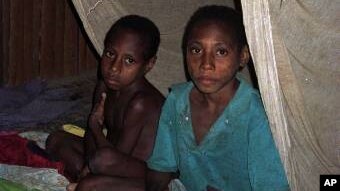
41 kids die from mystery disease in Papua


VOA    Voice of America

Mysterious Illness Kills Dozens of Children in Indonesian Village


FILE – Mosquito nets helped control malaria after an outbreak in the late 1990s. Today, a mysterious illness initially thought to be malaria has hit Papua, killing at least 41 children within three weeks.
 
 
Fatiyah Wardah
A mysterious illness in Indonesia has killed dozens of children in a village in the remote eastern province of Papua in the past three weeks, leading to charges that the government has failed to take aggressive action.
Read More Here
...................................................................................................

41 kids die from mystery
disease in Papua


A large number of children, many below the age of seven, have died of an unexplained disease in Mbuwa district, Nduga regency, Papua, following the start of the rainy season in early November.
A medical team consisting of health workers from Nduga, Wamena and Jayawijaya regencies arrived at the location but have yet to ascertain the cause of the deaths.
“As many as 41 children have died, as of today. They present with a slight illness at first but die shortly after these initial signs. The medical team from Nduga Health Office, assisted by the Wamena Health Office may have returned home, but the cause of these deaths remains uncertain,” said Mbuwa district chief Erias Gwijangge, during a call to The Jakarta Post on Monday.
Erias said Nduga and surrounding areas had experienced drought and were exposed to haze from forest fires. Rain only fell in the past month. When the rain began, a number of livestock, such as pigs and poultry, also died abruptly.
“Many of the children died prior to the livestock but there was no report of child fatalities, only in the last three days,” said Erias.
When contacted by the Post, Wamena City community health clinic analysis member Yan Hubi, who joined the trip to Mbuwa district, said his clinic analyzed blood samples of the children to find out if the children had been infected by malaria, but all were negative.
Yan returned to Mbuwa on Nov. 17. A doctor and several other medical workers are also continuing to conduct medical treatment in Mbuwa.
 
Read More Here

Friday, October 30, 2015

Biological Hazard - Bulgaria, Province of Kyustendil, Rila : Brucellosis (Animal)


Brucellosis is a contagious disease of both humans and animals caused by bacteria (invisible to the naked eye) of the genus Brucella which causes extensive economic damage to cattle breeding but is also a significant health issue as more than 50.000 people contract brucellosis world-wide.
Vet,gov.ba
..........
Biological HazardBulgariaProvince of Kyustendil, RilaDamage levelDetails
..........
Description
15 animals have been tested positive for brucellosis in the region of Rila town, the press centre of the District Administration - Kyustendil, announced. On September 13 began the second serological examinations of all small ruminants, cattle and equine which were tested negative in the first serological examinations in the infected villages. On October 20 were retested a total of 2,790 goats, sheep, buffalo, cattle and equine. 11 goats of them and three sheep from farms in the town of Rila, as well as one goat in Smochevo village were tested positive for brucellosis disease.
Biohazard name:Brucellosis
Biohazard level:3/4 High
Biohazard desc.:Bacteria and viruses that can cause severe to fatal disease in humans, but for which vaccines or other treatments exist, such as anthrax, West Nile virus, Venezuelan equine encephalitis, SARS virus, variola virus (smallpox), tuberculosis, typhus, Rift Valley fever, Rocky Mountain spotted fever, yellow fever, and malaria. Among parasites Plasmodium falciparum, which causes Malaria, and Trypanosoma cruzi, which causes trypanosomiasis, also come under this level.
Symptoms: 
Status:confirmed
..........
  1. 15 animals tested positive for brucellosis in Bulgaria’s Rila

    Focus Information Agency · 2 days ago
    15 animals have been tested positive for brucellosis in the region of Rila town, the press centre of the ... Rila. 15 animals have been tested positive for ...
..........


Biological Hazard - State of Wyoming, [Laramie County] : Pneumonic plague found in housecat


..........
Biological HazardUSAState of Wyoming, [Laramie County]Damage levelDetails
..........
Description
A housecat has been diagnosed with pneumonic plague in rural western Laramie County. Over a dozen individuals who came into contact with the cat are currently being assessed by the Wyoming Department of Health to determine if they need to receive antibiotics. Plague is a serious bacterial infection that can be deadly if not treated promptly with antibiotics. The pneumonic form of plague can be easily transmitted from a coughing cat or other animal to a human. Humans can then breathe in the bacteria and develop pneumonic plague as well. Although health officials believe this is thought to be an isolated case, plague has been present in the area before with animal cases in 2005 and 2008 and is believed to be endemic in Wyoming wildlife.
Biohazard name:Plague (pneumonic, cat )
Biohazard level:4/4 Hazardous
Biohazard desc.:Viruses and bacteria that cause severe to fatal disease in humans, and for which vaccines or other treatments are not available, such as Bolivian and Argentine hemorrhagic fevers, H5N1(bird flu), Dengue hemorrhagic fever, Marburg virus, Ebola virus, hantaviruses, Lassa fever, Crimean-Congo hemorrhagic fever, and other hemorrhagic or unidentified diseases. When dealing with biological hazards at this level the use of a Hazmat suit and a self-contained oxygen supply is mandatory. The entrance and exit of a Level Four biolab will contain multiple showers, a vacuum room, an ultraviolet light room, autonomous detection system, and other safety precautions designed to destroy all traces of the biohazard. Multiple airlocks are employed and are electronically secured to prevent both doors opening at the same time. All air and water service going to and coming from a Biosafety Level 4 (P4) lab will undergo similar decontamination procedures to eliminate the possibility of an accidental release.
Symptoms: 
Status:confirmed
..........
Local News 8

Pneumonic plague found in Laramie County cat

 
POSTED: 10:24 AM MDT Oct 29, 2015 
cat logo
GNU image/MGN Online

CHEYENNE, Wyo. (AP) - A housecat has been diagnosed with pneumonic plague in rural western Laramie County.
Over a dozen individuals who came into contact with the cat are currently being assessed by the Wyoming Department of Health to determine if they need to receive antibiotics.

Read More Here
..........

 Cheyenne, Wyoming | News, Weather, Sports | CBS5 NewsChannel


Animal plague found in Laramie County

 
LARAMIE COUNTY - A housecat has been diagnosed with pneumonic (the lung form) of plague in rural western Laramie County.

Plague, known as the Black Death during medieval times, is a serious bacterial infection that can be deadly if not treated promptly with antibiotics. The pneumonic form of plague can be easily transmitted from a coughing cat or other animal to a human. Humans can then breathe in the bacteria and develop pneumonic plague as well.

On October 26, the Wyoming Department of Health (WDH) notified Cheyenne-Laramie County Health Department (CLCHD) of a plague positive housecat submitted to the Wyoming State Veterinary Lab on October 21.


Read More Here
............

Tuesday, October 20, 2015

Biological Hazard - State of Illinois, [Crawford County] : Meningitis (viral)


http://www.health.umd.edu/sites/default/files/images/Viral%20Meningitis%20Prevention%20Tips%202014.img_assist_custom-325x421.jpg

Health Center Guidance on Viral Meningitis and Viral Syndromes

..........
 Biological HazardUSAState of Illinois, [Crawford County]Damage levelDetails
..........
Description
More Pittsburg students are staying home than usual, and more students at school are bringing bottled water. These are mainly precautions for the three confirmed reports of viral meningitis in two of district's schools. The three infected students are barred from school until the virus runs its course. And the two schools of the infected students were not disclosed due to confidentiality laws. Janis Goedeke, a health officer with Crawford County, said the three cases of viral meningitis are the only confirmed cases in Crawford County at this time. "The bacterial is much more serious (than the viral) and can be life threatening," Goedeke said, adding "Viral meningitis is very common in the community anyway, and particularly this time of year. This is not an unusual circumstance." Districtwide, as a precaution to reduce potential spreading, water fountains were turned off and a trash bag placed over them on Thursday and Friday - the water fountain prohibitions were lifted this week. On Saturday, Goedeke said the blood samples of the students came back positive for viral meningitis. The results prompted the health department and district to post on Facebook. The district also sent out an automated voice message to parents about the incident. All of the alerts talk about precautions the school is taking and precautions students and parents can take. "The preventative measures are basically the healthy habits that we normally use," said Superintendent of Schools Destry Brown. "Encouraging handwashing, we are going to do more disinfecting every day at the end of the day. We will also have teachers and students using antibacterial wipes to clean desks between classes." Brown said anyone with signs of meningitis - headache, fever or sore neck - should stay home. Brown said "quite a few parents" have decided to keep their students home at this time. Brown said the absentees will not be "unexcused." Brown said there was also a case thought to be Whooping Cough, but the results came back negative. He said the health department is still waiting the results of others tested for Whooping Cough.
Biohazard name:Meningitis (viral)
Biohazard level:3/4 Hight
Biohazard desc.:Bacteria and viruses that can cause severe to fatal disease in humans, but for which vaccines or other treatments exist, such as anthrax, West Nile virus, Venezuelan equine encephalitis, SARS virus, variola virus (smallpox), tuberculosis, typhus, Rift Valley fever, Rocky Mountain spotted fever, yellow fever, and malaria. Among parasites Plasmodium falciparum, which causes Malaria, and Trypanosoma cruzi, which causes trypanosomiasis, also come under this level.
Symptoms: 
Status:confirmed

..........
Morning Sun

Meningitis confirmed in Pittsburg

By Michael Stavola
mstavola@morningsun.net

Posted Oct. 19, 2015 at 10:08 PM

Pittsburg, Kan.
More Pittsburg students are staying home than usual, and more students at school are bringing bottled water.

These are mainly precautions for the three confirmed reports of viral meningitis in two of district’s schools. The three infected students are barred from school until the virus runs its course. And the two schools of the infected students were not disclosed due to confidentiality laws. Janis Goedeke, a health officer with Crawford County, said the three cases of viral meningitis are the only confirmed cases in Crawford County at this time.

“The bacterial is much more serious (than the viral) and can be life threatening,” Goedeke said, adding “Viral meningitis is very common in the community anyway, and particularly this time of year. This is not an unusual circumstance.”

Districtwide, as a precaution to reduce potential spreading, water fountains were turned off and a trash bag placed over them on Thursday and Friday – the water fountain prohibitions were lifted this week. On Saturday, Goedeke said the blood samples of the students came back positive for viral meningitis.


 Read More Here
..........

............

Biological Hazard - Singapore, Capital City, Singapore [Singapore General Hospital] : Hepatitis C Outbreak


Fifth death linked to Hepatitis C outbreak at SGH

http://www.theonlinecitizen.com/wp-content/uploads/2015/10/SGH.png
A medical review committee chaired by an external senior hepatologist has found that a hepatitis C infection could not be ruled out as a contributing factor to the death of a fifth patient following a viral outbreak of hepatitis C at the Singapore General Hospital, local media reported on Monday.
..........
 Biological HazardSingaporeCapital City, Singapore [Singapore General Hospital]Damage levelDetails
..........
Description
A medical review committee chaired by an external senior hepatologist has found that a hepatitis C infection could not be ruled out as a contributing factor to the death of a fifth patient following a viral outbreak of hepatitis C at the Singapore General Hospital, local media reported on Monday. The hospital had revealed the viral outbreak in its renal wards earlier this month, saying that four of the eight deaths out of the 22 affected patients had been linked to the viral infection. A fifth death had been under investigation then, and may now also be linked to the hepatitis C infection. "The committee concluded that the patient passed away from end-stage renal disease and pneumonia. While the death was not caused directly by hepatitis C virus, the committee could not rule out the possibility that hepatitis C virus infection could have been a contributing factor," TODAYonline reported SGH Medical Board chairman Professor Fong Kok Yong saying. Minister for Health Gan Kim Yong said on Saturday that international experts will be invited to advise the Independent Review Committee investigating the outbreak, so as to ensure that the review is thoroughly done. "The Committee will also look at the processes in both SGH and the Ministry of Health to identify whether there are any gaps and areas that we can improve upon so that we can strengthen our system," Mr Gan told The Straits Times. The hospital had previously contacted almost 1,000 people for hepatitis C screenings. 484 patients and 294 hospital employees have tested negative. The test results for 88 other cases are still pending. More tests will be done as the hospital schedules appointments for more patients, as well as for hospital staff currently on overseas leave.
Biohazard name:Hepatitis C (outbreak)
Biohazard level:3/4 High
Biohazard desc.:Bacteria and viruses that can cause severe to fatal disease in humans, but for which vaccines or other treatments exist, such as anthrax, West Nile virus, Venezuelan equine encephalitis, SARS virus, variola virus (smallpox), tuberculosis, typhus, Rift Valley fever, Rocky Mountain spotted fever, yellow fever, and malaria. Among parasites Plasmodium falciparum, which causes Malaria, and Trypanosoma cruzi, which causes trypanosomiasis, also come under this level.
Symptoms: 
Status:confirmed
..........

Hepatitis C could have contributed to death of 5th patient, says SGH

Hepatitis C could have contributed to death of 5th patient, says SGH
TODAY file photo
Medical review committee could not rule out hep C infection as a contributing factor in patient’s death

Published: 10:33 PM, October 19, 2015
Updated: 1:29 AM, October 20, 2015
 
SINGAPORE — Hepatitis C virus infection could have been a contributing factor in the death of a fifth patient affected by the outbreak at the Singapore General Hospital (SGH).
In a update today (Oct 19), the hospital said that the medical review committee chaired by an external senior hepatologist has completed its investigation and found that the patient died from end-stage renal disease and pneumonia but hepatitis C infection could not be ruled out as a contributing factor in the death.

When it broke the news of the outbreak on Oct 6, SGH had said four of the eight deaths among the 22 patients affected are possibly linked to hepatitis C infection. The hospital had also said a fifth death was under review then. Its update today refers to this patient.

Professor Fong Kok Yong, chairman of SGH’s Medical Board, said: “The committee concluded that the patient passed away from end-stage renal disease and pneumonia. While the death was not caused directly by hepatitis C virus, the committee could not rule out the possibility that hepatitis C virus infection could have been a contributing factor.”


Read More Here
..........


Wednesday, October 14, 2015

London hospital says nurse is being treated for Ebola in isolation unit, in case that raises concerns for survivors elsewhere


the guardian

Ebola nurse Pauline Cafferkey critically ill in deterioration that shocks experts


Pauline Cafferkey
Pauline Cafferkey was admitted to the Royal Free hospital last week with a late complication of her Ebola infection. Photograph: Lisa Ferguson/Scotland on Sunday/PA
Pauline Cafferkey, the nurse who suffered complications from the Ebola infection she contracted while volunteering in west Africa, is now critically ill, the Royal Free hospital in London has said.
The announcement shocked medical experts. While it is recognised that the virus can linger in parts of the body after a patient has recovered, it has never before been known to trigger potentially lethal disease months after the initial illness.

Jonathan Ball, a professor of molecular virology at the University of Nottingham, said it was “frankly staggering”. He said: “I am not aware from the scientific literature of a case where Ebola has been associated with what we can only assume as life-threatening complications after someone has initially recovered, and certainly not so many months after.”
Cafferkey was flown from Glasgow, where she lives, to London for specialised care in the tented isolation facility at the Royal Free after she fell ill last week. She spent nearly a month in the facility in January. Her family said the local medical staff had been slow to realise her illness was triggered by the infection she had successfully fought last year.

The hospital said on Wednesday afternoon that her condition had deteriorated and that she was critically ill. It has not released further details of her illness.


“We are sad to announce that Pauline Cafferkey’s condition has deteriorated and she is now critically ill. Pauline is being treated for Ebola in the high-level isolation unit at the Royal Free hospital,” a statement said.

Read More Here

Sunday, October 11, 2015

Biological Hazard - Nigeria, State of Cross River, Calabar : Ebola-like symptoms, death


md-health.com
http://news.vanderbilt.edu/files/Ebola_virus_fi.jpg
Vanderbilt.edu
..........
October 09 2015 11:50 AMBiological HazardNigeriaState of Cross River, CalabarDamage levelDetails
..........

RSOE EDIS  Event Report

Biological Hazard in Nigeria on Friday, 09 October, 2015 at 11:50 (11:50 AM) UTC.
Description
The Accident and Emergency ward of the University of Calabar Teaching Hospital (UCTH) has been shut following the death of a patient with Ebola-like symptoms. Besides, 10 people have been quarantined in Calabar, the National Emergency Management Agency (NEMA) tweeted yesterday. The Federal Government has dispatched a team to Calabar to ascertain the Ebola scare in the Cross River State capital. The federal and the Cross River State government have dismissed the Ebola link to the case. According to the Director of the National Centre for Disease control (NCDC) Prof. Abdulsalam Nasidi, the government is awaiting the result of the laboratory investigation but it believed the patient died of hemorrhagic fever. Nasidi also assured Nigerians that there was nothing to fear as measures have been taken to protect the people and including those who might have had contact with the patient The state government said it was awaiting results of blood samples of the patient, who died with symptoms of viral haemorrhagic fever. Dr Sunday Omini, Director of Public Health in the state Ministry of Health, said: "We are aware of the situation and we have got preliminary reports from the hospital, and we are all awaiting the result of the blood samples. "But, judging from the information I have received so far, I am 90 per cent sure that it is not Ebola. "'However, we are on top of the situation; there is no cause for alarm,'' he said. The management of UCTH said it had informed the NCDC, the Federal Ministry of Health and the state government about the development. A statement by Dr Queenet Kalu, Chairman, Medical Advisory Committee (CMAG), on behalf of the Medical Director of the hospital, said the public would be informed as soon as results of the blood samples are released, adding that the hospital management had quarantined those identified to have had contacts with the patient. "Further information will be made available as soon as we receive the results of the samples sent for analysis,'' the statement said. Nigeria had its first dose of Ebola disease on July 20, 2014 when Liberian Patrick Sawyer, sneaked into the country after been afflicted with the deadly disease. But the country's medical team rose up to the occasion to curtail its spread with minimal casualty.
Biohazard name:Ebola-like symptoms death
Biohazard level:4/4 Hazardous
Biohazard desc.:Viruses and bacteria that cause severe to fatal disease in humans, and for which vaccines or other treatments are not available, such as Bolivian and Argentine hemorrhagic fevers, H5N1(bird flu), Dengue hemorrhagic fever, Marburg virus, Ebola virus, hantaviruses, Lassa fever, Crimean-Congo hemorrhagic fever, and other hemorrhagic or unidentified diseases. When dealing with biological hazards at this level the use of a Hazmat suit and a self-contained oxygen supply is mandatory. The entrance and exit of a Level Four biolab will contain multiple showers, a vacuum room, an ultraviolet light room, autonomous detection system, and other safety precautions designed to destroy all traces of the biohazard. Multiple airlocks are employed and are electronically secured to prevent both doors opening at the same time. All air and water service going to and coming from a Biosafety Level 4 (P4) lab will undergo similar decontamination procedures to eliminate the possibility of an accidental release.
Symptoms: 
Status:suspected
..........

Monday, May 19, 2014

Biological Hazard - Denmark, [The area was not defined.]


Earth Watch Report  -  Biological Hazards

File:Neutrophil and Methicillin-resistant Staphylococccus aureus (MRSA) Bacteria.jpg

Scanning electron micrograph of neutrophil ingesting methicillin-resistant Staphylococcus aureus bacteria. Credit: NIAID   National Institutes of Health.
NIAID/NIH
Wikimedia.org

.....
May 13 2014 03:04 AMBiological HazardDenmark[The area was not defined.]Damage levelDetails

......

RSOE EDIS

Description
A troubling and also kind of odd story came out of Denmark this weekend. In a court proceeding, a microbiologist has disclosed that three residents of the country who had no known connection to farming died of MRSA infections caused by ST398, the livestock-associated strain of drug-resistant staph that first appeared among pig farmers in the Netherlands in 2004 and has since moved through Europe, Canada and the United States. If the report is correct - and sources have told me it is, but I've seen no data to confirm it - it reinforces the concern that bacteria which become resistant because of antibiotic use on farms can move off farms and affect the health of people who have no connection to farming. Livestock MRSA has always one of the best cases for establishing that, because the drug to which it showed the greatest resistance, tetracycline, wasn't used against human MRSA in the Netherlands, but was used routinely on farms - so the only place the strain could have picked up its unique resistance pattern was in pigs. (Here's my long archive of posts on pig MRSA, dating back to my book Superbug where the story was told for the first time.) Just to get them high up, here are some Danish news sources; this sees to have been a widely covered story. Danish isn't one of my languages, so I've relied on Google Translate - not the best practice, but there's enough agreement among the stories that I am comfortable with it in this case.
Biohazard name:MRSA (pig, human)
Biohazard level:3/4 Hight
Biohazard desc.:Bacteria and viruses that can cause severe to fatal disease in humans, but for which vaccines or other treatments exist, such as anthrax, West Nile virus, Venezuelan equine encephalitis, SARS virus, variola virus (smallpox), tuberculosis, typhus, Rift Valley fever, Rocky Mountain spotted fever, yellow fever, and malaria. Among parasites Plasmodium falciparum, which causes Malaria, and Trypanosoma cruzi, which causes trypanosomiasis, also come under this level.
Symptoms:
Status:confirmed

.....
 WIRED

Denmark: Three Deaths from Drug-Resistant “Pig MRSA”

ICStefanescu (CC), Flickr
A troubling and also kind of odd story came out of Denmark this weekend. In a court proceeding, a microbiologist has disclosed that three residents of the country who had no known connection to farming died of MRSA infections caused by ST398, the livestock-associated strain of drug-resistant staph that first appeared among pig farmers in the Netherlands in 2004 and has since moved through Europe, Canada and the United States.
If the report is correct — and sources have told me it is, but I’ve seen no data to confirm it — it reinforces the concern that bacteria which become resistant because of antibiotic use on farms can move off farms and affect the health of people who have no connection to farming.
Livestock MRSA has always one of the best cases for establishing that, because the drug to which it showed the greatest resistance, tetracycline, wasn’t used against human MRSA in the Netherlands, but was used routinely on farms — so the only place the strain could have picked up its unique resistance pattern was in pigs. (Here’s my long archive of posts on pig MRSA, dating back to my book Superbug where the story was told for the first time.)

Just to get them high up, here are some Danish news sources; this sees to have been a widely covered story. Danish isn’t one of my languages, so I’ve relied on Google Translate — not the best practice, but there’s enough agreement among the stories that I am comfortable with it in this case.
  • The Information: “Filthy use of antibiotics”
  • Kvalls Posten: “Resistant swine bacterium has killed three Danes”
  • DR DK: “Politicians are worried about swine bacteria”
  • Avisen: “Three Danes die of swine bacteria”
  • Ekstra Bladet: “Three died from killer bacteria from pigs”
  • Fyens: “University hospital physician: Three died of swine bacteria”

Read More Here
.....


Enhanced by Zemanta