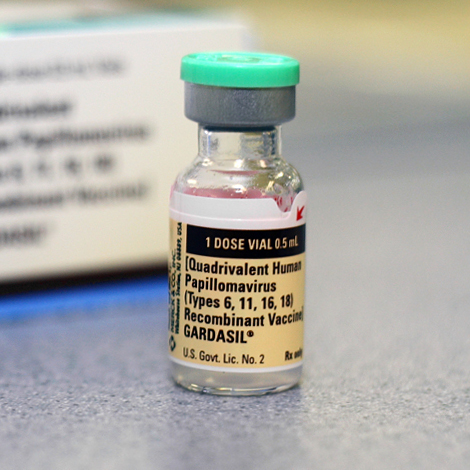
Eighteen Irish teenage girls have recently come forward claiming to be suffering acute physical side-effects from the controversial HPV anti-cervical cancer vaccine administered in their schools. Parents came forward after the Sunday Independent revealed similar claims of suffering from 131 young women a weekend ago.
These new allegations have surfaced since a doctor in Denmark (where Gardasil is no longer used) linked some chronic symptoms to the vaccination. In Denmark, one in 500 girls display a range of side-effects, there are 143 Irish teenagers are now suffering debilitating health issues, and we know girls in the US are suffering as well. Because of this, expert petitions are underway in France and Spain to ban its use, and Japan has stopped recommending the vaccine all together.
THOUSANDS
of adverse reactions to the lifesaving cervical cancer jab are being
recorded by health chiefs every year, The Sunday Post can reveal.
Campaigners
last night said the vaccine should no longer be given to schoolgirls
until more is found out about the side-effects of the Human Papilloma
Virus (HPV) vaccine.
The Post’s figures show more than 6,000
suspected adverse reactions to the jab have been recorded across the UK
since 2012, including 340 in Scotland.
However, campaigners claim
this is just the tip of the iceberg as health chiefs estimate they only
receive reports about 10% of all suspected adverse reactions, suggesting
tens of thousands could have suffered similarly.
More than eight
million HPV jabs have been given to girls aged 12 and 13 in the UK since
2008 and the vaccination programme is credited with saving 400 lives
every year.
But pressure is growing for the authorities to get a
better understanding of the side-effects as the figures obtained by The
Post show one person south of the Border died this year as a result of a
suspected adverse reaction to the HPV jab.
MSPs on Holyrood’s
petitions committee agreed to ask SNP ministers for their view on
campaigners’ calls to hold a roundtable discussion on the safety of the
vaccine, involving medical and scientific experts from both sides of the
debate.
Gardasil,
a vaccine for the Human Papillomavirus (HPV), has been labeled as a
controversial since it has been made available. Although beneficial in
preventing cancer within the girls that receive the vaccine, the side
effects that some are experiencing can be debilitating for many girls.
Those side effects have many wondering if the drug is safe enough for
human use.
Common
side effects of being vaccinated with Gardasil include nausea,
headaches, and even fainting at the time of the vaccination, or shortly
after, according to the Independent.
However, more extreme side effects are more serious and longer lasting,
often times permanent. They include chronic fatigue, chronic regional
pain syndrome, postural tachycardia syndrome, and fibromyalgia,
according to Jesper Mehlsen of the Frederiksberg Hospital in Denmark.
Mehlsen
was quick to point out that the conditions have not been proven to be
caused by Gardasil, but there is a growing trend among girls that have
received the vaccine and are experiencing the exact same conditions over
time.
“We have noted a pattern of
symptoms in a relatively large group of patients and that these symptoms
seem to have a temporal association to the vaccination.”
[Photo by Russell Kirk/Merck & Co. via Getty Images]ARecently,
18 teenage girls came forward to report debilitating side effects after
taking Gardasil, joining the growing number of teens across the world
that have experienced harmful side effects after taking Gardasil. In
Ireland, about 131 girls have been identified, and in Denmark, over
1,100 hundred girls suffer from Gardasil side effects, according to the Independent.
The number of reported drastic side effects in America vary depending
on the study that is read. However, reports of negative and debilitating
side effects from around the world have led nearly 40 percent of
American parents to not vaccinate their children from HPV.
Bacteria containing mcr-1 gene resistant to all known antibiotics found in Denmark
December 7, 20159:26am
Lethal tummy bug ... A strain of the common e. coli bacteria resistant to all known treatments has been found in Denmark.
Network WritersNews Corp Australia Network
JUST
weeks after the discovery in China of bacteria resistant to all known
forms of treatment, the same strain has been found in Denmark. Worse:
It’s been there since 2012.
Late
last week researchers at the Technical University of Denmark announced
they had found the feared ‘invulnerability’ gene among E. coli bacteria
samples taken from humans and food.
The scientists had been conducting a review of a genetic database of some 3000 different E. coli samples taken since 2009.
Specifically
they were seeking the mcr-1 gene, a mutation which gives bacteria a
frightening resistance to the last effective family of antibiotics —
colistin.
New Superbug Resistant to Last-line Antibiotics: Study
Sunday, 06 Dec 2015 11:19 AM
Scientists warned of the "epidemic potential" of deadly and fast-spreading bacteria resistant to last-line antibiotics.
The
new superbugs, found in southern China, could erase nearly a century of
antibiotic protection against killer diseases born by common germs such
as E. coli, the researchers reported in a study.
"These are
extremely worrying results," said Jian-Hua Liu, a professor at Southern
Agricultural University in Guangzhou and co-author of the study.
Liu
and colleagues found a gene, called MCR-1, that makes bacteria
resistant to a class of antibiotics, known as polymyxins, used to fight
superbugs.
The gene -- detected in common but deadly bacteria such
as E. coli and K. pneumoniae, which causes pneumonia and blood disease
-- effectively makes these bacteria invincible.
Even
worse, MCR-1 allows the bacteria to spread easily from one strain or
species to another, said the study, published in Lancet Infectious
Diseases.
Until now, rare cases of resistance occurred only through mutation in individual organisms, severely limiting transmission.
"Polymyxins were the last class of antibiotics in which resistance was incapable of spreading from cell to cell," said Liu.
The
World Health Organization (WHO) has already warned antimicrobial
resistance may result in "a return to the pre-antibiotic era," where
infections once easily cured prove fatal.
Most of the 50 to 100
million people who died during the 1918 flu pandemic -- 10 years before
the discovery of penicillin -- were killed by bacterial pneumonia, not
the flu virus itself.
Agricultural
Use Of Antibiotics Could Create Health Crisis, Experts Warn China’s use
of thousands of tons of antibiotics in agriculture is a major cause for
concern.
Asian Scientist Newsroom | November 24, 2015 | In the Lab
AsianScientist
(Nov. 24, 2015) - Two medical experts from The University of Queensland
are urging China to curb its use of antibiotics in animals to avoid
what could be a ‘major health catastrophe’ for humans, following their
research published in The Lancet Infectious Diseases.
Polymyxin
antibiotic class is a “last-defence” antibiotic for patients, including
in intensive care units, but its extensive use in agriculture in China
was leading to resistance in humans, warned Professor David Paterson,
Head of the Infection and Immunity group at UQ Center for Clinical
Research.
“It will be very dangerous if people
stop responding to this treatment. A key part of many intensive
treatments relies on antibiotic success to fight life-threatening
infection and keep further infections at bay. However, resistance to
this antibiotic is now becoming widespread in chickens, pigs and other
animals across Asia, and has now been detected in humans,” cautioned
Paterson.
In the report, Paterson said the
resistance was directly linked to agricultural use of the antibiotic in
the food-chain. “When humans eat the food derived from these animals fed
with antibiotics, this leads to antibiotic resistance. By the end of
2015, China is projected to use thousands of tonnes of polymyxins.
Chinese leaders needed to take urgent and decisive action to curb this
use.” Paterson said.
A
new gene that makes bacteria resistant to polymyxins - the last-resort
antibiotics for treating infections - is widespread in a large family of
bacteria sampled from pigs and people in South China, says a new study
published in The Lancet Infectious Diseases.
The
researchers first found evidence of transferable resistance to the
polymyxin drug colistin in bacteria isolated from a pig on an intensive
farm in China.
The researchers say some of the bacterial
strains that have acquired the new resistance gene - called MCR-1 - also
have epidemic potential.
The discovery is particularly alarming
because the researchers found the new gene on plasmids - a mobile form
of DNA that is easily shared and spread among different bacteria via
horizontal gene transfer.
It echoes an earlier discovery in India a few years ago of the resistance gene NDM-1 that makes bacteria resistant to nearly all antibiotics, including the last-resort antibiotics carbapenems.
In their study, the researchers, led by members from South China Agricultural University, Guangzhou, conclude:
"The
emergence of MCR-1 heralds the breach of the last group of antibiotics,
polymyxins, by plasmid-mediated resistance. Although currently confined
to China, MCR-1 is likely to emulate other global resistance mechanisms
such as NDM-1."
Co-author Jian-Hua Liu, a professor
specializing in antimicrobial resistance in animals, says the results
are "extremely worrying" because the polymyxins were "the last class of
antibiotics in which resistance was incapable of spreading from cell to
cell."
Polymyxin resistance transferring readily among common bacteria
Scanning electron micrograph of neutrophil ingesting methicillin-resistant Staphylococcus aureus bacteria. Credit: NIAID National Institutes of Health. NIAID/NIH
Wikimedia.org
A
troubling and also kind of odd story came out of Denmark this weekend.
In a court proceeding, a microbiologist has disclosed that three
residents of the country who had no known connection to farming died of
MRSA infections caused by ST398, the livestock-associated strain of
drug-resistant staph that first appeared among pig farmers in the
Netherlands in 2004 and has since moved through Europe, Canada and the
United States. If the report is correct - and sources have told me it
is, but I've seen no data to confirm it - it reinforces the concern that
bacteria which become resistant because of antibiotic use on farms can
move off farms and affect the health of people who have no connection to
farming. Livestock MRSA has always one of the best cases for
establishing that, because the drug to which it showed the greatest
resistance, tetracycline, wasn't used against human MRSA in the
Netherlands, but was used routinely on farms - so the only place the
strain could have picked up its unique resistance pattern was in pigs.
(Here's my long archive of posts on pig MRSA, dating back to my book
Superbug where the story was told for the first time.) Just to get them
high up, here are some Danish news sources; this sees to have been a
widely covered story. Danish isn't one of my languages, so I've relied
on Google Translate - not the best practice, but there's enough
agreement among the stories that I am comfortable with it in this case.
Biohazard name:
MRSA (pig, human)
Biohazard level:
3/4 Hight
Biohazard desc.:
Bacteria
and viruses that can cause severe to fatal disease in humans, but for
which vaccines or other treatments exist, such as anthrax, West Nile
virus, Venezuelan equine encephalitis, SARS virus, variola virus
(smallpox), tuberculosis, typhus, Rift Valley fever, Rocky Mountain
spotted fever, yellow fever, and malaria. Among parasites Plasmodium falciparum, which causes Malaria, and Trypanosoma cruzi, which causes trypanosomiasis, also come under this level.
A
troubling and also kind of odd story came out of Denmark this weekend.
In a court proceeding, a microbiologist has disclosed that three
residents of the country who had no known connection to farming died of
MRSA infections caused by ST398, the livestock-associated strain of
drug-resistant staph that first appeared among pig farmers in the
Netherlands in 2004 and has since moved through Europe, Canada and the
United States.
If the report is correct — and sources have told me
it is, but I’ve seen no data to confirm it — it reinforces the concern
that bacteria which become resistant because of antibiotic use on farms
can move off farms and affect the health of people who have no
connection to farming.
Livestock MRSA has always one of the best
cases for establishing that, because the drug to which it showed the
greatest resistance, tetracycline, wasn’t used against human MRSA in the
Netherlands, but was used routinely on farms — so the only place the
strain could have picked up its unique resistance pattern was in pigs.
(Here’s my long archive of posts on pig MRSA, dating back to my book Superbug where the story was told for the first time.)
Just to get them high up, here are some Danish news sources; this sees
to have been a widely covered story. Danish isn’t one of my languages,
so I’ve relied on Google Translate — not the best practice, but there’s
enough agreement among the stories that I am comfortable with it in this
case.
Roundup herbicide's health risks recognized by Danish scientists
Tuesday, April 22, 2014 by: L.J. Devon, Staff Writer
(NaturalNews)
Monsanto's Roundup is coming under fire in Denmark as scientists awake
to its effect on enzymes activities and the gastrointestinal health of
mammals. Danish scientists are calling out for further investigation of
the weed killer and other glyphosate-containing pesticides. Citing
glyphosate's potential for abuse on the health of livestock, the
scientists report that the chemical is most dangerous during a mammal's
sensitive life stages.
Likewise, the weed killer has been proven
to inhibit specific enzyme pathways in the guts of mammals -- enzymes
that play an important role in allowing the body to detoxify naturally.
Danish scientists recognize that glyphosate affects livestock at sensitive life stages
Current
health assessments of livestock in Denmark show that genetically
modified soy feed, which is doused with glyphosate, has negative effects
on mammalian health. Scientists from Denmark's Aarhus University
investigated various farmer reports at the request of the Danish farm
minister.
One of the scientists, Martin Tang Sorensen, hit the
ground running, reviewing study after study identifying the risks that
glyphosate poses to livestock health. Evidence pointed out that
glyphosate impacts livestock the most during sensitive phases of the
animal's life.
Two hypotheses were studied and were of great
concern to the researchers. The first investigated glyphosate's damaging
effect on the microorganisms in an animal's gastrointestinal system.
The second studied an animal's mineral status as a secondary effect of
glyphosate exposure.
Glyphosate disrupts good bacteria in the gastrointestinal tract, leaving livestock more prone to infections
For
cattle and poultry, glyphosate disrupts the natural "good" bacteria
balance in the gut. This is evidenced by the recent uptick of Clostridium botulinum
infections in cattle. In the past ten years in Germany, botulism
infections have increased dramatically, showing how a diminished
gastrointestinal tract favors the growth of infectious disease. For
example, salmonella and clostridium were found to be highly resistant to
glyphosate. At the same time, beneficial bacteria such as Enterococcus, Bacillus and Lactobacillus were found to be most susceptible, destroyed in the presence of glyphosate. Without enough good bacteria, the gut of the livestock becomes a nest for disease to replicate.
GM Soy Linked to Illnesses in Farm Pigs Dr Eva Sirinathsinghji Institute of Science in Society Danish Farmer Reverses Illnesses in pigs by reverting to a GM-free diet for his animals, which is yet further evidence for the toxicity of glyphosate tolerant GM crops Dr Eva Sirinathsinghji
A
Danish farmer has gained huge public recognition for publishing his
simple method for ridding his pigs of illness- removing genetically
modified (GM) ingredients from their diet.
Published in the farming magazine Effektivt Landbrug on
13 April 2012 [1], the farmer Ib Borup Perderson describes how his pigs
suffered from symptoms including chronic diarrhoea, birth defects,
reproductive problems, reduced appetite, bloating, stomach ulcers,
weaker and smaller piglets, and reduced litter sizes. This was not just a
problem for the animals themselves but also the profitability of the
farm, with fewer healthy animals, mounting costs of medicines and added
labour costs.
After researching the health hazards of GM foods and
associated herbicides, Pederson decided to stop feeding his 450 sows
with GM soybean, replacing them with fishmeal and non-GM soybean
instead. He began to notice health benefits after two days of a GM-free
diet. The farmer’s account has since been published in an English
dossier compiled by scientist Brian John of GM-free Cymru (Wales), with
collaboration from Pederson, published online by GM Watch [2].
This
finding adds to the continual flow of new evidence appearing in
peer-reviewed scientific studies, farmers’ reports and witness accounts
of the devastating health impacts of glyphosate-based herbicides and the
associated GM crops modified to tolerate it. Birth defects from
glyphosate exposure were detected in the 1980s in lab animals performed
by Monsanto (see [3] EU Regulators and Monsanto Exposed for Hiding Glyphosate Toxicity, SiS 51, [4] Lab Study Establishes Glyphosate Link to Birth Defects, SiS 48, 5 Glyphosate Kills Rat Testes Cells,
SiS 54). Residents of heavy agrochemical-use zones in Argentina have
seen startling increases in birth defects, adult and human cancer rates
as well as other illnesses (see [6] Argentina’s Roundup Human Tragedy, SiS 48, [7] Pesticide Illnesses and GM Soybeans, SiS
53). Argentinian tobacco farmers have recently filed a lawsuit against
Monsanto for birth defects suffered by their children following claims
by the corporation that the chemical was safe to use [8]. Animal feeding
studies have shown GM soya feed to cause sterility, stunting and death
in rats (see [9] GM Soya Fed Rats: Stunted, Dead, or Sterile, SiS
33). This is also not the first time that livestock illness including
reproductive problems has been linked to glyphosate-tolerant crop
derived feed. Professor Emeritus Don Huber of Perdue University, a
senior scientist of USDA (US Department of Agriculture) has been
studying crop health for over 20 years, and warned how reduced mineral
content of glyphosate-tolerant crops lead to nutritional deficiencies in
livestock that in turn cause reproductive problems (see [10] USDA Scientist Reveals All, SiS
53). Reduced mineral content in crops results from glyphosate’s metal
chelating properties, rendering essential minerals unavailable. Nutrient
deficiency effects are independent of direct glyphosate toxicity that
causes endocrine disruption, birth defects and cancers among other
illnesses. The identification of a novel pathogen in glyphosate-treated
crops, reproductive organs of livestock as well as aborted foetal
tissue may also be a contributing factor (see [11]Emergency! Pathogen New to Science Found in Roundup Ready GM Crops?,SiS50). Improvements in health with GMO-free diet
The dossier [2] presents following effects since removing GM produce from the pigs’ diets, as described by Pederson:
1.
Within 2 days, diarrhoea virtually disappeared in the farrowing house,
whereas before, 50-100 ml Borgal / day [an antibacterial drug] had to be
used.
2. Since switching, there had been no death from bloat in
sows or death by ulcers, as opposed to minimum 1 per month previously
(36 sows died due to stomach related sickness over the last two years
before switching).
3. No sows have died through loss of appetite, whereas 2 sows died from this cause last year.
4.
Even without washing between farrowings, diarrhoea does not reappear;
previously failing to wash between sows would result in more diarrhoea.
5. Previously the farmer had struggled with diarrhoea in first layer sows, no more problems there.
6.
Two years ago when the diarrhoea was as its worst, there were months
with nearly 30% dead in the farrowing house. At that time it was
impossible to find sows that could nurse piglets.
7. Before it was
unusual to have a sow with 13 piglets weaned. The average was about
10.5 per sow plus spare mothers. Now the farmer is getting over 12
piglets on average weaned and 14 piglets weaned per sow is common. There
are fewer nursing sows, simply because the sows are milking better and
eating more.
At
first glance the frozen bundles could be mistaken for conventional
joints of meat. But as Ib Pedersen, a Danish pig farmer, lifts them
carefully out of the freezer it becomes apparent they are in fact whole
piglets – some horribly deformed, with growths or other abnormalities,
others stunted.
This is the result, Pedersen claims, of feeding
the animals a diet containing genetically modified (GM) ingredients. Or
more specifically, he believes, feed made from GM soya and sprayed with
the controversial herbicide glyphosate.
Pedersen, who produces
13,000 pigs a year and supplies Europe’s largest pork company Danish
Crown, says he became so alarmed at the apparent levels of deformity,
sickness, deaths, and poor productivity he was witnessing in his animals
that he decided to experiment by changing their diet from GM to non-GM
feed. Danish
pig farmer Ib Pedersen is convinced that GM animal feed, and the
glyphosate herbicide in particular, is responsible for deformities and
other defects in pigs The results, he says, were
remarkable: ”When using GM feed I saw symptoms of bloat, stomach ulcers,
high rates of diarrhoea, pigs born with the deformities … but when I
switched [to non GM feed] these problems went away, some within a matter
of days.”
The farmer says that not only has the switch in
diet improved the visible health of the pigs, it has made the farm more
profitable, with less medicine use and higher productivity. “Less
abortions, more piglets born in each litter, and breeding animals living
longer.” He also maintains that man hours have been reduced, with less
cleaning needed and fewer complications with the animals.
Inside
the farmhouse, piles of paperwork are laid out across a vast table;
print outs, reports, statistics, scientific research, correspondence.
Pedersen shows me photos he says are of animals adversely affected by
the GM feed – there’s more piglets with spinal deformities, their back
legs dragging on the ground; others have visible problems with their
faces, limbs or tails. There’s even a siamese twin – two animals joined
at the head.
Pedersen believes these abnormalities, and the other
problems, were caused – at least in part – by the presence of the
herbicide glyphosate in his GM pig feed. Glyphosate is routinely sprayed
on many soya and cereal crops to kill weeds and maximise yields.
Although
it is used on conventional crops, its usage on GM soya and maize is
particularly prevalent as the crops are engineered to be resistant to
the chemical, killing the weeds but leaving the crop plants unaffected.
The
introduction of GM crops resistant to glyphosate allowed crops to be
sprayed with the herbicide to control weeds – often many times over a
growing season – without killing the crop. But this also led to much
higher levels of glyphosate in the plants and seeds.
After
glyphosate-resistant strains of soy were introduced in 1996, EU
regulators raised the allowed maximum residue limit (MRL) for glyphosate
in imported soy 200-fold, from 0.1 mg/kg to 20 mg/kg.
Glyphosate use has become increasingly controversial in
recent years, with a growing body of research, say campaigners,
suggesting that exposure, even at low levels, can be harmful to animals
and humans.
Studies have also suggested, claim critics, that the
herbicide may disrupt the human endocrine system, which regulates the
body’s biological processes, meaning that any level of exposure could
pose a significant risk to health.
Such claims are vigorously refuted by the agro-chemical industry, who state the herbicide is safe and who accuse campaigners of touting flawed research, or manipulating the findings to suit their own agenda.
Pedersen
claims that independent testing revealed all of his deformed pigs had
glyphosate in their organs. He shows me a chart he suggests shows a
clear correlation between the volume of glyphosate found in pig feed and
higher numbers of cranial and spinal deformities. “The more glyphosate,
the more deformities,” he says, bluntly.
Outside, along a muddy
track through a number of arable fields – in addition to pigs, Pedersen
produces strawberries, peas and potatoes – we come to the main pig
house. It’s vast and crowded, efficient and noisy, with the unmistakable
stink of pig waste. A factory farm.
Pedersen shows me the
farrowing crates, the large bodies of the nursing sows squeezed under
metal bars, surrounded by up to a dozen weaning piglets. He points out
his best animals – the most productive, the veterans – and stops to
check on those he has concerns about, examining a swollen joint here or
an inflamed nipple there. Antibiotics are administered to one.
In
the main hall the pigs move more freely, as they do in a series of
smaller rooms where younger animals are kept as they grow. The farmer
manually throws down handfuls of sandy-looking feed to supplement that
available in the conical feed troughs. The feed mix, he explains,
contains soya, fishmeal and other ingredients – but nothing of GM
origin.
Pederson admits his work isn’t scientific but says the
results should alarm people. He’s worried that many farmers have no idea
of the potential impact of GM feed, and that the same is true for
consumers: when using GM feed, he says, “Everything was down in the
quagmire … We had eleven pigs die in one day.” Deformities and deaths “the new normal”
The
farmer’s research, and outspoken stance, provoked a storm of
controversy in Danish agricultural circles after the respected farming
publication Effektivt Landbrug featured the story, interviewing
Pedersen in detail and referring to the pig farmers’ suggestion that
DDT and thalidomide – linked to deformities in up to 10,000 babies –
could be regarded as trivial compared to the potential risks from GM and
glyphosate.
Critics accused him of scaremongering and slammed the
findings as unscientific and “without merit” – pointing out that if the
claims were true, thousands of other farmers using GM feed would be
recording similar problems.
Despite this, Pedersen’s work has
prompted the Danish Pig Research Centre (VSP) to announce an in-depth
study to test the effects of GM and non-GM soya on animal health. The
findings of the research have yet to be published.
And Pedersen’s
findings are beginning to spread well beyond Denmark; earlier this month
the German television channel ARD broadcast a documentary featuring the
farmer’s claims, and Pedersen himself recently travelled to the UK to
address a packed symposium at the House of Commons, organised by the
All-Party Parliamentary Group On Agroecology.
Anti-GM campaigners
say the findings are particularly compelling as the observations were
made in a real farm setting, not a laboratory. Claire Robinson of GM
Watch told The Ecologist.

 Eighteen Irish teenage girls have recently come forward claiming to be suffering acute physical side-effects from the controversial HPV anti-cervical cancer vaccine administered in their schools. Parents came forward after the Sunday Independent revealed similar claims of suffering from 131 young women a weekend ago.