Showing posts with label London. Show all posts

Wednesday, October 14, 2015

London hospital says nurse is being treated for Ebola in isolation unit, in case that raises concerns for survivors elsewhere


the guardian

Ebola nurse Pauline Cafferkey critically ill in deterioration that shocks experts
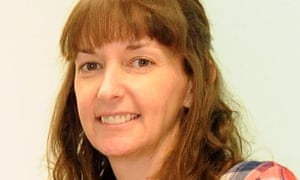

Pauline Cafferkey
Pauline Cafferkey was admitted to the Royal Free hospital last week with a late complication of her Ebola infection. Photograph: Lisa Ferguson/Scotland on Sunday/PA
Pauline Cafferkey, the nurse who suffered complications from the Ebola infection she contracted while volunteering in west Africa, is now critically ill, the Royal Free hospital in London has said.
The announcement shocked medical experts. While it is recognised that the virus can linger in parts of the body after a patient has recovered, it has never before been known to trigger potentially lethal disease months after the initial illness.

Jonathan Ball, a professor of molecular virology at the University of Nottingham, said it was “frankly staggering”. He said: “I am not aware from the scientific literature of a case where Ebola has been associated with what we can only assume as life-threatening complications after someone has initially recovered, and certainly not so many months after.”
Cafferkey was flown from Glasgow, where she lives, to London for specialised care in the tented isolation facility at the Royal Free after she fell ill last week. She spent nearly a month in the facility in January. Her family said the local medical staff had been slow to realise her illness was triggered by the infection she had successfully fought last year.

The hospital said on Wednesday afternoon that her condition had deteriorated and that she was critically ill. It has not released further details of her illness.


“We are sad to announce that Pauline Cafferkey’s condition has deteriorated and she is now critically ill. Pauline is being treated for Ebola in the high-level isolation unit at the Royal Free hospital,” a statement said.

Read More Here

Tuesday, April 1, 2014

Archaeologists and forensic scientists believe they have uncovered the truth about the nature of the Black Death

Black death was not spread by rat fleas, say researchers

Black death
Black death researchers extracted plague DNA from 14th century skulls found in east London. Photograph: Philip Toscano/PA
Archaeologists and forensic scientists who have examined 25 skeletons unearthed in the Clerkenwell area of London a year ago believe they have uncovered the truth about the nature of the Black Death that ravaged Britain and Europe in the mid-14th century.
Analysis of the bodies and of wills registered in London at the time has cast doubt on "facts" that every schoolchild has learned for decades: that the epidemic was caused by a highly contagious strain spread by the fleas on rats.
Now evidence taken from the human remains found in Charterhouse Square, to the north of the City of London, during excavations carried out as part of the construction of the Crossrail train line, have suggested a different cause: only an airborne infection could have spread so fast and killed so quickly.
The Black Death arrived in Britain from central Asia in the autumn of 1348 and by late spring the following year it had killed six out of every 10 people in London. Such a rate of destruction would kill five million now. By extracting the DNA of the disease bacterium, Yersinia pestis, from the largest teeth in some of the skulls retrieved from the square, the scientists were able to compare the strain of bubonic plague preserved there with that which was recently responsible for killing 60 people in Madagascar. To their surprise, the 14th-century strain, the cause of the most lethal catastrophe in recorded history, was no more virulent than today's disease. The DNA codes were an almost perfect match.

Read More Here
Enhanced by Zemanta

Monday, August 5, 2013

Taste test: World's first test-tube burger revealed in London


Published on Aug 5, 2013

 
The world's first test-tube burger has been revealed in London and tasted by two lucky volunteers who seemed to quite like it! Scientist-turned-chef Professor Mark Post produced the burger from 20,000 tiny strips of meat grown from cow stem cells. The lab-grown 5oz (142g) patty cost £250,000 to produce was fried in a little sunflower oil and butter by leading chef Richard McGeown.

Nutritional scientist Hanni Rutzler said the burger tasted "close to meat" but that it was "not that juicy". Report by Ashley Fudge.


**********************************************************


Google's Sergey Brin bankrolled world's first synthetic beef hamburger

The billionaire co-founder of Google, Sergey Brin, said he invested €250,000 in the technology for animal welfare reasons

Link to video: Google burger: Sergey Brin explains why he funded world's first lab-grown beef hamburger

The man who has bankrolled the production of the world's first lab-grown hamburger has been revealed as Google co-founder Sergey Brin. The internet entrepreneur has backed the project to the tune of €250,000 (£215,000), allowing scientists to grow enough meat in the lab to create a burger – as a proof of concept – that will be cooked and eaten in London on Monday.
Brin, a computer scientist who set up Google with university colleague Larry Page, is one of the wealthiest men in the world and has a history of backing projects that sound as though they belong in science fiction movies.
The pair have teamed up with film director James Cameron and others to investigate mining asteroids, and Brin is an investor in the private spaceflight company Space Adventures, which is selling $100m (£65m) trips to the moon. Google is also developing driverless cars and its philanthropic arm, Google.org, has invested in green energy projects.
"It's really just proof of concept right now, we're trying to create the first cultured beef hamburger," said Brin in a film to mark the tasting event in London. "From there I'm optimistic that we can really scale by leaps and bounds."
The synthetic meat hamburger will be cooked and eaten at an event this afternoon. Among the tasters will be the Chicago-based author of Taste of Tomorrow, Josh Schonwald, and an Austrian food trends researcher, Hanni Rützler of the Future Food Studio.
Brin said that he was moved to invest in the technology for animal welfare reasons. People had an erroneous image of modern meat production, he said, imagining "pristine farms" with just a few animals in them. "When you see how these cows are treated, it's certainly something I'm not comfortable with."


Read More Here


Enhanced by Zemanta