Showing posts with label Food Production. Show all posts

Monday, November 16, 2015

Hmmmm Factor..... Did you think the genetically modified pig was gone? Think Again.


Natural Blaze

Two New GE Pigs Want to Go To the Market


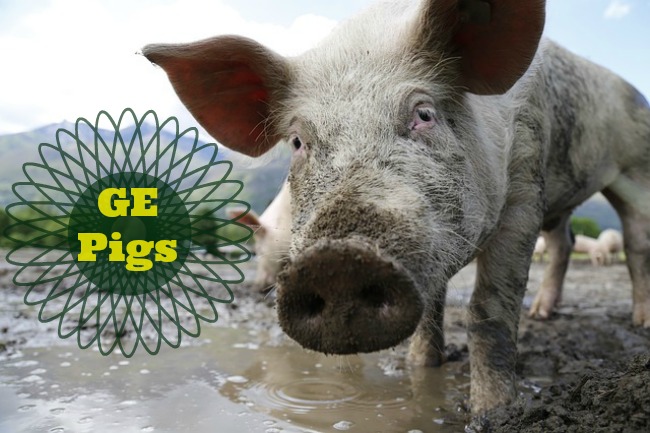
pig-752555_640

By Heather Callaghan


Did you think the genetically modified pig was gone? It is true that Canada’s “Enviro Pig” was scrapped in 2012 after consumer backlash and lack of university funding. That vacancy mainly left genetically modified salmon in the running to become the very first commercial GM animal.
But there are two new types of engineered pigs poised for approval in their respective countries. Now, with the secret Trans Pacific Partnership out in the open, it becomes clear that the deal opens the door for a swarm of global biotech ventures that can more easily glide their wares across country boundaries.

Whereas Enviro Pig’s genetic splicing was supposedly intended to cut down on phosphorous waste that kills waterways, two more pigs are vying for public acceptance.

It’s important to note that these animals aren’t “transgenic” like many of the GE crops on the market. That is, they do not contain genes from other species or kingdoms like bacteria. Biotech involves more than GMOs, and some methods currently fall outside of regulation or definition. However, we are still talking genetic engineering.


CBC News reports on them:

  • Bruce Whitelaw and his colleagues at the University of Edinburgh are developing a pig resistant to African swine fever, a devastating disease with no vaccine or cure that has led to hundreds of pigs being slaughtered in Europe to prevent its spread.
  • Jinsu Kim and his colleagues at Seoul National University have developed “double-muscle” pigs that produce twice as much muscle as a regular pig, resulting in higher protein, lower fat pork.


Read More Here

.....................................................................................................

CBC News

Genetically modified pigs raise concerns about food regulation

Regulatory system lacks transparency, critics say

CBC News Posted: Nov 03, 2015 11:50 AM ETLast Updated: Nov 04, 2015 8:59 AM ET


Two kinds of genetically modified pigs are on their way to becoming pork on our dinner plates. If they do, they'll be some of the very first genetically modified animals to enter our food system.
Two kinds of genetically modified pigs are on their way to becoming pork on our dinner plates. If they do, they'll be some of the very first genetically modified animals to enter our food system. (Laszlo Balogh/Reuters)


Close


The Current: GMO pigs' cautionary tale of genetically modified food research 24:43


Two kinds of genetically modified pigs are on their way to becoming pork on our dinner plates. If they do, they'll be some of the very first genetically modified animals to enter our food system, along with genetically modified salmon that is also trying to gain regulatory approval.

But consumers are wary and lack confidence in governments' readiness to regulate this new class of food product, researchers and activists say.

The genetically modified pigs under development are designed to improve pork production in different ways:

  • Bruce Whitelaw and his colleagues at the University of Edinburgh are developing a pig resistant to African swine fever, a devastating disease with no vaccine or cure that has led to hundreds of pigs being slaughtered in Europe to prevent its spread.
  • Jinsu Kim and his colleagues at Seoul National University have developed "double-muscle" pigs that produce twice as much muscle as a regular pig, resulting in higher protein, lower fat pork.

In both cases, researchers have precisely targeted an individual pig gene to create a mutation that turns up or turns down certain genes. The African swine fever resistant pig has an immune gene that is slightly more like a warthog's. The double-muscle pig has a mutation similar to one produced by normal breeding in a muscly cow breed called the Belgian blue.

The pigs aren't "transgenic" — that is, they don't contain genes from other organisms. That makes them unlike some genetically modified crops already on the market, which may contain genes from organisms such as bacteria.


Read More Here


Related Stories

Monday, November 9, 2015

The impending anthropogenic mass extinction could very well make the elite depopulation agenda a moot point according to Rosemary Mason.


Global Research

Poisoned Agriculture: Depopulation and Human Extinction


Agricultural-Engineer-On-Field-Examining-Ripe-Ears-Of-Grain-GMO-Test-Crop


There is a global depopulation agenda. The plan is to remove the ‘undesirables’, ‘the poor’ and others deemed to be ‘unworthy’ and a drain on finite resources. However, according to Rosemary Mason, the plan isn’t going to work because an anthropogenic mass extinction is already underway that will affect all life on the planet and both rich and poor alike. Humans will struggle to survive the phenomenon.


A new paper by Rosemary A Mason in the ‘Journal of Biological Physics and Chemistry’, indicates that a ‘sixth extinction’ is under way (the Holocene extinction, sometimes called the Sixth Extinction, is a name describing the ongoing extinction of species during the present Holocene epoch - since around 10,000 BCE). In her paper, ‘The sixth mass extinction and chemicals in the environment: our environmental deficit is now beyond nature’s ability to regenerate’, she argues that loss of biodiversity is the most urgent of the environmental problems, as biodiversity is critical to ecosystem services and human health. And the main culprit is the modern chemical-intensive industrialised system of food and agriculture.

Mason asserts there is a growing threat from the release of hormone-disrupting chemicals that could even be shifting the human sex ratio and reducing sperm counts. An industrial agricultural revolution has created a technology-dependent global food system, but it has also created serious long-run vulnerabilities, especially in its dependence on stable climates, crop monocultures and industrially produced chemical inputs. In effect, farming is a principal source of global toxification and soil degradation.

Without significant pressure from the public demanding action, Mason argues there could little chance of changing course fast enough to forestall disaster. The ‘free’ market is driving the impending disaster and blind faith in corporate-backed technology will not save us. Indeed, such faith in this technology is actually killing us.

Since the late 1990s, US scientists have written in increasingly desperate tones regarding an unprecedented number of fungal and fungal-like diseases, which have recently caused some of the most severe die-offs and extinctions ever witnessed in wild species and which are jeopardizing food security. Only one paper dared to mention pesticides as being a primary cause, however.
Mason cites a good deal of evidence to show how the widespread use on agricultural crops of the systemic neonicotinoid insecticides and the herbicide glyphosate, both of which cause immune suppression, make species vulnerable to emerging infectious pathogens, driving large-scale wildlife extinctions, including essential pollinators.

Providing evidence to show how human disease patterns correlate remarkably well with the rate of glyphosate usage on corn, soy and wheat crops, which has increased due to ‘Roundup Ready’ crops, Mason goes on to present more sources to show how our over-reliance on chemicals in agriculture is causing irreparable harm to all beings on this planet. Most of these chemicals are known to cause illness, and they have likely been causing illnesses for many years. But until recently, the herbicides have never been sprayed directly on food crops and never in this massive quantity.

The depopulation agenda

Mason discusses how agriculture and genetically modified organisms (GMOs) fit into a wider agenda for depopulating the planet. She notes that on the initiative of Gates, in May 2009 some of the richest people in the US met at the home of Nurse, a British Nobel prize-winning biochemist and President (2003–10) of Rockefeller University in Manhattan, to discuss ways of tackling a ‘disastrous’ environmental, social and industrial threat of overpopulation. The meeting was hosted by David Rockefeller Jr. These same individuals have met several times since to develop a strategy in which population growth would be tackled.

The Rockefeller Foundation (RF) was involved in extensive financing of eugenics research  in league with some of the US’s most respected scientists from such prestigious universities as Stanford, Yale, Harvard and Princeton. The explicit aim of the eugenics lobby funded by wealthy élite families, such as Rockefeller, Carnegie, Harriman and others since the 1920s, has embodied what they termed ‘negative eugenics’, the systematic killing off of ‘undesired bloodlines’.

RF funded the earliest research on GMOs, which Mason regards as part of the depopulation agenda. The RF funded the earliest research on GMOs in the 1940s and effectively founded the science of molecular biology.

Mason cites Steven Druker to show the fraud behind GMOs and how governments and leading scientific institutions have systematically misrepresented the facts about GMOs and the scientific research that casts doubt on their safety. Druker has shown that GMOs can have severe health impacts, which have been covered up.

The Royal Society is the preeminent scientific body within the UK that advises the government. It has misrepresented the facts about GMOs and has engaged in various highly dubious and deceptive tactics to promote the technology.

Druker wrote an open letter to RS as it has an obligation to the British public to provide a public response and ‘put the record straight’ on GMOs. Although Sir Paul Nurse’s presidency of Rockefeller University terminated in 2010, after he assumed the Royal Society presidency, Mason notes that Nurse is said to have maintained a laboratory on the Rockefeller campus and has an ongoing relationship with the university.

She asks: is that why Sir Paul was unable (or unwilling) even to discuss GMOs with Steven Druker? Was he sent to London by the Rockefeller Foundation to support the UK Government in their attempt to bring in GM crops? The UK Government and the GM industry have after all been shown to be working together to promote GM crops and foods, undermine consumer choice and ignore environmental harm.

Mason then goes on to discuss the impact of glyphosate residues (herbicide-tolerant GM crops are designed to work with glyphosate), which are found in the organs of animals, human urine and human breast milk as well as in the air and rivers. She documents its widespread use and contamination of soil and water and notes that the WHO International Agency for Research on Cancer’s assessment of glyphosate being a 2A carcinogen (probably carcinogenic in humans) is unwelcome news for the agrochemical industry. She also notes that Roundup usage has led to a depletion of biodiversity and that loss of biodiversity is also correlated with neonicotinoids. However, despite the evidence, the blatant disregard concerning the use of these substances by regulatory agencies around the world is apparent.

To provide some insight into the impact on health of the chemical-intensive model of agriculture, Mason shows that in the US increases in Alzheimer’s disease, obesity, breast cancer, oesophageal cancer, congenital anomalies and a growing burden of disability, particularly from mental disorders are all acknowledged.

She claims that plans are under way to depopulate the planet’s seven million plus people to a more manageable level of between 500–2000 million by a combination of means, including the poisoning and contamination of the planet’s food and water supplies via chemical-intensive industrialised agriculture. Mason also notes that health-damaging GMOs are being made available to the masses (under the guise of ‘feeding the poor’), while elites are more prone to eat organic food.
We may be gone before planned depopulation takes hold

Although Mason cites evidence to show that a section of the US elite has a depopulation agenda, given the amount of poisons being pumped into the environment and into humans, the thrust of her argument is that we could all be extinct before this comes to fruition – both rich and poor alike.
In concluding, she states that the global pesticides industry has been allowed to dominate the regulatory agencies and have created chemicals of mass destruction that can no longer be controlled. She has some faith in systems biology coming to the fore and being able to understand the complexity of the whole organism as a system, rather than just studying its parts in a reductionist manner. But Mason believes that ultimately the public must place pressure on governments and hold agribusiness to account.

However, that in itself may not be enough.

It is correct to highlight the poisonous impacts of the Rockefeller-sponsored petrochemical ‘green revolution’. It has uprooted indigenous/traditional agriculture and local economies and has recast them in a model that suits global agribusiness. It is poisoning life and the environment, threatening food security across the globe and is unsustainable. The ‘green revolution’ was ultimately a tool of US foreign policy that has been used in conjunction with various institutions like the IMF, World Bank and World Trade Organisation. GMOs represent more of the same.

In this respect, Mason follows the line of argument in William F Engdahl’s book ‘Seeds of Destruction: The Hidden Agenda of Genetic Manipulation’, which locates the GM issue and the ‘green revolution’ firmly within the context of empire. Engdahl also sees the Rockefeller-Gates hand behind the great GMO project to a sinister eugenicist strategy of depopulation.

Mason’s concerns about depopulation therefore should not be dismissed, particularly given the record of the likes of the Gates and Rockefeller clans, the various covert sterility programmes that have been instituted by the US over the decades and the way agriculture has and continues to be used as a geopolitical tool to further the agendas of rich interests in the US.

To understand the processes that have led to modern farming and the role of entities like Monsanto, we must appreciate the geopolitics of food and agriculture, which benefits an increasingly integrated global cartel of finance, oil, military and agribusiness concerns. This cartel seeks to gain from war, debt bondage and the control of resources, regardless of any notions relating to food security, good health and nutrition, biodiversity, food democracy, etc.
Food and trade policy analyst Devinder Sharma notes the impacts in India:
“India is on fast track to bring agriculture under corporate control… Amending the existing laws on land acquisition, water resources, seed, fertilizer, pesticides and food processing, the government is in overdrive to usher in contract farming and encourage organized retail. This is exactly as per the advice of the World Bank and the International Monetary Fund as well as the international financial institutes.”
In Punjab, India, pesticides have turned the state into a ‘cancer epicentre‘. Moreover, Indian soils are being depleted as a result of the application of ‘green revolution’ ideology and chemical inputs. India is losing 5,334 million tonnes of soil every year due to soil erosion because of the indiscreet and excessive use of fertilisers, insecticides and pesticides. The Indian Council of Agricultural Research reports that soil is become deficient in nutrients and fertility.

And now, there is an attempt to push GM food crops into India in a secretive, non-transparent manner that smacks of regulatory delinquency underpinned by corrupt practices, which suggests officials are working hand in glove with US agribusiness.

As smallholders the world over are being driven from their land and the GMO/chemical-industrial farming model takes over, the problems continue to mount.

The environment, the quality of our food and our health are being sacrificed on the altar of corporate profit and a type of looting based on something we can loosely regard as ‘capitalism’. The solution involves a shift to organic farming and investment in and reaffirmation of indigenous models of agriculture. But ultimately it entails what Daniel Maingi of Growth Partners for Africa says what we must do: “… take capitalism and business out of farming.”

It must also entail, according to Maingi, investing in  “… indigenous knowledge and agroecology, education and infrastructure and stand(ing) in solidarity with the food sovereignty movement.”
In other words, both farmers and consumers must organise to challenge governments, corrupt regulatory bodies and big agribusiness at every available opportunity. If we don’t do this, what Mason outlines may come to pass.


Tuesday, November 3, 2015

EPA Proposes Extended Ban on Neurotoxic Pesticide Sprayed on Crops


Banned for household use since 2000
 
pesticide-field-sprayings-735-250
 
by Julie Fidler
Posted on November 1, 2015
 
 
The U.S. Environmental Protection Agency (EPA) announced Friday a proposal that would ban a pesticide commonly sprayed on citrus fruits, almonds, and other crops.


Chlorpyrifos has been in use since 1965 as an insecticide for oranges, apples, cherries, grapes, broccoli, and asparagus. Dozens of farmworkers have been sickened by chlorpyrifos is recent years. In September 2014, a coalition of environmental health groups sued the EPA, asking the agency to ban the toxic chemical.
 
The agency cited scientific evidence in defense of its ban on chlorpyrifos for household use in 2000. Prior to the ban, chlorpyrifos was the most widely used household pesticide in the U.S. Sold as Dursban, the Dow-made chemical was found in flea collars and was routinely used to kill household pests, such as roaches, termites and ants.

At the time, the agency warned that farmworkers who mixed chlorpyrifos, sold for farms as Lorsban, or applied it using backpack sprayers or open-cab tractors faced a potentially unacceptable level of risk. The agency also said it needed to research how chlorpyrifos drifting from nearby fields or tracked home on clothing put children’s health at risk.

The National Resources Defense Council (NRDC) and Pesticide Action Network North America (PANNA) say that chlorpyrifos interferes with the brain development of fetuses, infants and children. [1] It has also been found to cause genetic damage in children, though it is reversible, and one study linked the insecticide to an increased risk of autism in unborn children.

Read More Here

Thursday, October 15, 2015

Italy and Austria join growing list of countries banning GMO agriculture. EU Committee Wants to Demolish their right to do so.


NaturalNews's profile photo
NaturalNews

Italy and Austria join growing list of countries banning GMO agriculture


EU

(NaturalNews) European nations are leading the world in rejecting genetically modified organisms in food and crops, with two more countries recently joining the list: Italy and Austria.

As reported by Nation of Change, Italian ministries have opted to utilize the newly created European Union rules that permit member countries to opt out of growing GM crops. Austrian officials joined in as well, with both nations making the decision to stop growing eight varieties of GM maize, which essentially amounted to a complete ban on GM crops.

The EU's opt-out regulations were implemented earlier this year. They allow member states to decide on their own if they want to continue using GM crops or ban them altogether.

As reported by Sustainable Pulse, a number of other countries in the EU have also opted out of GM crops:

Wales: "These new rules proposed by the European Commission provide Wales with the necessary tools to maintain our cautionary approach by allowing us to control the future cultivation of GM crops in Wales," said Welsh Deputy Minister for Farming and Food, Rebecca Evans. "It will allow us to protect the significant investment we have made in our organic sector and safeguard the agricultural land in Wales that is managed under voluntary agri-environment schemes."

She added: "Farming and food processing businesses remain the driving force of our rural economy. Our emphasis is on competing on quality, strong branding and adding value through local processing. We, therefore, need to preserve consumer confidence and maintain our focus on a clean, green, natural environment. "

Poland: In 2013, the Polish government actually adopted a regulation that banned GMO farming in the country, well ahead of the EU action. But once the EU approved its regulation giving member nations the right to ban if they chose, that was more than enough authority for the Polish government to act.

"Now we no longer have to explain the scientific aspects and we can already relate to social issues," Polish Agriculture Minister Marek Sawicki said at the time of the country's ban.

Germany: German government officials announced in late September that the country would no longer permit the cultivation of GM crops, as stated by German Agriculture Minister Christian Schmidt.

Slovenia: Slovenian Agriculture Minister Dejan Zidan said in announcing the country's ban that "the government adopted the decision for a request for the exclusion of the entire geographical territory of Slovenia for GM maize to the EU, including the already registered variety MON 810 and seven other varieties which are in the process of registration with the European Commission. This allows me to formally send the request as the Ministry of Agriculture in accordance with the law for the exclusion of Slovenia with the regards to the cultivation of GM maize."

Serbia: State Secretary in the Serbian Ministry of Agriculture and Environmental Protection Danilo Golubovic recently announced the country's GMO ban. In making the announcement, Golubovic said the decision was based on a desire to improve public health and safety.

Bulgaria: This government has decided to burnish its clean and green image by banning GM crops. As noted by Sustainable Pulse's director, Henry Rowlands, "Bulgaria is home to a wide variety of unique flora and fauna and is also the base of many ancient civilizations, it is with this background that Bulgarians know what is at risk when it comes to using an untested and unnecessary technology."

European nations that have opted out of growing GM crops thus far are Latvia, France, Austria, Cyprus, Lithuania, the Netherlands, Scotland, Northern Ireland, Poland, Germany, Greece, Croatia, Hungary, Slovenia and Italy, Sustainable Pulse reported.

Sources:


BullHorn.NationOfChange.org


SustainablePulse.com


Reuters.com
EcoWatch.com

Reuters.com


About NaturalNews

The NaturalNews Network is a non-profit collection of public education websites covering topics that empower individuals to make positive changes in their health, environmental sensitivity, consumer choices and informed skepticism. The NaturalNews Network is owned and operated by Truth Publishing International, Ltd., a Taiwan corporation. It is not recognized as a 501(c)3 non-profit in the United States, but it operates without a profit incentive, and its key writer, Mike Adams, receives absolutely no payment for his time, articles or books other than reimbursement for items purchased in order to conduct product reviews.

The vast majority of our content is freely given away at no charge. We offer thousands of articles and dozens of downloadable reports and guides (like the Honest Food Guide) that are designed to educate and empower individuals, families and communities so that they may experience improved health, awareness and life fulfillment.

Learn More About Natural News Here

 
...................................................................................................


by Christina Sarich
Posted on October 15, 2015

 
gmo_corn_syringe_735_250

EU Committee Wants to Demolish Existing Law Allowing Member States to Ban GMOs

As 19 EU nations plan GMO bans


Stating a concern that the proposed law would lead to the reintroduction of border controls between GM and non-GMO-growing countries, the European Parliament news service reported that Members of the Environment Committee shot down a draft EU law that would allow member states to restrict or prohibit sales of genetically modified crops.

This vote goes against numerous EU states that have made it clear in recent months that they plan to instate total bans on GM crops. A total of 19 EU countries have sent letters to the EP saying that they plan GM bans, citing concern over spoiling agricultural markets, and also the desire to provide their citizens with organic food.


Thursday, October 8, 2015

“As far as genetically-modified organisms are concerned, we have made the decision not to use any GMO in food productions.”, Russian Deputy Prime Minister Arkady Dorkovich


01.10.2015 Author: F. William Engdahl

Victory! World’s Largest Nation Bans GMO Food Crops


212678292 

Victories are to be celebrated and for the future of healthy life on our planet we all can celebrate a beautiful victory. The world’s largest nation, the Russian Federation, whose landmass spans Eurasia from the Baltic and Ukraine on the west to Vladivostock and the Pacific on her east, has formally declared all commercial planting of Genetically Modified Organisms, GMOs, to be prohibited. 

The issue has been subject of a heated debate for some months inside Russia. In February 2014, just days prior to the US-orchestrated coup d’etat in Ukraine, Russian Prime Minister Dmitry Medvedev created a national research project to obtain scientific information so the Government and Duma might make a decision on GMOs in Russia. Now a definitive decision has been made, and it goes against Monsanto and the US-led GMO cartel. We can say Russia’s crisis has concentrated minds on the essentials of life.

Russian Deputy Prime Minister Arkady Dorkovich told an international biotechnology conference in Kirov September 18, “As far as genetically-modified organisms are concerned, we have made the decision not to use any GMO in food productions.”

Last year the Duma or parliament voted to make tough GMO labeling laws as a first step to the new ban in order to inform consumers of presence of GMO in various foods they buy. That was before US and EU sanctions led to Russian counter-sanctions against EU imports of agriculture products. In August 2014, the Russian government announced its bans on import from the EU and several other countries of meat, fish, dairy products, fruit and vegetables as a response to the sanctions. It produced surprising results. Since the imposition of tough Russian food import bans, Russian agriculture has undergone a spectacular rebirth. 

Russian supermarkets from Rostov on Don to Sochi to Moscow today feature overwhelmingly Russian products, domestically grown. Russians I spoke with during a visit this August to the Rostov region told me they realized that the taste of Russian food such as tomatoes was far superior to that of imported food that often is artificially colored and treated with chemical preservatives that it holds on the shelf, looking fresh. Following the tumultuous collapse of the Soviet Union in the early 1990’s the corrupt Yeltsin government opened the doors for western agribusiness giants like Kraft, Nestle, Unilever to fill Russian stores with their agribusiness industrialized food products. 


Read More Here

Sunday, October 4, 2015

Foods We Won’t Have If We Keep Letting Bees Die


About one-third of the world’s crops depend on the honeybees for pollination. The past decades honeybees have been dying at an alarming rate. Fewer bees will eventually lead to less availability of our favorite whole foods and it will also drive up the prices of many of the fruits and veggies we eat on a daily basis.

While some actions have been taken in the past, our bees are still dying and something needs to be done to make sure our most favorite foods don’t go into extinction.

What’s Causing Massive Bee Deaths?


About fifty years ago our world looked a whole lot different. Bees had an abundance of flowers to feast on and there were fewer pests and diseases threatening their food chain. These days however, nature has to make place for industrialization and our bees are having a hard time finding good pollen and nectar.

And if clearing their dinner tables from good quality food wasn’t bad enough already, farmers are extensively using herbicides and insecticides, which cause a phenome called Colony Collapse Disorder (CCD) where bees get disorientated and poisoned and can’t find their way back to the hive. Or when they manage to get back, they die from intoxication.

“We need good, clean food, and so do our pollinators. If bees do not have enough to eat, we won’t have enough to eat. Dying bees scream a message to us that they cannot survive in our current agricultural and urban environments,” states Marla Spivak, an American entomologist, and Distinguished McKnight University Professor at the University of Minnesota.

List of Foods We Will Have To Go without If The Bees Go


While we don’t need bees to pollinate all our food because they either self-pollinate or rely on the wind (like rice, wheat, and corn), many of our favorite foods will disappear from our kitchen tables.
Foods in the danger zone include:

  • Apples
  • Mangos
  • Kiwi Fruit
  • Peaches
  • Berries
  • Onions
  • Pears
  • Alfalfa
  • Cashews
  • Avocados
  • Passion Fruit
  • Beans
  • Cruciferous vegetables
  • Cacao/Coffee
  • Cotton
  • Lemons and limes
  • Carrots
  • Cucumber
  • Cantaloupe
  • Watermelon
  • Coconut
  • Beets
  • Turnips
  • Chili peppers, red peppers, bell peppers, green peppers
  • Papaya
  • Eggplant
  • Vanilla
  • Tomatoes
  • Grapes
  • Many seeds and nuts

A substantial drop in population, or complete extinction, of honeybees will make these food scares or even non-existent. So to keep our body healthy and our kitchen table interesting we have to take action before it is too late.

What You can Do


  • Plant bee friendly plants in your garden or green community space.
  • Limit the use of pesticides or use organic alternatives.
  • Buy local, organically grown produce and honey to support the beekeepers and farmers in your area.
  • Donate to non-profit organizations, like Pollinator Partnership, to help protect, grow, and strengthen bee populations.


Sources: CNNNCBI, and onEarth.
Don’t forget to download my FREE Book “Amy’s Home Kitchen”, packed with my family’s favorite healthy, clean and delicious recipes. Or connect with me on Facebook or Google+
If you are interested in detoxing, clean eating, losing weight, and changing your lifestyle without feeling hungry and counting calories, click here

************************************************************

About NaturalNews

The NaturalNews Network is a non-profit collection of public education websites covering topics that empower individuals to make positive changes in their health, environmental sensitivity, consumer choices and informed skepticism. The NaturalNews Network is owned and operated by Truth Publishing International, Ltd., a Taiwan corporation. It is not recognized as a 501(c)3 non-profit in the United States, but it operates without a profit incentive, and its key writer, Mike Adams, receives absolutely no payment for his time, articles or books other than reimbursement for items purchased in order to conduct product reviews.

The vast majority of our content is freely given away at no charge. We offer thousands of articles and dozens of downloadable reports and guides (like the Honest Food Guide) that are designed to educate and empower individuals, families and communities so that they may experience improved health, awareness and life fulfillment.
Learn More About Natural News Here

Wednesday, September 30, 2015

Fears mount that the USDA's organic certification process is being hijacked by corporate interests

 
 Natural News
..
organic


(NaturalNews) Some organic food experts are worried that the term used to describe non-genetically modified crops and produce may soon become nearly meaningless, thanks in large part to undue (read corporate) influence on the Department of Agriculture.

According to Jerome Rigot, PhD, writing in a blog posted at the Cornucopia Institute, which promotes food safety backed by science, it may no longer be accurate to rely on the USDA's "organic" labeling as remaining "true to its mandate of assuring consumers that food under this label is truly healthy and grown or raised with minimal impact to the environment," as well as respecting "the health and well-being of the workers and animals involved."

Rigot notes that, among other concerns, Consumers Union, the publisher of Consumer Reports, recently downgraded its rating of the Agriculture Department's organic seal and label. The director of the Consumer Safety and Sustainability Center for the magazine, Dr. Urvashi Rangan, testified to the National Organic Standards Board in late 2014: "Organic is slipping. And as a result, we have downgraded its rating from highly meaningful to meaningful." He further noted that the rule of the magazine "is to help educate people about what organic means as well as what it doesn't mean."
Regarding these concerns, Rigot wrote:

As an example, the Cornucopia Institute filed formal legal complaints with the USDA in December 2014 against 14 giant poultry and dairy CAFOs (read: concentrated animal feeding operations or "factory farms") for allegedly violating the USDA organic regulations requiring outdoor and pasture access. Each complaint was summarily dismissed, without an investigation, by the enforcement division of the National Organic Program (NOP), which stated, "The NOP has reviewed these complaints and has determined that investigation is unwarranted."

Inept, corporatists or lobbyists

The determination was odd, says Rigot, because literally hundreds of high-res photos, satellite imagery and state regulatory documents were submitted as evidence to the NOP which, together, should have produced more than enough doubt to motivate someone to launch an investigation.
A former NOSB board member who manages the country's first certified organic dairy farm, Kevin Englebert, was clearly disappointed by the NOP decision, seeing it as a lapse of the organization's responsibilities.

"For the NOP to not even investigate these facilities means one of three things: 1) the personnel who made that decision are inept, 2) they are too close and friendly with corporate lobbyists and multimillion-dollar certifiers that are involved in the process, or 3) the most likely scenario, corrupt politicians are preventing them from enforcing the law," he said, as quoted by Rigot, who intimated that elements of all three reasons might be at play.

He noted that the National Organic Program is a very small part of the Agriculture Department. However, many large corporations have a significant vested interest in organic foods, especially the processed foods industry (including General Mills, Smuckers, Coca-Cola, etc.), and similar to GMO corporations, they'll do whatever it takes to expand their bottom line.

"Circumstantial evidence makes it reasonable to conclude that the same type of undue industry influence that appears to have prevented Vilsack and the USDA from acting quickly to end the Salmonella outbreak [in 2014] and limit the health toll is behind efforts to dilute the federal organic standards, control the NOP leadership, and limit or obstruct the ability of the congressionally authorized National Organic Standard Board from doing its job efficiently and with integrity," Rigot wrote.

For more breaking news regarding organic agriculture, check out Organics.news, powered by FETCH.news.

Compromised board members

In September 2014, we reported that the Cornucopia Institute had conducted a study to examine the voting records and backgrounds of the 15 members of the NOSB.

The board is an advisory body created by the secretary of agriculture to make recommendations aimed at preserving and protecting the organic farming industry. What's more, the board is also required to maintain and update the National List of Approved and Prohibited Substances – a list that identifies substances and other compounds that cannot be used in organic crop and livestock production.

The NOSB's seats are supposed to be filled with members representing farmers, environmentalists, public interest advocates, handlers, retailers, scientists and a USDA certifying agent. However, Cornucopia found in its study that corporate representatives were filling seats intended for farmers and other independent organic industry stakeholders, often leading to decisions that were not beneficial to the organic food and livestock industry.

Details surrounding that study are posted here.

Sources:
Cornucopia.org
NaturalNews.com
AMS.USDA.gov

Fears mount that the USDA's organic certification process is being hijacked by corporate interests

 
 Natural News
..
organic


(NaturalNews) Some organic food experts are worried that the term used to describe non-genetically modified crops and produce may soon become nearly meaningless, thanks in large part to undue (read corporate) influence on the Department of Agriculture.

According to Jerome Rigot, PhD, writing in a blog posted at the Cornucopia Institute, which promotes food safety backed by science, it may no longer be accurate to rely on the USDA's "organic" labeling as remaining "true to its mandate of assuring consumers that food under this label is truly healthy and grown or raised with minimal impact to the environment," as well as respecting "the health and well-being of the workers and animals involved."

Rigot notes that, among other concerns, Consumers Union, the publisher of Consumer Reports, recently downgraded its rating of the Agriculture Department's organic seal and label. The director of the Consumer Safety and Sustainability Center for the magazine, Dr. Urvashi Rangan, testified to the National Organic Standards Board in late 2014: "Organic is slipping. And as a result, we have downgraded its rating from highly meaningful to meaningful." He further noted that the rule of the magazine "is to help educate people about what organic means as well as what it doesn't mean."
Regarding these concerns, Rigot wrote:

As an example, the Cornucopia Institute filed formal legal complaints with the USDA in December 2014 against 14 giant poultry and dairy CAFOs (read: concentrated animal feeding operations or "factory farms") for allegedly violating the USDA organic regulations requiring outdoor and pasture access. Each complaint was summarily dismissed, without an investigation, by the enforcement division of the National Organic Program (NOP), which stated, "The NOP has reviewed these complaints and has determined that investigation is unwarranted."

Inept, corporatists or lobbyists

The determination was odd, says Rigot, because literally hundreds of high-res photos, satellite imagery and state regulatory documents were submitted as evidence to the NOP which, together, should have produced more than enough doubt to motivate someone to launch an investigation.
A former NOSB board member who manages the country's first certified organic dairy farm, Kevin Englebert, was clearly disappointed by the NOP decision, seeing it as a lapse of the organization's responsibilities.

"For the NOP to not even investigate these facilities means one of three things: 1) the personnel who made that decision are inept, 2) they are too close and friendly with corporate lobbyists and multimillion-dollar certifiers that are involved in the process, or 3) the most likely scenario, corrupt politicians are preventing them from enforcing the law," he said, as quoted by Rigot, who intimated that elements of all three reasons might be at play.

He noted that the National Organic Program is a very small part of the Agriculture Department. However, many large corporations have a significant vested interest in organic foods, especially the processed foods industry (including General Mills, Smuckers, Coca-Cola, etc.), and similar to GMO corporations, they'll do whatever it takes to expand their bottom line.

"Circumstantial evidence makes it reasonable to conclude that the same type of undue industry influence that appears to have prevented Vilsack and the USDA from acting quickly to end the Salmonella outbreak [in 2014] and limit the health toll is behind efforts to dilute the federal organic standards, control the NOP leadership, and limit or obstruct the ability of the congressionally authorized National Organic Standard Board from doing its job efficiently and with integrity," Rigot wrote.

For more breaking news regarding organic agriculture, check out Organics.news, powered by FETCH.news.

Compromised board members

In September 2014, we reported that the Cornucopia Institute had conducted a study to examine the voting records and backgrounds of the 15 members of the NOSB.

The board is an advisory body created by the secretary of agriculture to make recommendations aimed at preserving and protecting the organic farming industry. What's more, the board is also required to maintain and update the National List of Approved and Prohibited Substances – a list that identifies substances and other compounds that cannot be used in organic crop and livestock production.

The NOSB's seats are supposed to be filled with members representing farmers, environmentalists, public interest advocates, handlers, retailers, scientists and a USDA certifying agent. However, Cornucopia found in its study that corporate representatives were filling seats intended for farmers and other independent organic industry stakeholders, often leading to decisions that were not beneficial to the organic food and livestock industry.

Details surrounding that study are posted here.

Sources:
Cornucopia.org
NaturalNews.com
AMS.USDA.gov

Saturday, May 24, 2014

Landslide victory against Biotech crops : Despite hundreds of thousands of dollars spent by companies like Monsanto. Jackson County, Oregon are now enjoying a landslide victory against GMO crops being grown within it's borders.

Genetically engineered crops banned in Jackson County, Oregon in landslide victory against GMOs


Oregon


Wednesday, May 21, 2014


(NaturalNews) A ban on the growing of all genetically engineered plants appears to be a landslide victory in Jackson County, Oregon. With 100 percent of the precincts reporting and a huge voter turnout of over 50 percent, nearly 66% of voters elected to ban all genetically engineered crops from being grown in the county.

The vote ran 39,489 to 20,432 in favor of the ban, and it sends a clear signal that the People of Jackson County, Oregon -- a largely agricultural area of the country -- absolutely do not want genetically engineered crops to be growing anywhere near them. (Click here to see county election results.)

This is on top of the recent victory in Vermont where lawmakers passed a mandatory GMO labeling law that requires foods to be honestly labeled with their GMO content. (The evil biotech industry and its Grocery Manufacturers of America front group plant to sue Vermont to keep consumers in the dark.)

"Destroy all genetically engineered plants"

This ordinance in Oregon requires everyone to "destroy" all genetically engineered plants except those grown under indoor laboratory conditions (i.e. those which are safely isolated from the wild). This will allow scientists to continue to study GMOs without risking the lives of everyone else in the process.

Click here to read the full text of the ordinance (PDF).


.....

Oregon counties ban cultivation of GMO crops

Published time: May 21, 2014 16:37
Edited time: May 22, 2014 11:18


Reuters/Ints Kalnins
Despite the flood of corporate money poured into two small Oregon counties, local residents voted on Tuesday to ban genetically engineered crops from being planted within their borders.
Although Jackson County itself is home to less than 120,000 registered voters, the measure to ban genetically modified crops (GMOs) made headlines around the nation when it was revealed that large biotech companies like Monsanto were pouring hundreds of thousands of dollars into the area in order to affect the vote’s outcome.
As RT reported previously, Monsanto and five other corporations spent at least $455,000 in an attempt to defeat the initiative, and opponents of the GMO ban had gained an eight-to-one spending advantage as of April. According to the Associated Press, nearly $1 million of the $1.3 million spent during the campaign was used by opponents.
When the results were tallied, however, 66 percent of Jackson County residents voted in favor of the ban.
"We fought the most powerful and influential chemical companies in the world and we won," local farmer and anti-GMO advocate Elise Higley told the Oregonian.
"It's a great day for the people of Oregon who care about sustainability and healthy ecosystems," added the group GMO Free Oregon on its Facebook page.


.....
Enhanced by Zemanta

Friday, May 16, 2014

Cheerios Go Non-GMO : We spoke and they listened. Time to reward their effort and let them know we are watching!


.....


January 18, 2014 | 49,140 views


By Dr. Mercola
Cereal giant General Mills has announced that its original-flavor Cheerios will soon be made without the use of genetically modified (GM) ingredients.
It's a major step in the right direction that also highlights the changing attitudes among the US public regarding genetically modified organisms (GMOs)… increasing numbers of people simply do not want them in our food.
For some of you, the news that Cheerios even contained GM ingredients to begin with may come as a surprise, as GM ingredients are not required to be labeled in the US (the way they are in the European Union or EU).
Others may have assumed they were GM-free, since they're made mostly from oats, not corn or soy, which are two of the most commonly used GMOs in the US. Unbeknownst to many, however, Cheerios were formerly made using GM cornstarch and sugar.
Most likely, though, General Mills' move was made in response to recent consumer backlash, proving once again that the power to clean up the food supply lies in your hands.

Consumer Backlash Likely Drove General Mills to Drop GMOs from Cheerios


General Mills reported earlier this month that they've already begun producing Cheerios made without GMOs. To be clear, the change will only apply to its original-flavor cereal (not Apple Cinnamon or others), and the boxes will be labeled "Not Made with Genetically Modified Ingredients."
There will also be a disclaimer that trace amounts of GMO ingredients may be present due to contamination during the manufacturing process.1 The move comes just weeks after General Mills' Cheerios brand released a Facebook app asking "fans" to "show what Cheerios mean to them."
The app allowed users to create their own placards using Cheerios' trademarked black font on a yellow background, where dots and periods featured little cheerios. One day later, the app was abruptly pulled after thousands of angry "fans" expressed their disgust over the company's betrayal. What betrayal, you ask?
General Mills donated more than $1.1 million to the "No on Prop. 37" campaign to defeat California's Proposition 37, which would have required GM foods to be labeled as such and prevented GM foods from being mislabeled as "natural."
Proposition 37 was defeated back in November 2012 due to massive donations from multinational corporations, such as General Mills, which hide GM ingredients behind natural labels and "wholesome" advertising. Two of the first three ingredients in Cheerios and Honey Nut Cheerios are cornstarch and sugar—two ingredients that are often genetically engineered.

You Spoke… and General Mills Listened!


Many people are now waking up to the fact that there is an ever-growing number of genetically engineered ingredients in our food that we had no idea were there. As far as Cheerios goes, you'd never get the impression there might be anything unnatural about their cereal.
But when it came out that the company had been donating to efforts to keep GM labeling silent, their trust for providing "wholesome goodness" (as their Web site claims) was badly broken.
After all, they would rather pay millions to hide that their products contain GM ingredients rather than give you the choice to buy something else… or reformulate their product without GM ingredients (which would be the sensible thing to do if they were really concerned about children's long-term health and well-being).
After all the backlash – remember, there were thousands of people speaking out against their GMO deception on their Facebook page – General Mills got proactive with damage control by removing the GM ingredients from their flagship product. Now, if they'll extend it to their other products as well, we'll be getting somewhere…

Monsanto Disses GMO-Free Cheerios as a Marketing Stunt

Monsanto, the world leader in genetically modified (GM) crops and seeds, dismissed General Mills' move to make Cheerios GMO-free, calling it a 'marketing' move. CEO Hugh Grant focused his comments on the fact that oats are the main ingredient in original Cheerios, and there are no GM oats.
Still, there is GM corn and GM sugar, two other ingredients used in the cereal. Clearly Monsanto is keen on downplaying the positive press that General Mills is receiving over labeling their products as free from GMOs. Could this signal the beginning of the end for the unspoken partnership between biotech and the junk-food industry?
CEO Hugh Grant said:2
"The interesting thing with Cheerios over that particular brand is they're made from oats, and there are no biotech oats in existence today. So I think we've talked for years about we would support voluntary labeling and that was up to companies to do. I think we saw last week was the first real life example of true voluntary labeling and probably a little bit of marketing as well."
Monsanto is not going to let GM labeling happen without a fight, however. Last year the company donated nearly $5 million to the anti-labeling campaign in Washington State, and in 2012 they donated more than $7 million to help defeat California's Proposition 37.
Curiously enough, Monsanto is more than willing to "support" GMO labeling once they run out of options. They even ran an ad in the UK letting British consumers know how much the company supports the mandatory labeling of their goods—even urging Britons to seek such labels out—ostensibly because Monsanto believes "you should be aware of all the facts before making a decision."

Forbes Asks: Are GMO-Free Cheerios "The First Domino"?


The first white flag from the food industry has gone up, and even Forbes had to admit it. With increasing GMO-labeling initiatives on state ballots and regulators considering labeling changes on a national level, the food industry has been standing together to defeat this rising opposition … until now.
General Mills' move sets it apart from the other industry giants in showing that they are responding to consumer demand. It's a wise move that will win them major favor among the growing number of Americans seeking safer food while costing them little (the actual tweaking of their recipe to become GMO-free will be minimal). This may very well be the 'first domino' to fall …
In fact, Post Foods recently announced that they have released a non-GMO verified Grape Nuts cereal that is available on store shelves as of January 2014.. and they're looking to add even more non-GMO verified products, noting that
"We are always listening to our consumers..."
So it seems the dominoes are already beginning to fail. As for why General Mills' made their move at such a pivotal time in GM-food history, Forbes hit the nail on the head:3
"The answer is that public opinion is reaching critical mass. Ninety-percent of Americans believe that GMOs are unsafe, 93 percent of Americans favor stringent federal GMO labeling regulations, and 57 percent say they would be less likely to buy products labeled as genetically modified. When we shift the focus from General Mills motivations to the timing of its decision, we see why every food manufacturer ought to be taking notice, whether another brand-name kitchen table staple goes non-GMO or not."

Read More Here
Enhanced by Zemanta