Showing posts with label Psy - Ops. Show all posts

Wednesday, December 2, 2015

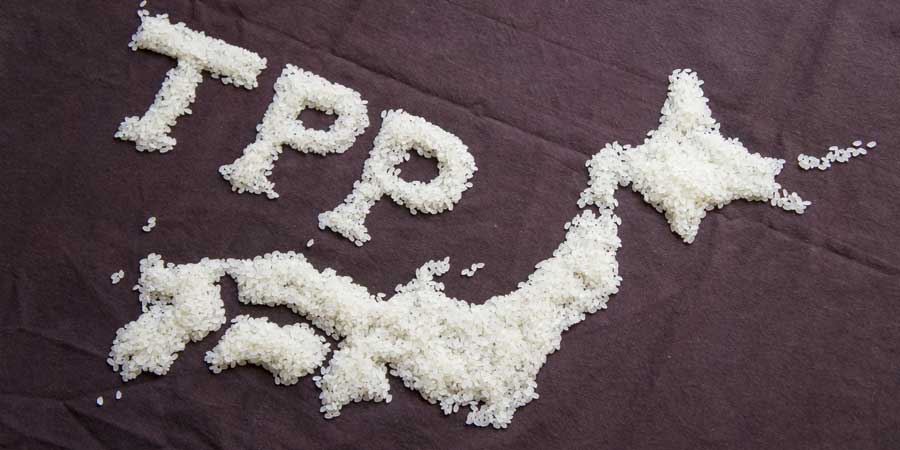
TPP a Disaster for Natural Health


TPP Deal Finally Revealed

Details of the long-secret Trans-Pacific Partnership are public at last: it will undermine the safety of our food supply, make medicine more expensive, and give power to the biotech monopoly. Action Alert!

A few weeks ago, the full text of the Trans-Pacific Partnership (TPP) trade deal was finally released after many years of closed-door negotiations between officials from the US and eleven other countries, all of whom border the Pacific Ocean. Its provisions were apparently kept secret from all but the biotech and pharmaceutical industries.

Leaked documents during the trade negotiations provided reason to be concerned about the final agreement. And now, a review of the deal’s twenty-nine chapters and five thousand pages proves these early concerns were completely justified. The final package now awaits a vote in Congress, which is likely to take place in Spring 2016.

Here are some of the most pressing concerns for natural health advocates:

It Undermines the Safety of the Food Supply


The TPP contains a number of provisions that threaten current food safety laws.

Generally speaking, passage of the TPP would mean that any US food safety law concerning things like pesticides, food additives, or labeling that is more stringent than “international standards” may be considered an “illegal barrier” to trade, and subject to enforcement. We have learned to beware of such “international standards.” They are largely determined by global special interests.

The TPP expands corporate power in other ways. The deal includes an investor-state dispute settlement (ISDS) system in which multinational corporations can challenge a host company’s regulations in an international court. ISDS has been a fixture in other trade treaties, including NAFTA (the North Atlantic Free Trade Agreement), and has been used to challenge countries’ economic policies, anti-smoking efforts, and environmental preservation laws. It is another giveaway to Big Food and other powerful multinational interests—a recurring theme throughout the TPP document.
The trade agreement also undercuts US efforts to inspect food imports. The agreement limits food import inspections at the border “to what is reasonable and necessary,” and if an issue arises, a country must also provide an “opportunity for a review of the decision.” This provision, referred to as the Rapid Response Mechanism, may give exporting countries the right to challenge basic food safety provisions in the US.

It Gives New Patent Protections to Big Pharma


The TPP contains an entire chapter on intellectual property rights, with many provisions relating to pharmaceutical patents. No doubt heavily influenced by the pharmaceutical industry, the trade deal will force signatory countries to accept many of the same patent laws that have kept drug prices so astronomically high in the US.

The deal would extend and broaden certain patent and data protections for the pharmaceutical industry, which Big Pharma can then use to keep prices high and delay competition from generics. It is a wonderful gift to the pharmaceutical industry—but a grave loss to patients in developing countries looking for access to affordable drugs.

The TPP also allows a practice known as “evergreening,” which lets drug companies extend a patent on an old drug when it can be used to treat a new condition—another boon for Big Pharma’s monopoly power.

Even when Big Pharma loses in the TPP, it wins. One of the more controversial topics in TPP negotiations concerned patent and data protections for biologic drugs—medicines derived not from inert chemical compounds but from living organisms. Big Pharma wanted twelve years of exclusivity— they already have this in the US—and US trade officials pushed hard in the negotiations to make this the standard. Instead, the deal grants them at least five years of exclusivity and as much as eight.

It’s Also a Gift to Biotech Seed Companies


Finally, the TPP deal expands biotech’s monopoly over the seed industry. The deal requires all twelve countries to join a number of global intellectual property treaties. One of these treaties is the 1991 International Convention for the Protection of New Varieties of Plants (UPOV91), which emphasizes the rights of seed companies over farmers. Among other things, UPOV91:

  • Requires intellectual property (IP) protection for all plant species;
  • Provides IP protection for 20 to 25 years; and
  • Stops farmers from exchanging seeds—a common and important practice in many developing nations and indeed throughout human history.

In countries that have not already turned agriculture over to the biotech industry, this could mean a substantial rewrite of regulations meant to protect farmers.

Other treaties that signatory countries are compelled to join make it easier to apply for patents—making it very likely that more plants and seeds will be patented.

If these gifts to industry were not enough, President Obama moved earlier this summer to have the deal “fast-tracked”—that is, Congress will be given a fixed period to review the agreement, after which time legislators must make a yes/no vote without the possibility of amending the deal. Essentially, it’s “take it or leave it.”

We say: leave it. And if the US does reject it, do not worry about losing the reduction of tariffs that is already included. There will just be a second (and, we hope, a better) version to replace it.
Action Alert! Write to your members of Congress and urge them to oppose the TPP deal, which undermines consumers and farmers and extends monopoly rights to major industries. Please send your message immediately.


Take-Action


Wednesday, September 30, 2015

Think you can avoid glyphosate by buying organic? Think again. Investigation finds many products in the US organic grain market contain glyphosate residue.


contaminated_wheat_grain
Think you can avoid glyphosate by buying organic? Think again. A new investigation by Tropical Traditions reveals that many products in the organic grain market in the U.S. contain glyphosate residue at levels almost the same as conventional grains.

Brian Shilhavy
Health Impact News Editor

With over 80% of the U.S. food supply now reportedly contaminated with the herbicide glyphosate, many people are turning to USDA certified organic products to avoid this toxic chemical. Current USDA NOP (National Organic Program) standards do not allow the use of the herbicide glyphosate on organic crops.

However, a new investigation by Tropical Traditions has revealed that the U.S. organic grain market is contaminated with glyphosate.

Tropical Traditions has sold organic grains for years. After reading new research about the issue of “crop desiccation” done by using glyphosate on wheat and other grains just prior to harvest, Tropical Traditions decided to first test some commercial wheat products with wheat grown in Montana, North Dakota, and Canada. They sent the commercial samples to a well-known and respected laboratory to test for glyphosate.

All tested positive for glyphosate residue. The range was from 0.07 mg/kg to 0.09 mg/kg. Keep in mind this is glyphosate found in non-GMO crops. For a GMO crop such as GMO soybeans, which are sprayed heavily with glyphosate, the range is typically between 3.3 and 5.7 mg/kg. (Source.)
Next, Tropical Traditions tested the USDA certified organic grains from suppliers they had been using, sourced mainly from western states such as Montana and Idaho. Sadly, the presence of glyphosate residue was found in organic wheat and other organic grains, including organic barley, oats, spelt, and einkorn. The range was from 0.03 to 0.06 mg/kg, just slightly lower than the conventional grains that were tested.

The only organic grains that tested clean were organic rye and organic millet. There was also one variety of organic wheat from small-scale farmers in Wisconsin that tested clean from glyphosate.

Why Should We be Concerned about Glyphosate?

Glyphosate is in 80% of our food supply in the U.S., and some scientists believe it may well be the most toxic chemical ever approved for commercial use. Glyphosate is now linked to kidney disease, antibiotic resistant bacteria, inflammatory bowel disease, obesity, depression, ADHD, autism, Alzheimer’s disease, Parkinson’s disease, ALS, multiple sclerosis, cancer, cachexia, infertility, and developmental malformations. It destroys the microbiome of humans and plants, which is the root cause of many modern diseases.


Read More Here

Fears mount that the USDA's organic certification process is being hijacked by corporate interests

 
 Natural News
..
organic


(NaturalNews) Some organic food experts are worried that the term used to describe non-genetically modified crops and produce may soon become nearly meaningless, thanks in large part to undue (read corporate) influence on the Department of Agriculture.

According to Jerome Rigot, PhD, writing in a blog posted at the Cornucopia Institute, which promotes food safety backed by science, it may no longer be accurate to rely on the USDA's "organic" labeling as remaining "true to its mandate of assuring consumers that food under this label is truly healthy and grown or raised with minimal impact to the environment," as well as respecting "the health and well-being of the workers and animals involved."

Rigot notes that, among other concerns, Consumers Union, the publisher of Consumer Reports, recently downgraded its rating of the Agriculture Department's organic seal and label. The director of the Consumer Safety and Sustainability Center for the magazine, Dr. Urvashi Rangan, testified to the National Organic Standards Board in late 2014: "Organic is slipping. And as a result, we have downgraded its rating from highly meaningful to meaningful." He further noted that the rule of the magazine "is to help educate people about what organic means as well as what it doesn't mean."
Regarding these concerns, Rigot wrote:

As an example, the Cornucopia Institute filed formal legal complaints with the USDA in December 2014 against 14 giant poultry and dairy CAFOs (read: concentrated animal feeding operations or "factory farms") for allegedly violating the USDA organic regulations requiring outdoor and pasture access. Each complaint was summarily dismissed, without an investigation, by the enforcement division of the National Organic Program (NOP), which stated, "The NOP has reviewed these complaints and has determined that investigation is unwarranted."

Inept, corporatists or lobbyists

The determination was odd, says Rigot, because literally hundreds of high-res photos, satellite imagery and state regulatory documents were submitted as evidence to the NOP which, together, should have produced more than enough doubt to motivate someone to launch an investigation.
A former NOSB board member who manages the country's first certified organic dairy farm, Kevin Englebert, was clearly disappointed by the NOP decision, seeing it as a lapse of the organization's responsibilities.

"For the NOP to not even investigate these facilities means one of three things: 1) the personnel who made that decision are inept, 2) they are too close and friendly with corporate lobbyists and multimillion-dollar certifiers that are involved in the process, or 3) the most likely scenario, corrupt politicians are preventing them from enforcing the law," he said, as quoted by Rigot, who intimated that elements of all three reasons might be at play.

He noted that the National Organic Program is a very small part of the Agriculture Department. However, many large corporations have a significant vested interest in organic foods, especially the processed foods industry (including General Mills, Smuckers, Coca-Cola, etc.), and similar to GMO corporations, they'll do whatever it takes to expand their bottom line.

"Circumstantial evidence makes it reasonable to conclude that the same type of undue industry influence that appears to have prevented Vilsack and the USDA from acting quickly to end the Salmonella outbreak [in 2014] and limit the health toll is behind efforts to dilute the federal organic standards, control the NOP leadership, and limit or obstruct the ability of the congressionally authorized National Organic Standard Board from doing its job efficiently and with integrity," Rigot wrote.

For more breaking news regarding organic agriculture, check out Organics.news, powered by FETCH.news.

Compromised board members

In September 2014, we reported that the Cornucopia Institute had conducted a study to examine the voting records and backgrounds of the 15 members of the NOSB.

The board is an advisory body created by the secretary of agriculture to make recommendations aimed at preserving and protecting the organic farming industry. What's more, the board is also required to maintain and update the National List of Approved and Prohibited Substances – a list that identifies substances and other compounds that cannot be used in organic crop and livestock production.

The NOSB's seats are supposed to be filled with members representing farmers, environmentalists, public interest advocates, handlers, retailers, scientists and a USDA certifying agent. However, Cornucopia found in its study that corporate representatives were filling seats intended for farmers and other independent organic industry stakeholders, often leading to decisions that were not beneficial to the organic food and livestock industry.

Details surrounding that study are posted here.

Sources:
Cornucopia.org
NaturalNews.com
AMS.USDA.gov

Fears mount that the USDA's organic certification process is being hijacked by corporate interests

 
 Natural News
..
organic


(NaturalNews) Some organic food experts are worried that the term used to describe non-genetically modified crops and produce may soon become nearly meaningless, thanks in large part to undue (read corporate) influence on the Department of Agriculture.

According to Jerome Rigot, PhD, writing in a blog posted at the Cornucopia Institute, which promotes food safety backed by science, it may no longer be accurate to rely on the USDA's "organic" labeling as remaining "true to its mandate of assuring consumers that food under this label is truly healthy and grown or raised with minimal impact to the environment," as well as respecting "the health and well-being of the workers and animals involved."

Rigot notes that, among other concerns, Consumers Union, the publisher of Consumer Reports, recently downgraded its rating of the Agriculture Department's organic seal and label. The director of the Consumer Safety and Sustainability Center for the magazine, Dr. Urvashi Rangan, testified to the National Organic Standards Board in late 2014: "Organic is slipping. And as a result, we have downgraded its rating from highly meaningful to meaningful." He further noted that the rule of the magazine "is to help educate people about what organic means as well as what it doesn't mean."
Regarding these concerns, Rigot wrote:

As an example, the Cornucopia Institute filed formal legal complaints with the USDA in December 2014 against 14 giant poultry and dairy CAFOs (read: concentrated animal feeding operations or "factory farms") for allegedly violating the USDA organic regulations requiring outdoor and pasture access. Each complaint was summarily dismissed, without an investigation, by the enforcement division of the National Organic Program (NOP), which stated, "The NOP has reviewed these complaints and has determined that investigation is unwarranted."

Inept, corporatists or lobbyists

The determination was odd, says Rigot, because literally hundreds of high-res photos, satellite imagery and state regulatory documents were submitted as evidence to the NOP which, together, should have produced more than enough doubt to motivate someone to launch an investigation.
A former NOSB board member who manages the country's first certified organic dairy farm, Kevin Englebert, was clearly disappointed by the NOP decision, seeing it as a lapse of the organization's responsibilities.

"For the NOP to not even investigate these facilities means one of three things: 1) the personnel who made that decision are inept, 2) they are too close and friendly with corporate lobbyists and multimillion-dollar certifiers that are involved in the process, or 3) the most likely scenario, corrupt politicians are preventing them from enforcing the law," he said, as quoted by Rigot, who intimated that elements of all three reasons might be at play.

He noted that the National Organic Program is a very small part of the Agriculture Department. However, many large corporations have a significant vested interest in organic foods, especially the processed foods industry (including General Mills, Smuckers, Coca-Cola, etc.), and similar to GMO corporations, they'll do whatever it takes to expand their bottom line.

"Circumstantial evidence makes it reasonable to conclude that the same type of undue industry influence that appears to have prevented Vilsack and the USDA from acting quickly to end the Salmonella outbreak [in 2014] and limit the health toll is behind efforts to dilute the federal organic standards, control the NOP leadership, and limit or obstruct the ability of the congressionally authorized National Organic Standard Board from doing its job efficiently and with integrity," Rigot wrote.

For more breaking news regarding organic agriculture, check out Organics.news, powered by FETCH.news.

Compromised board members

In September 2014, we reported that the Cornucopia Institute had conducted a study to examine the voting records and backgrounds of the 15 members of the NOSB.

The board is an advisory body created by the secretary of agriculture to make recommendations aimed at preserving and protecting the organic farming industry. What's more, the board is also required to maintain and update the National List of Approved and Prohibited Substances – a list that identifies substances and other compounds that cannot be used in organic crop and livestock production.

The NOSB's seats are supposed to be filled with members representing farmers, environmentalists, public interest advocates, handlers, retailers, scientists and a USDA certifying agent. However, Cornucopia found in its study that corporate representatives were filling seats intended for farmers and other independent organic industry stakeholders, often leading to decisions that were not beneficial to the organic food and livestock industry.

Details surrounding that study are posted here.

Sources:
Cornucopia.org
NaturalNews.com
AMS.USDA.gov

Wednesday, April 2, 2014

National mental health and disability advocacy groups joined together to decry Forced Treatment Provision hidden in the patch to Medicare regulations that has nothing to do with Medicare (H. R. 4302)


Expensive pills


March 29, 2014
There is a little known bill in the works which would force people in crisis into forced psychiatric treatment. Mad in America reported on March 28, 2014 that mental health advocates are urging protest against a forced treatment addition to a new Medicare bill. Many national mental health and disability advocacy groups have joined together to urge people to contact their senators in order to protest a section of a bill which was rushed through the House of Representatives by voice vote this week. This bill, Section 224 of HR4302, is up for a vote in the Senate on Monday.
Raymond Bridge, public policy director of the National Coalition for Mental Health Recovery has said: “In its rush to fix a problem with Medicare, the House passed a bill including a highly controversial program, involuntary outpatient commitment, with no debate and no roll call vote.” It appears to Bridge that the Senate may pass a version of the House bill which includes this troublesome provision on Monday. Daniel Fisher, M.D., Ph.D. has commented about this bill, saying: “It would bring America back to the dark ages before de-institutionalization, when people with mental health conditions languished in institutions, sometimes for life.”

Read More Here

.....

Mental Health Advocates Decry Forced Treatment Provision in "Doc Fix" Bill


WASHINGTON, March 28, 2014 /PRNewswire-USNewswire/ -- The bill rushed through the House of Representatives by voice vote yesterday to patch Medicare regulations includes a highly controversial provision that has nothing to do with Medicare, and that would subject people in crisis to forced treatment. Studies have shown that such force causes trauma and drives people away from treatment, mental health advocates warned.
Today, an array of national mental health and disability advocacy groups joined together to decry this provision, which they view as a regressive attack on hundreds of thousands of Americans with serious mental health conditions.
"In its rush to fix a problem with Medicare, the House passed a bill including a highly controversial program, involuntary outpatient commitment, with no debate and no roll call vote," said Raymond Bridge, public policy director of the National Coalition for Mental Health Recovery (NCMHR), a coalition of 32 statewide organizations and others representing individuals with mental illnesses. "And it seems that the Senate may pass a version of the House bill including this troubling provision on Monday," Bridge added.
The 123-page Protecting Access to Medicare Act of 2014, H.R. 4302, includes a four-year, $60 million grant program (Sec. 224) to expand involuntary outpatient commitment (IOC) – also called Assisted Outpatient Treatment (AOT) – in states that have laws authorizing IOC. The laws allow courts to mandate someone with a serious mental illness to follow a specific treatment plan, usually requiring medication. The facts show that involuntary outpatient commitment is not effective, involves high costs with minimal returns, is not likely to reduce violence, and that there are more effective alternatives.
Assisted Outpatient Treatment is central to the controversial Helping Families in Mental Health Crisis Act (H.R. 3717), proposed by Rep. Tim Murphy in December 2013.
"This legislation would eliminate initiatives that use evidence-based, voluntary, peer-run services and family supports to help people diagnosed with serious mental illnesses to recover," said Daniel Fisher, M.D., Ph.D., a psychiatrist and an NCMHR founder. "It would bring America back to the dark ages before de-institutionalization, when people with mental health conditions languished in institutions, sometimes for life."
The provisions of H.R. 3717 would exchange low-cost, community-based services with good outcomes for high-cost yet ineffective interventions, according to the NCMHR; the National Disability Rights Network (NDRN), the non-profit membership organization for the federally mandated Protection and Advocacy (P&A) Systems and Client Assistance Programs (CAP) for individuals with disabilities; and the National Council on Independent Living (NCIL), which advances independent living and the rights of people with disabilities through consumer-driven advocacy.

Read More Here

Enhanced by Zemanta