Showing posts with label Pharmaceutical industry. Show all posts

Wednesday, December 2, 2015

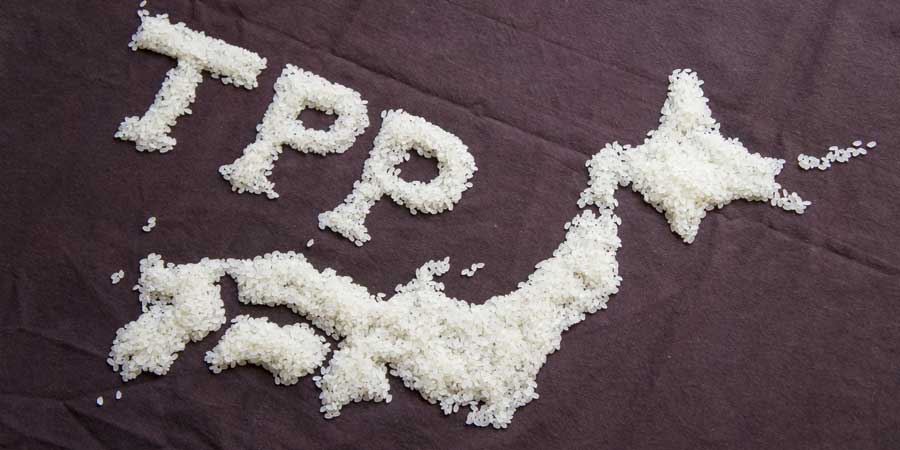
TPP a Disaster for Natural Health


TPP Deal Finally Revealed

Details of the long-secret Trans-Pacific Partnership are public at last: it will undermine the safety of our food supply, make medicine more expensive, and give power to the biotech monopoly. Action Alert!

A few weeks ago, the full text of the Trans-Pacific Partnership (TPP) trade deal was finally released after many years of closed-door negotiations between officials from the US and eleven other countries, all of whom border the Pacific Ocean. Its provisions were apparently kept secret from all but the biotech and pharmaceutical industries.

Leaked documents during the trade negotiations provided reason to be concerned about the final agreement. And now, a review of the deal’s twenty-nine chapters and five thousand pages proves these early concerns were completely justified. The final package now awaits a vote in Congress, which is likely to take place in Spring 2016.

Here are some of the most pressing concerns for natural health advocates:

It Undermines the Safety of the Food Supply


The TPP contains a number of provisions that threaten current food safety laws.

Generally speaking, passage of the TPP would mean that any US food safety law concerning things like pesticides, food additives, or labeling that is more stringent than “international standards” may be considered an “illegal barrier” to trade, and subject to enforcement. We have learned to beware of such “international standards.” They are largely determined by global special interests.

The TPP expands corporate power in other ways. The deal includes an investor-state dispute settlement (ISDS) system in which multinational corporations can challenge a host company’s regulations in an international court. ISDS has been a fixture in other trade treaties, including NAFTA (the North Atlantic Free Trade Agreement), and has been used to challenge countries’ economic policies, anti-smoking efforts, and environmental preservation laws. It is another giveaway to Big Food and other powerful multinational interests—a recurring theme throughout the TPP document.
The trade agreement also undercuts US efforts to inspect food imports. The agreement limits food import inspections at the border “to what is reasonable and necessary,” and if an issue arises, a country must also provide an “opportunity for a review of the decision.” This provision, referred to as the Rapid Response Mechanism, may give exporting countries the right to challenge basic food safety provisions in the US.

It Gives New Patent Protections to Big Pharma


The TPP contains an entire chapter on intellectual property rights, with many provisions relating to pharmaceutical patents. No doubt heavily influenced by the pharmaceutical industry, the trade deal will force signatory countries to accept many of the same patent laws that have kept drug prices so astronomically high in the US.

The deal would extend and broaden certain patent and data protections for the pharmaceutical industry, which Big Pharma can then use to keep prices high and delay competition from generics. It is a wonderful gift to the pharmaceutical industry—but a grave loss to patients in developing countries looking for access to affordable drugs.

The TPP also allows a practice known as “evergreening,” which lets drug companies extend a patent on an old drug when it can be used to treat a new condition—another boon for Big Pharma’s monopoly power.

Even when Big Pharma loses in the TPP, it wins. One of the more controversial topics in TPP negotiations concerned patent and data protections for biologic drugs—medicines derived not from inert chemical compounds but from living organisms. Big Pharma wanted twelve years of exclusivity— they already have this in the US—and US trade officials pushed hard in the negotiations to make this the standard. Instead, the deal grants them at least five years of exclusivity and as much as eight.

It’s Also a Gift to Biotech Seed Companies


Finally, the TPP deal expands biotech’s monopoly over the seed industry. The deal requires all twelve countries to join a number of global intellectual property treaties. One of these treaties is the 1991 International Convention for the Protection of New Varieties of Plants (UPOV91), which emphasizes the rights of seed companies over farmers. Among other things, UPOV91:

  • Requires intellectual property (IP) protection for all plant species;
  • Provides IP protection for 20 to 25 years; and
  • Stops farmers from exchanging seeds—a common and important practice in many developing nations and indeed throughout human history.

In countries that have not already turned agriculture over to the biotech industry, this could mean a substantial rewrite of regulations meant to protect farmers.

Other treaties that signatory countries are compelled to join make it easier to apply for patents—making it very likely that more plants and seeds will be patented.

If these gifts to industry were not enough, President Obama moved earlier this summer to have the deal “fast-tracked”—that is, Congress will be given a fixed period to review the agreement, after which time legislators must make a yes/no vote without the possibility of amending the deal. Essentially, it’s “take it or leave it.”

We say: leave it. And if the US does reject it, do not worry about losing the reduction of tariffs that is already included. There will just be a second (and, we hope, a better) version to replace it.
Action Alert! Write to your members of Congress and urge them to oppose the TPP deal, which undermines consumers and farmers and extends monopoly rights to major industries. Please send your message immediately.


Take-Action


Saturday, October 24, 2015

Big Pharma Caught Manipulating Antidepressant Drug Trials Putting Teenagers in Grave Danger


Paxil
Paxil , Wkimedia.org
..........


By Kristen Anderson

The FDA requires each new drug to undergo rigorous testing and stand up to scientific scrutiny, a process that is designed to protect consumers by thoroughly examining the effects of new medications before they are available to the public. But few people stop to realize that these studies which are mandated by the FDA, are actually funded by the drug companies themselves, clearly a conflict of interest.

Big Pharma has so much influence in the field of scientific research, that the professionals who depend on peer-reviewed studies, i.e. doctors, psychiatrists, nurses, etc., prefer to read meta-analyses as a way to ensure objectivity. These meta-analyses combine evidence from multiple studies to weed out studies that produced irregular or uncommon results. In this way, the meta-analysis is regarded as the purest form of research and is heavily relied on by medical professionals. But, again, if Big Pharma has essentially infiltrated the research industry to the point that the majority of studies are being skewed, even a meta-analysis is unreliable.


Take for example Study 329. GlaxoSmithKline funded Study 329 between 1994 and 1998 and the results showed that Paxil was safe for teenagers. This study was published in 2001 in the Journal of the American Academy of Child and Adolescent Psychiatry (JAACAP), a well-respected and peer-reviewed journal. It was later found, however, that the authors had downplayed the negative findings and that GlaxoSmithKline had actually hired a PR firm to ghost write the article! Paxil actually clearly increases suicidal thoughts and impulses among teenagers and this effect was downplayed in the article and not even addressed in the conclusion (the most-read section of a scientific study).


Read More Here

Tuesday, September 22, 2015

Daraprim priced at just $1 / pill a few years ago has now spiked to $750 per pill. All thanks to the parasitic price gouging Big Pharma CEO Martin Shkreli, who calls it a bargain!

 NaturalNews

drug


Outrageous Big Pharma greed on parade as $1 pill for treating fatal infection suddenly skyrockets to $750 PER PILL!


(NaturalNews) The total greed of Big Pharma is on parade this week as a company called Turing Pharmaceuticals took ownership of a lifesaving medication that treats parasitic infections like malaria. The pill -- mostly purchased by AIDS and cancer patients -- used to cost $1 each. But now, thanks to Turing Pharmaceuticals and its profiteering CEO Martin Shkreli, each pill will cost you $750.
Remarkably, The New York Times even covered the story, reporting, "Specialists in infectious disease are protesting a gigantic overnight increase in the price of a 62-year-old drug that is the standard of care for treating a life-threatening parasitic infection."
"The drug, called Daraprim, was acquired in August by Turing Pharmaceuticals, a start-up run by a former hedge fund manager. Turing immediately raised the price to $750 a tablet from $13.50, bringing the annual cost of treatment for some patients to hundreds of thousands of dollars."
This drug was priced at just $1 a few years ago. It went up to $13.50 over the last decade or so, and now has spiked to $750 per pill. This means a single treatment course could cost more than buying a home.


This is all explained by the "Taiwanese animators" in this highly educational animated short video:


Big Pharma greed on parade and out of control

Why is Turing Pharmaceuticals charging $750 a pill? Because they CAN. Like every other drug company in the world, they're going to gouge the consumer and extract the maximum dollars possible. Big Pharma is really about the profits, you see, and not at all interested in "helping humanity" as their ridiculous TV ads claim.

Is it any wonder that 1 out of every 5 dollars spent in the U.S. economy is spent on "sick care" costs? Check out the following chart that shows how different countries spend money in different ways. Care to guess which country spends the most on health care? The United States by a long shot!


Read More Here

Tuesday, March 11, 2014

FDA’s Sneak Attempt to Ban Another B Vitamin


Breaking News: FDA’s Sneak Attempt to Ban Another B Vitamin

March 11, 2014
 
Vitamins Close-upYou can’t live without this vitamin. But the FDA wants to reserve the natural form for monopoly drug companies, leaving only the synthetic form for supplements. Urgent Action Alert!

The FDA has just released a new 109-page guidance on the revision of nutrition and supplement labels. (You can read more about the implications of the new labeling rules in our other article this week.)

On page 69, the agency slipped in two little paragraphs that could risk the health of millions of people who desperately need folate. It’s a sneak attack so quiet and unobtrusive that few people will even realize it’s there.

According to the guidance, the word “folate” will be banned from the Supplement Fact labels—only the term “folic acid” will be allowed.

Folate is the naturally occurring form of the water-soluble vitamin B9. It is found in foods such as black-eyed peas, chickpeas and other beans, lentils, spinach, turnip greens, asparagus, avocado, and broccoli, but is also available as a supplement.

The human body needs folate to synthesize and repair its DNA. It’s especially important during the kind of rapid cell division and growth seen in infancy and pregnancy. Children and adults both require folate to produce healthy red blood cells and prevent anemia among many other vital functions.

Folic acid, on the other hand, is synthetically produced, and refers to just one member of the folate group: pteroylmonoglutamic acid. While folic acid occurs only rarely in whole foods, it’s extremely stable, which is why it’s widely used in dietary supplements and to fortify processed foods.

The important thing to remember is that folic acid is not itself biologically active, though for most people the liver can convert it to the folate we need. Most, however, does not mean all. It’s estimated that 30% to 40% of the population can’t efficiently convert synthetic folic acid into folate.

In other words, about a third of the human population has two potential problems: a deficiency in folate (because it is hard to get enough from a diet full of processed foods), and possibly even an excess of folic acid (because their body can’t metabolize what could become an overabundance of folic acid present in “fortified” foods):

  • According to Dr. Jonathan V. Wright, folate deficiency is one of the most dangerous medical conditions, leading to Alzheimer’s and other brain diseases. If pregnant women are deficient in it, it can also lead to spina bifida and other neural tube birth defects in their children.


Note that the FDA is not exactly banning the inclusion of folate and requiring the inclusion of folic acid in supplements. As usual, it is playing a much more subtle insider’s game. It is simply banning supplement producers from using the word folate on their labels and conversely only allowing the word folic acid on their labels. But it would of course be fraudulent to put folic acid on your label and then use something else. The FDA understands that perfectly.

So on what grounds is the agency banning the use of the word folate on the label? Believe it or not, it is arguing that folate can only be found in “conventional” (whole or minimally processed) foods.

Before we examine this absurd claim, we must first explain that limiting a folate claim to food would not prevent drug companies from becoming the only source of folate outside of food. Drug companies don’t care what a chemical is called so long as they can create a high priced monopoly in it. Ironically, the FDA’s position that folate can only be used to describe what is in food would still turn folate over to the drug companies—so long as supplement labels can only use the term folic acid.

So what about the agency’s assertion that “folate” can only be found in food? “Folate” is actually a term for a whole B vitamin group. The term “folate” we see on dietary supplement labels refers to “dietary folates,” members of the folate group that can be naturally found in foods. Folinic acid (5-FTHF), calcium methylfolate, and various other tetrahydrofolates can be found in dietary supplements. Many brands feature dietary folate.[1] It would be completely inaccurate and misleading to refer to these dietary folates as “folic acid.” Legally, it would be fraudulent.

Why did the FDA do this? One can only guess. But it would not be surprising if it eventually turns out to be a blatant attempt to reserve for drug companies the use of dietary folates. After all, B vitamins are not only essential for life. They are also proven therapeutic agents. Drug company research programs have been coming up short for years; new drug therapeutic agents are in very short supply.

Moreover, the drug company Merck already holds patents on Metafolin, which the body recognizes as a bioavailable dietary folate. Metafolin is licensed by dietary supplement companies for some of their products.

If, according to FDA “logic,” dietary supplements can’t contain folate like Metafolin, it would only be available from whole foods…or drugs, and only from drugs in higher doses. Since Merck would have exclusivity for a Metafolin “drug,” our guess is that they would make billions. And other forms of patentable folate could then follow.

Sound unlikely? It’s not—both forms of fish oil and vitamin D have already been turned into patented drugs. Imagine if competition from supplemental forms of fish oil or D could be wiped out at one stroke by saying no supplement label could use the term!

Read More Here
Enhanced by Zemanta

Monday, December 30, 2013

Why Are Babies Dying in China After Receiving the Hepatitis B Vaccine?


chinese baby with doctor Why Are Babies Dying in China After Receiving the Hepatitis B Vaccine?

Health Impact News

At least nine babies have died in China the past few weeks after being injected with the Hepatitis B vaccine.
In China, the Hepatitis B vaccine is given in three stages. The first shot is taken immediately after birth. The second and third shots of the vaccine are taken after a baby is one month and then six months old.
The pharmaceutical company manufacturing the vaccine has conducted quality control tests on the batch currently in the market, and has not found anything wrong with the vaccine. Similar statements have been made by health authorities:
The drug supervision department in Shenzhen says their test results indicate the vaccines were safe.
“According to our investigation, BioKangtai has produced the vaccine strictly under required standards. And their samples have passed our tests.” Wang Lifeng with Drug Administration of Shenzhen said.
The deaths, which have occurred within a very short time after receiving the vaccine, are gaining wide exposure in the China media. Because vaccines are almost always promoted as safe, injuries and deaths often are not associated with the vaccine, so there may be more deaths than have currently been reported. One of the deaths was reported by a family member after hearing about other babies dying shortly after receiving the vaccine in the media. When the family originally was fighting to save the baby from dying, they had not suspected the vaccine.


.....

NY Times

China Investigates Vaccine Maker After Deaths of Infants


SHANGHAI — Health authorities in China are investigating one of the nation’s biggest vaccine makers after eight infants died in the past two months following injections that were meant to immunize them against hepatitis B.

The government said this week that it had suspended the use of millions of doses of a hepatitis B vaccine produced by the manufacturer, Shenzhen Kangtai Biological Products. Government inspectors have been sent to examine the company’s facilities.
Six of the deaths have been linked to vaccines produced by Shenzhen Kangtai; the two other infant deaths occurred recently after the use of a hepatitis B vaccine produced by another drug maker, Beijing Tiantan Biological Products. The government did not say whether any action had been taken against Beijing Tiantan or its vaccines. Investigators have not determined the cause of the deaths or linked them directly to the injections, but the cases come at a time of growing public concern in China about food and drug safety problems.
In recent years, China has been troubled by a series of scandals, including tainted rice and milk and the mysterious appearance of thousands of dead pigs floating in the Huangpu River in Shanghai. China has vowed repeatedly to crack down on food and drug safety violations and has moved to strengthen the powers of health officials.
In the vaccine cases, the government is focusing on the role of Shenzhen Kangtai, a privately run drug maker formed in 1992 with government support and the cooperation of the American pharmaceutical company Merck.


.....

Enhanced by Zemanta

Thursday, October 17, 2013

Big Pharma and FDA: A Marriage Not Made in Heaven


In this excerpt from the new book Crony Capitalism in America 2008-2012, Hunter Lewis exposes the incestuous relationship between government and the drug industry.
Lewis, who serves as president of ANH-USA’s board of directors, has written nine books on moral philosophy, psychology, and economics, including the widely acclaimed Are the Rich Necessary? (which the New York Times called “highly provocative and highly pleasurable”). He has contributed to the New York Times, the Times of London, the Washington Post, and the Atlantic Monthly, as well as numerous websites such as Forbes.com and RealClearMarkets.com.
In his new book, Lewis shows how private interests and politicians rely upon one another—political favors in exchange for money—a system known as crony capitalism. Where do private interests such as those on Wall Street or in the drug industry stop and Washington begins? It’s impossible to say anymore.
Chapter 15 is all about the FDA, and we thought our readers would enjoy this searing behind-the-scenes look at just how deeply the US Food and Drug Administration has enmeshed itself with the pharmaceutical industry:
Big Pharma and FDA:
A Marriage Not Made in Heaven
The drug industry at one time was called the patent medicine industry. This is still the more revealing name. Drug companies devote themselves to inventing non-natural molecules for use in medicine. Why non-natural? Because molecules previously occurring in nature cannot, as a rule, be patented. It is essential to develop a patentable medicine; only a medicine protected by a government patent can hope to recoup the enormous cost of taking a new drug through the government’s approval process.
Getting a new drug through the US Food and Drug Administration (FDA) is not just expensive ($1 billion on average). It also requires having the right people on your side. Drug companies know that they must hire former FDA employees to assist with the process. They also hire leading experts as consultants, some of the same experts who may be called on by the FDA to serve on its screening panels. Direct payments must also be made to support the FDA’s budget.
All these financial ties encourage a “wink and a nod” relationship between researchers working for drug companies and regulators, who are often the same people, thanks to the revolving door. As the Economist magazine writes:
Pharmaceutical companies bury clinical trials which show bad results for a drug and publish only those that show a benefit. The trials are often run on small numbers of unrepresentative patients, and the statistical analyses are massaged to give as rosy a picture as possible. Entire clinical trials are run not as trials at all, but as under-the-counter advertising campaigns designed to persuade doctors to prescribe a company’s drug.
The bad behavior extends far beyond the industry itself. Drug regulators, who do get access to some of the hidden results, often guard them jealously, even from academic researchers, seeming to serve the interests of the firms whose products they are supposed to police. The French journal Prescrire applied to Europe’s drug regulator for information on the diet drug rimonabant. The regulator sent back 68 pages in which virtually every sentence was blacked out. . . .
Medical journals frequently fail to perform basic checks on the papers they print, so all sorts of sharp practice goes uncorrected. Many published studies are not written by the academics whose names they bear, but by commercial ghostwriters paid by drug firms. Doctors are bombarded with advertising encouraging them to prescribe certain drugs. . . .
What the Economist calls “bad behavior” also spills over from the medical world to the financial world. Just since 2008, 75 people have been charged with trying to profit from inside information about drug approvals or company mergers related to patentable drugs. One of them, an FDA chemist named Cheng Yi Liang with access to the Agency’s approval database, pleaded guilty to insider trading on 25 companies for a total gain of $3.78 million over five years. Others with larger resources to invest have made much larger sums. Rod Rothstein, the US Attorney for Maryland who helped prosecute the FDA case, has noted that “healthcare is particularly attractive to criminals because so much turns on government regulatory approval.”
Dr. Ben Goldacre, author of Bad Pharma, summarizes the entire drug approval process as follows: “[It] is broken. . . . The people you should have been able to trust to fix [the] problems have failed you.”
Although the costs of drug approval keep growing, along with the related corruption, the financial payoff for those ultimately winning approval can be astronomical, because approval also brings with it a government-protected monopoly. Only FDA-approved drugs can be prescribed within government programs such as Medicare. Doctors may prescribe unapproved substances outside of Medicare, Medicaid, or the Veteran’s Administration, but by doing so risk losing their license to practice. Some approved drugs may be priced as high as $500,000 per year per patient.
The FDA will also discourage, and often ban, substances that might compete with approved drugs. When anti-depression drugs (based on extending the life of a hormone, serotonin, inside the body) were approved, the Agency promptly banned a natural substance, L-Tryptophan, that increased serotonin, even though the natural substance was much cheaper and had long been available. Many years later, after the anti-depression drugs were well established, Tryptophan was finally allowed back, but under restrictions that made it more expensive.
In general, the FDA maintains a resolutely hostile stance toward supplements. It will not allow any treatment claims to be made for them, no matter how much science there is to support it, unless they are brought through the FDA approval process and thus become drugs. The Agency understands that this is a classic “Catch-22.” Who can afford to spend up to a billion dollars to win FDA approval of a non-patented substance? The answer is obvious: no one. So the real FDA intent is simply to eliminate any competition for patented drugs, since these drugs pay the Agency’s bills.
This FDA policy prevents millions of Americans from hearing about food or supplement remedies that are safer and cheaper than drugs. It hurts the poor and the middle class. But, ironically, it also hurts the rich, even the crony capitalist rich. A national magazine ran a profile of a Wall Street billionaire sitting in his gigantic Connecticut mansion, popping acid blockers for a stomach problem that tormented him. He was totally unaware of research suggesting that most such ailments stemmed from too little acid, not too much, and that a few simple tablets containing hydrochloric acid, one of the cheapest supplements, would probably end his pain.
Why did the billionaire not know this? The answer could not be simpler: crony capitalist drug companies earn huge profits from acid blockers, and along with their friends in government at the FDA, succeed in keeping this information hidden. So there the billionaire sits in his great mansion, unable to enjoy it because of intense stomach pain.
Drug companies and the FDA are not alone in wishing to suppress supplement alternatives to hyper-expensive patented prescription drugs. They have allies among both politicians and doctors. For example, the Archives of Internal Medicine, run by the American Medical Association, and supported financially by drug companies, often publishes flimsy studies attacking supplements, and generally ignores the considerable scientific evidence in their favor.
One such study, published October 10, 2011, by University of Michigan researchers, purported to show that taking supplements could shorten your life. It caused a media feeding frenzy, with headlines everywhere. The problem was that this study, like its predecessors, was junk science. The women in the study were asked every six years what they had taken. They were supposed to remember what they had taken for the six-year period. The reports did not have to be specific: the word “multivitamin” could mean anything. Who knows what was taken or even it if was taken? It could also be synthetic or natural.
Those who reported taking “multivitamins” were found over time to be healthier on average than others and to live longer. But the authors of the study, who clearly had an anti-supplement agenda, made numerous “adjustments” attributing the good health to other factors. Once these arbitrary “adjustments” were made, they then concluded that supplements actually made these healthier than average and longer living people unhealthier. Even after the “adjustment,” the statistical evidence was weak to nonexistent, but that did not prevent media from all over the world reporting that supplements may hasten your death.
What was behind this? The AMA seems worried about competition for its brand of medicine, which focuses almost exclusively on conventional drugs and surgery. It is especially worried about competition from “integrative” doctors who include advice about food, supplements, and exercise in their practice. The AMA and its affiliates also have a tight relationship with drug companies, and depend on them for financial support in many forms, not just journal advertising. Both the AMA and drug companies thus seem determined to trash supplements and those giving advice on supplements.


Read More Here


*****************************************************

Dr John Rengen Virapen (1/4) Big Pharma Whistleblower Speaks Out at the AZK in Germany (Full Edit)

Philip Jonkers  


Uploaded on Jul 9, 2009

 
Dr. John Rengen Virapen worked 35 years for Eli Lilly & Co as an executive. He now speaks out on the many crimes Big Pharma was and is responsible for and he himself also participated in. Unfortunately, many of its crimes go passed public awareness as it enjoys the unethical protection from its big allies, the mainstream media, the FDA and governments. 

Check out accompanying blog carrying ample background material: http://1phil4everyill.wordpress.com/2... 

 John Virapen's website - with contact info and book order instructions: http://www.johnvirapen.com/ http://www.side-effects-death.com/ 

 New interview dated 2009-07-27 on blogtalkradio: http://www.blogtalkradio.com/MedicalW...


Part 2


 Part 3


Part 4


*****************************************************


Enhanced by Zemanta