Showing posts with label European Union. Show all posts

Thursday, November 19, 2015

Diabetes, obesity linked to chemical exposure – Endocrine Society


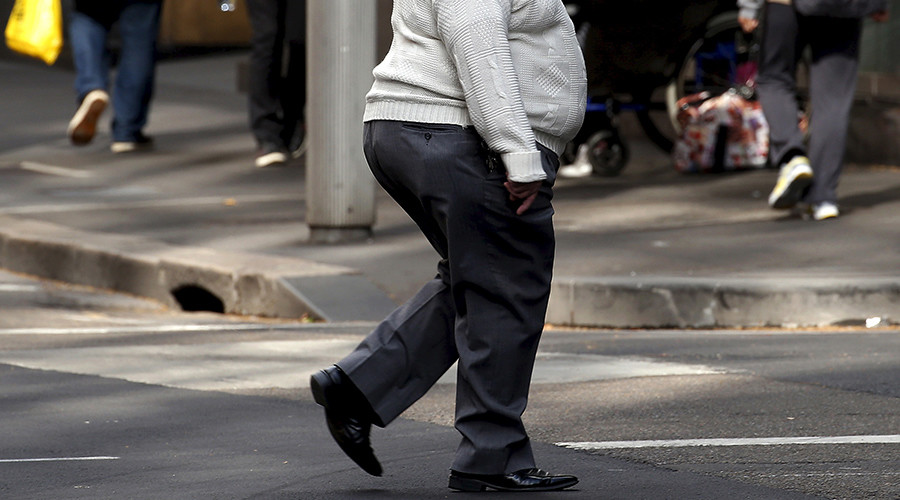
© David Gray
Scientific research has increasingly linked common chemicals found in everyday products to diabetes, obesity, cancer, and other major ailments, according to a new policy statement.
 
Endocrine-disrupting chemicals (EDCs) like bisphenol A and phthalates, found in food can linings, plastics, cosmetics, and pesticides, are common to the point that everyone on Earth has been exposed to one or more. EDCs – which influence the body's natural hormones – mimic, block, or simply interfere with hormone functions, leading to the malformation of cells.

The Endocrine Society now says in a new scientific statement that research in recent years has repeatedly pointed to links between these and other chemicals to not only diabetes and obesity, but infertility and breast cancer.

"In 2015, there is far more conclusive evidence about whether, when, and how endocrine-disrupting chemicals perturb endocrine systems, including in humans," said the Endocrine Society, which includes health specialists involved in EDC research.


READ MORE: TTIP will legalize cancer-causing chemicals banned by EU, trade union warns


"Thus, it is more necessary than ever to minimize further exposures, to identify new endocrine disrupting chemicals as they emerge, and to understand underlying mechanisms in order to develop methods to enable interventions in cases of endocrine disrupting chemical-associated disease. This is especially important because new chemicals may be released into the marketplace without appropriate safety testing."


Read More Here

Friday, May 16, 2014

Cheerios Go Non-GMO : We spoke and they listened. Time to reward their effort and let them know we are watching!


.....


January 18, 2014 | 49,140 views


By Dr. Mercola
Cereal giant General Mills has announced that its original-flavor Cheerios will soon be made without the use of genetically modified (GM) ingredients.
It's a major step in the right direction that also highlights the changing attitudes among the US public regarding genetically modified organisms (GMOs)… increasing numbers of people simply do not want them in our food.
For some of you, the news that Cheerios even contained GM ingredients to begin with may come as a surprise, as GM ingredients are not required to be labeled in the US (the way they are in the European Union or EU).
Others may have assumed they were GM-free, since they're made mostly from oats, not corn or soy, which are two of the most commonly used GMOs in the US. Unbeknownst to many, however, Cheerios were formerly made using GM cornstarch and sugar.
Most likely, though, General Mills' move was made in response to recent consumer backlash, proving once again that the power to clean up the food supply lies in your hands.

Consumer Backlash Likely Drove General Mills to Drop GMOs from Cheerios


General Mills reported earlier this month that they've already begun producing Cheerios made without GMOs. To be clear, the change will only apply to its original-flavor cereal (not Apple Cinnamon or others), and the boxes will be labeled "Not Made with Genetically Modified Ingredients."
There will also be a disclaimer that trace amounts of GMO ingredients may be present due to contamination during the manufacturing process.1 The move comes just weeks after General Mills' Cheerios brand released a Facebook app asking "fans" to "show what Cheerios mean to them."
The app allowed users to create their own placards using Cheerios' trademarked black font on a yellow background, where dots and periods featured little cheerios. One day later, the app was abruptly pulled after thousands of angry "fans" expressed their disgust over the company's betrayal. What betrayal, you ask?
General Mills donated more than $1.1 million to the "No on Prop. 37" campaign to defeat California's Proposition 37, which would have required GM foods to be labeled as such and prevented GM foods from being mislabeled as "natural."
Proposition 37 was defeated back in November 2012 due to massive donations from multinational corporations, such as General Mills, which hide GM ingredients behind natural labels and "wholesome" advertising. Two of the first three ingredients in Cheerios and Honey Nut Cheerios are cornstarch and sugar—two ingredients that are often genetically engineered.

You Spoke… and General Mills Listened!


Many people are now waking up to the fact that there is an ever-growing number of genetically engineered ingredients in our food that we had no idea were there. As far as Cheerios goes, you'd never get the impression there might be anything unnatural about their cereal.
But when it came out that the company had been donating to efforts to keep GM labeling silent, their trust for providing "wholesome goodness" (as their Web site claims) was badly broken.
After all, they would rather pay millions to hide that their products contain GM ingredients rather than give you the choice to buy something else… or reformulate their product without GM ingredients (which would be the sensible thing to do if they were really concerned about children's long-term health and well-being).
After all the backlash – remember, there were thousands of people speaking out against their GMO deception on their Facebook page – General Mills got proactive with damage control by removing the GM ingredients from their flagship product. Now, if they'll extend it to their other products as well, we'll be getting somewhere…

Monsanto Disses GMO-Free Cheerios as a Marketing Stunt

Monsanto, the world leader in genetically modified (GM) crops and seeds, dismissed General Mills' move to make Cheerios GMO-free, calling it a 'marketing' move. CEO Hugh Grant focused his comments on the fact that oats are the main ingredient in original Cheerios, and there are no GM oats.
Still, there is GM corn and GM sugar, two other ingredients used in the cereal. Clearly Monsanto is keen on downplaying the positive press that General Mills is receiving over labeling their products as free from GMOs. Could this signal the beginning of the end for the unspoken partnership between biotech and the junk-food industry?
CEO Hugh Grant said:2
"The interesting thing with Cheerios over that particular brand is they're made from oats, and there are no biotech oats in existence today. So I think we've talked for years about we would support voluntary labeling and that was up to companies to do. I think we saw last week was the first real life example of true voluntary labeling and probably a little bit of marketing as well."
Monsanto is not going to let GM labeling happen without a fight, however. Last year the company donated nearly $5 million to the anti-labeling campaign in Washington State, and in 2012 they donated more than $7 million to help defeat California's Proposition 37.
Curiously enough, Monsanto is more than willing to "support" GMO labeling once they run out of options. They even ran an ad in the UK letting British consumers know how much the company supports the mandatory labeling of their goods—even urging Britons to seek such labels out—ostensibly because Monsanto believes "you should be aware of all the facts before making a decision."

Forbes Asks: Are GMO-Free Cheerios "The First Domino"?


The first white flag from the food industry has gone up, and even Forbes had to admit it. With increasing GMO-labeling initiatives on state ballots and regulators considering labeling changes on a national level, the food industry has been standing together to defeat this rising opposition … until now.
General Mills' move sets it apart from the other industry giants in showing that they are responding to consumer demand. It's a wise move that will win them major favor among the growing number of Americans seeking safer food while costing them little (the actual tweaking of their recipe to become GMO-free will be minimal). This may very well be the 'first domino' to fall …
In fact, Post Foods recently announced that they have released a non-GMO verified Grape Nuts cereal that is available on store shelves as of January 2014.. and they're looking to add even more non-GMO verified products, noting that
"We are always listening to our consumers..."
So it seems the dominoes are already beginning to fail. As for why General Mills' made their move at such a pivotal time in GM-food history, Forbes hit the nail on the head:3
"The answer is that public opinion is reaching critical mass. Ninety-percent of Americans believe that GMOs are unsafe, 93 percent of Americans favor stringent federal GMO labeling regulations, and 57 percent say they would be less likely to buy products labeled as genetically modified. When we shift the focus from General Mills motivations to the timing of its decision, we see why every food manufacturer ought to be taking notice, whether another brand-name kitchen table staple goes non-GMO or not."

Read More Here
Enhanced by Zemanta

Wednesday, May 7, 2014

American Apples Have Been Banned in Europe

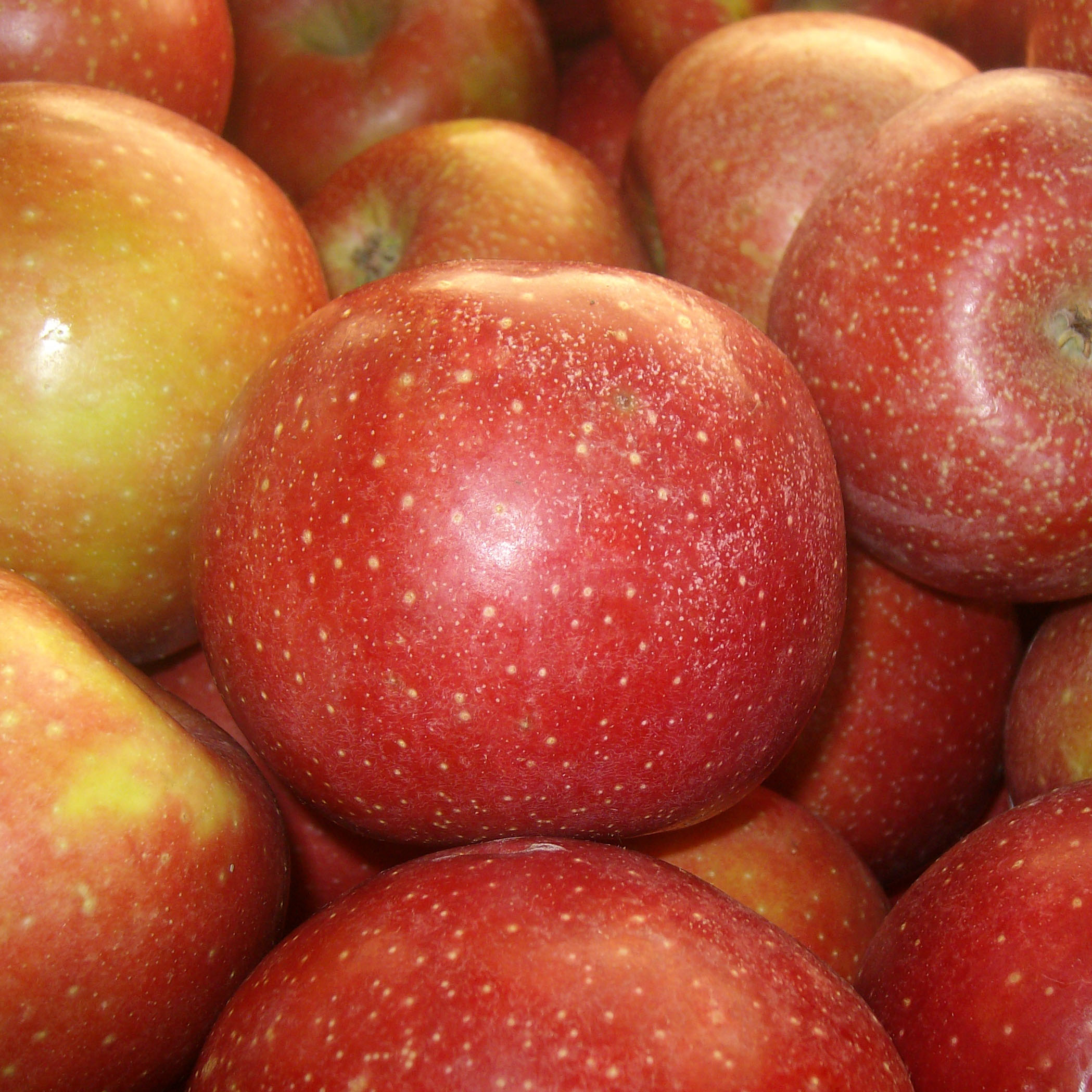
File:Red Delicious apples.jpg
red delicious  Sonita Lewis
Wikimedia.org
.....

Why American Apples Just Got Banned in Europe

| Wed Apr. 23, 2014 9:01 PM PDT

Back in 2008, European Food Safety Authority began pressing the chemical industry to provide safety information on a substance called diphenylamine, or DPA. Widely applied to apples after harvest, DPA prevents "storage scald"—brown spots that "becomes a concern when fruit is stored for several months," according to Washington State University, reporting from the heartland of industrial-scale apple production.
DPA isn't believed to be harmful on its own. But it has the potential to break down into a family of carcinogens called nitrosamines—not something you want to find on your daily apple. And that's why European food safety regulators wanted more information on it. The industry came back with just "one study that detected three unknown chemicals on DPA-treated apples, but it could not determine if any of these chemicals, apparently formed when the DPA broke down, were nitrosamines," Environmental Working Group shows in an important new report. (The EFSA was concerned that DPA could decay into nitrosamines under contact with nitrogen, a ubiquitous element, EWG notes.) Unsatisfied with the response, the EFSA banned use of DPA on apples in 2012. And in March, the agency then slashed the tolerable level of DPA on imported apples to 0.1 parts per million, EWG reports.

Read More Here

.....

Most apples in the US drenched with chemical banned in Europe

Published time: April 24, 2014 23:06


AFP Photo / Remy Gabalda
A chemical used on most non-organic American apples that preserves the fruit’s color after harvest was banned by the European Union in 2012 because its makers could not prove it did not put human health at risk, according to a new study.
The US Department of Agriculture (USDA) found in 2010 that 80 percent of apples harvested in the United States are coated with diphenylamine, or DPA, a “growth regulator” that works to stave off darkening of the fruit’s skin during months of cold storage.
DPA, regulated as a pesticide, has been used in the US since 1962. The USDA has reported that DPA residue is found more often and at greater concentrations that most other pesticide residues. The chemical has been detected in apple juice and applesauce, as well as pears and pear baby food. In fact, the USDA has consistently found that apples are one of the most pesticide-treated products in the American produce market.
Beginning in 2008, the EU’s European Commission asked European producers of DPA to prove nitrosamines – a family of powerful carcinogens – and other harmful substances would not develop from a mixture of DPA and nitrogen, a common element in the environment. The Commission was interested in whether those formations occurred when containers of DPA sat unattended, when DPA was used to treat fruit for storage, or when DPA-doused fruit was made into juices, purees, and sauces.

Read More Here

.....
Enhanced by Zemanta

Friday, February 21, 2014

Silencing the Scientist: Tyrone Hayes on Being Targeted By Herbicide Firm Syngenta

democracynow democracynow


Published on Feb 21, 2014
http://www.democracynow.org - We speak with a University of California scientist Tyrone Hayes, who discovered a widely used herbicide may have harmful effects on the endocrine system. But when he tried to publish the results, the chemical's manufacturer launched a campaign to discredit his work. Hayes was first hired in 1997 by a company, which later became agribusiness giant Syngenta, to study their product, Atrazine, a pesticide that is applied to more than half the corn crops in the United States, and widely used on golf courses and Christmas tree farms. When Hayes found results Syngenta did not expect -- that Atrazine causes sexual abnormalities in frogs, and could cause the same problems for humans -- it refused to allow him to publish his findings. A new article in The New Yorker magazine uses court documents from a class-action lawsuit against Syngenta to show how it sought to smear Hayes' reputation and prevent the U.S. Environmental Protection Agency from banning the profitable chemical, which is already banned by the European Union.


Enhanced by Zemanta

Tuesday, February 4, 2014

Genetically modified purple tomatoes created to battle against cancer have been grown and harvested in Leamington, Ontario, Canada

Does it disturb anyone  else that  only  after  it is going to be  made  available  to the  general  public will they be  doing  trial studies on  the validity of it's  claims?   Not to  mention the  safety issues of the genetic mutation that  has  been triggered in these  tomatoes?

One  wonders  why these  tests were not  done  before  exposing the general  public  to  their GMO creation?

~Desert Rose~
.....
Canada harvests cancer-fighting purple tomatoes
© Flickr.com/Daniel*1977/cc-by-nc-sa 3.0

Genetically modified purple tomatoes created to battle against cancer have been grown and harvested in Leamington, Ontario, Canada. The purple vegetables have been altered so that they contain larger doses of anthocyanins—the very same antioxidant that is present in blackberries and plums. Anthocyanins are believed to fight against cancer.

In Leamington the acclaimed tomato capital of Canada, New Energy Farms planted and grew the vegetable for plant biologist Cathie Martin. She is a professor at the John Innes Centre in Norwich, UK. “It looks very similar to normal tomato crops. You really wouldn’t know any difference, apart from the color of the fruit,” New Energy Farms CEO Paul Carver said.
The unusual looking tomatoes were grown in a controlled environment in a greenhouse, then hand selected. The juice was squeezed out of the vegetables while the seeds and plants were lit on fire as a preventative measure to shield against cross-contamination.
Come early February, the estimated 528 gallons of purple tomato juice will be sent off to British heart patients. Besides anthocyanins being cancer-fighting, the special element in the tomatoes also battles cardiovascular disease.
"When mice [with cancer] were fed a diet supplemented with purple tomatoes, they lived 30 percent longer than those with a diet supplemented with red tomatoes,” Martin said. She revealed that the purple tomatoes also have anti-inflammatory properties.
Research shows “complementary health advantages for people diagnosed with major chronic disease, particularly cancer. We’re not saying this is a standalone therapy,” she said.
Since European rules for genetically modified foods are much stricter, it was easier to grow the tomatoes in Canada. “Canada was an unbelievably good choice because you have a very enlightened view of regulatory approval,” Martin said, “It was easier to do this in Canada than elsewhere.”
Voice of Russia, Cbc.ca
.....

BBC 

Genetically-modified purple tomatoes heading for shops


Purple tomatoes The new tomatoes could improve the nutritional value of everyday foods

The prospect of genetically modified purple tomatoes reaching the shelves has come a step closer.
Their dark pigment is intended to give tomatoes the same potential health benefits as fruit such as blueberries.
Developed in Britain, large-scale production is now under way in Canada with the first 1,200 litres of purple tomato juice ready for shipping.
The pigment, known as anthocyanin, is an antioxidant which studies on animals show could help fight cancer.
Scientists say the new tomatoes could improve the nutritional value of everything from ketchup to pizza topping.
The tomatoes were developed at the John Innes Centre in Norwich where Prof Cathie Martin hopes the first delivery of large quantities of juice will allow researchers to investigate its potential.
"With these purple tomatoes you can get the same compounds that are present in blueberries and cranberries that give them their health benefits - but you can apply them to foods that people actually eat in significant amounts and are reasonably affordable," she said.
I hope this will serve as a vanguard product where people can have access to something that is GM but has benefits for them”
Prof Cathie Martin John Innes Centre in Norwich
The tomatoes are part of a new generation of GM plants designed to appeal to consumers - the first types were aimed specifically at farmers as new tools in agriculture.
The purple pigment is the result of the transfer of a gene from a snapdragon plant - the modification triggers a process within the tomato plant allowing the anthocyanin to develop.
Although the invention is British, Prof Martin says European Union restrictions on GM encouraged her to look abroad to develop the technology.
Canadian regulations are seen as more supportive of GM and that led to a deal with an Ontario company, New Energy Farms, which is now producing enough purple tomatoes in a 465 square metre (5,000sq ft) greenhouse to make 2,000 litres (440 gallons) of juice.
According to Prof Martin, the Canadian system is "very enlightened".
"They look at the trait not the technology and that should be a way we start changing our thinking - asking if what you're doing is safe and beneficial, not 'Is it GM and therefore we're going to reject it completely'.
"It is frustrating that we've had to go to Canada to do a lot of the growing and the processing and I hope this will serve as a vanguard product where people can have access to something that is GM but has benefits for them."
The first 1,200 litres are due to be shipped to Norwich shortly - and because all the seeds will have been removed, there is no genetic material to risk any contamination.
Read More Here

Related Stories

.....
Enhanced by Zemanta

Friday, September 6, 2013

Ten facts the mainstream media didn't tell you about the Seralini GM corn study in their rush to rip it apart

Seralini

Ten things the mainstream media didn't tell you about the Seralini GM corn study

Thursday, September 05, 2013 by: Ethan A. Huff, staff writer
(NaturalNews) It has been almost a year now since French researcher and scientist Gilles-Eric Seralini published his groundbreaking study on the deleterious effects of eating Monsanto's genetically-modified (GM) corn, and there are still millions of people out there who are confused about its controversial findings. To help sort things out, here are ten facts about the study that you probably heard nothing about from the mainstream media:
1) Seralini's study was a chronic toxicity study, not a cancer study. Not long after being published, Seralini's study was maliciously ripped apart by "skeptics," the media and many industry-backed institutions that claimed it was a badly-designed cancer study. But the truth is that Seralini's study was actually a chronic toxicity study, and one that met or exceeded all accepted scientific standards.
2) No other long-term studies have ever been conducted on NK603 GM corn. The chorus of whining that ensued about how Seralini's study allegedly contradicted all other similar studies is also invalid, as no other similar studies have ever been conducted -- Seralini's study is the only long-term study involving Monsanto's NK603 GM corn that has ever been conducted.
3) There was nothing wrong with the types of rats Seralini used. Another popular criticism involves the Sprague-Dawley (SD) variety of rat used by Seralini in his study. This same variety has been used by Monsanto on many occasions in its 90-day "safety" studies on GMOs.
4) SD rats and humans are almost equally prone to developing cancer. Contrary to what you may have heard, SD rats are not inherently more prone to cancer than humans, and in fact have almost an equal risk with humans. This makes them a perfect choice for a long-term safety study on GMOs, vindicating Seralini in his use of them.
5) Seralini's study far more in-depth than any 'safety' study ever conducted by Monsanto. It is hypocritical for the mainstream scientific community to criticize Seralini's study methodologies, especially considering the fact that they were far more rigorous than those used by Monsanto to gain GMO approval. Seralini's sample sizes, testing protocols and other methods all exceed those routinely used by the biotechnology industry.
6) Rejecting Seralini's study means rejecting all industry-backed safety studies. Logically speaking, there is no way to reject Seralini's findings about the dangers of GM corn without also rejecting the findings of industry-backed studies that claim GM corn is safe. Using the same arguments of the vested scientists and media outlets that have attacked Seralini, the bulk of published data on GMOs is thus false, which means GMOs have no place on the consumer market.
7) Seralini's study proves industry studies to be fraudulent. The only one of its kind conducted for longer than 90 days, Seralini's study also shows that the dangers of GMOs, which are often denied, are actually real. They just show up past the time threshold used in all industry-backed studies -- the first tumors appeared no earlier than four months into Seralini's study.
8) Toxicity observed in Monsanto studies confirmed by Seralini's study. Though it often goes unreported, Monsanto's own GMO safety studies have observed toxicity from exposure and consumption. But this toxicity is routinely written off as being "not biologically meaningful." But Seralini's study confirms that, if Monsanto's studies were performed for longer than 90 days, these same markers of toxicity would develop into the diseases observed by Seralini.
9) Governments do not require the types of long-term studies conducted by Seralini. The reason why Seralini's study was accused of being out in left field is that no other similar long term studies are ever conducted, due to the fact that governments around the world simply don't require them. If they did, the world would have a much different understanding about the alleged safety of GMOs.
10) Even short-term studies have observed toxicity from GMOs. Despite a lack of proper long-term safety testing, a number of independent, short-term laboratory and farm studies have, indeed, observed toxicity due to GMO exposure. Any claim to the contrary is simply a lie, and Seralini's study helps affirm this other research.
To learn more, visit:
http://gmoseralini.org
Sources for this article include:
http://gmoseralini.org
http://www.naturalnews.com

Enhanced by Zemanta

Sunday, July 21, 2013

80% Support of the European Public for the Ban of Monsanto GMO Corn. Why are Americans ok with it?

Italy to Ban Monsanto GMO Corn with 80% Public Support

Christina Sarich
by
Natural Society
July 20th, 2013
corn in hand 263x164 Italy to Ban Monsanto GMO Corn with 80% Public SupportFirst India gives Monsanto a run for their ill-gotten money by refusing their patent applications, and now Italy, with the help of three Italian ministries, will try to undo Monsanto. A decree has been signed which will ban Monsanto’s MON810 maize, one of the two genetically modified crops currently legally grown in Europe and sold commercially. The decree is not yet binding as it has to be published in the official gazette, but the public stands behind the three Italian ministers who put forth the document with a resounding 80% against GMO and Monsanto, as evidenced in a public survey.
The agricultural ministry rightfully addressed one of many problems with Monsanto’s GMO crops, stating that they have a ‘negative impact on biodiversity.’ The ban was also signed by the health and environment ministries. That makes three. The ministries stated:
“Our agriculture is based on biodiversity, on quality, and those we must continue to aim for, without games that even from an economic point of view would not make us competitive.”

The three ministries have also notified the European Commission and other states in the EU about this important precedent-setting move to oust Monsanto from the world food supply monopoly that the company is currently trying to browbeat the world with. The ministries have also requested a scientific basis for the final decision from the European Food and Safety Authority – Europe’s version of the FDA, the country’s food safety watch dog.


Read More Here


Enhanced by Zemanta