Why I Kicked My Keurig to the Curb

Why I Kicked My Keurig to the Curb
September 19, 2014 by Erin Chamerlik, The Real Food Revivalist
What
busy person doesn’t love the idea of having a personal cup of coffee
instantly with the push of a button. Many people are delighted when the
Keurig machines show up in the workplace or doctor’s waiting room. I
loved the idea. I bought one from Costco along with the handy unit to
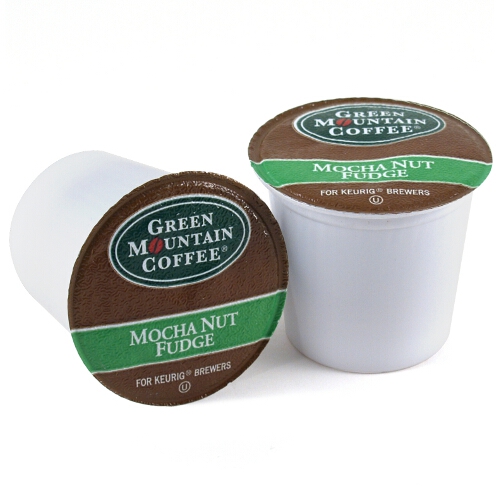
store those awkward K Cups. I, of course, insisted on the Newman’s
Organic K Cups for my coffee choice.
We stocked our hot beverage center with a variety of flavored K Cups.
Then that little voice in my head started asking questions
I
pushed those concerns away for the sake of convenience (after all,
filling my own coffee filter with fresh ground coffee takes all of what…
two minutes? I’m a busy person, just like you!).
I wondered:
- How fresh is the coffee in a K Cup?
- What toxins am I exposing myself to as the hot water forces the coffee through the little holes poked in the plastic cup?
- What is that lid made of that is poked at the top to allow the water to enter the cup?
- What chemicals are used in the flavored coffee selections?
- Is there a filter inside the plastic cup? What is it made of and how is it secured inside the plastic cup?
If
you own a Keurig, please continue reading this post because what I
discovered is shocking and sickening. This will explain why I am kicking
my Keurig to the curb.
Is your Keurig harboring mold and bacteria?
When
I packed up my kitchen to move 500 miles south, I wanted to make sure
that my Keurig was completely empty and dry before it went on the moving
truck.
IMPOSSIBLE!
Keurig.com states,
“Once your Keurig home brewer has been primed, you cannot empty the
water from the inside. The internal tank of the brewer cannot be
drained.”
The microbiologist in me is disgusted at the
thought. Back in the day when I worked in a hospital lab, we emptied all
water reservoirs daily or they would grow bacteria and a biofilm could
develop. You are familiar with biofilms if you ever cleaned the goo out
of a flower vase after the flowers have died. Biofilms are found
wherever there is water and a surface to stick to (like your shower
curtain).
The rubber tubing and the internal tank of the Keurig cannot be drained.
It is possible that bacteria and mold are happily living inside that
hidden water tank where it is nice and dark and warm. Another
mold-magnet is that black rubber ring on the bottom of the exterior
water container. Look now! Is there green or black slime? ewwwww
(biofilm!).
Donna Duberg, M.A., M.S.,
an assistant professor of clinical laboratory science at Saint Louis
University said, “Bacteria forms a slick biofilm when grown in moist,
dark places, and so do molds.”
No, your coffee bean’s antibacterial action is not enough to kill these microbes
that are floating through the system. Duberg said, “There is research
which shows that it is only about 50 percent effective in killing
bacteria, such as Staphylococcus aureus and Streptococcus mutans, and
molds.”

Workplace coffee mugs were found to contain fecal bacteria 50% of the time.
No, your water is not getting hot enough to kill all microbes that are living in your coffee system. For that to happen, the water would need to reach
boiling temperature and
stay there for one minute. And, for heaven’s sake, wash your workplace
coffee mug with dish soap and water. Researchers found that half of
workplace coffee mugs were contaminated with fecal bacteria.
Can you clean the Keurig? The
first step is to empty out the exterior water tank and look inside the
tank. Does it feel slimy? Clean and dry that tank and run a few cycles
of diluted vinegar through the Keurig.
Good luck with that.
One person said, “I could still smell a moldy aroma after doing quite a
few vinegar cycles. There were also black floaty things in my cup even
when I just brewed hot water.”
Plastic K Cups Conundrum 
The Plastic
The K Cup is a composite plastic, #7. Although this is technically BPA-free the
chemicals from the composite plastic are not safe and they still have estrogenic activity. As long as I mentioned fake estrogens coming from the plastic in your K Cup, don’t make a bad situation worse by adding
soy milk to your coffee!
(Men, would you like “moobs” with your mocha and soy?).
Read More Here