Showing posts with label European Food Safety Authority. Show all posts

Wednesday, May 7, 2014

American Apples Have Been Banned in Europe

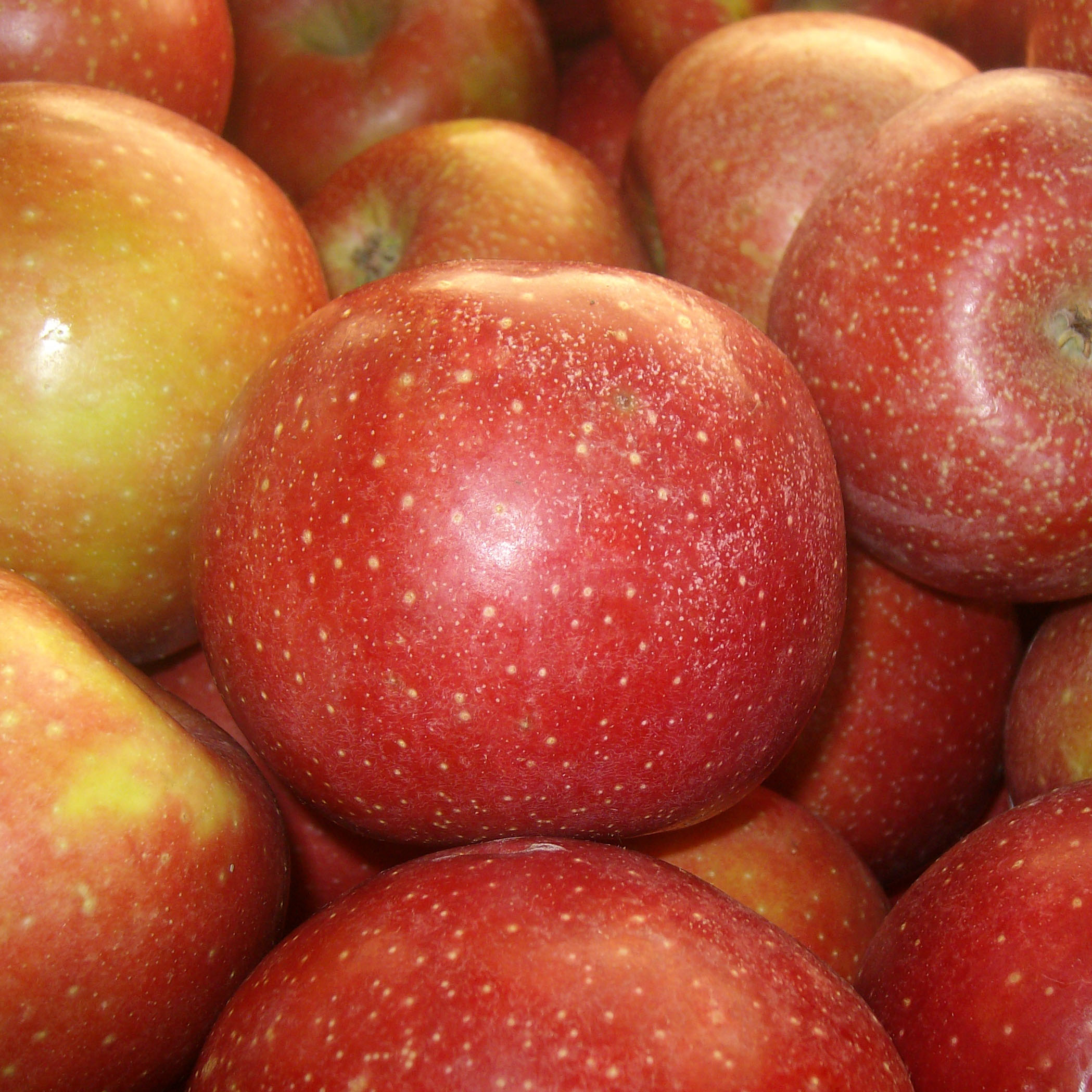
File:Red Delicious apples.jpg
red delicious  Sonita Lewis
Wikimedia.org
.....

Why American Apples Just Got Banned in Europe

| Wed Apr. 23, 2014 9:01 PM PDT

Back in 2008, European Food Safety Authority began pressing the chemical industry to provide safety information on a substance called diphenylamine, or DPA. Widely applied to apples after harvest, DPA prevents "storage scald"—brown spots that "becomes a concern when fruit is stored for several months," according to Washington State University, reporting from the heartland of industrial-scale apple production.
DPA isn't believed to be harmful on its own. But it has the potential to break down into a family of carcinogens called nitrosamines—not something you want to find on your daily apple. And that's why European food safety regulators wanted more information on it. The industry came back with just "one study that detected three unknown chemicals on DPA-treated apples, but it could not determine if any of these chemicals, apparently formed when the DPA broke down, were nitrosamines," Environmental Working Group shows in an important new report. (The EFSA was concerned that DPA could decay into nitrosamines under contact with nitrogen, a ubiquitous element, EWG notes.) Unsatisfied with the response, the EFSA banned use of DPA on apples in 2012. And in March, the agency then slashed the tolerable level of DPA on imported apples to 0.1 parts per million, EWG reports.

Read More Here

.....

Most apples in the US drenched with chemical banned in Europe

Published time: April 24, 2014 23:06


AFP Photo / Remy Gabalda
A chemical used on most non-organic American apples that preserves the fruit’s color after harvest was banned by the European Union in 2012 because its makers could not prove it did not put human health at risk, according to a new study.
The US Department of Agriculture (USDA) found in 2010 that 80 percent of apples harvested in the United States are coated with diphenylamine, or DPA, a “growth regulator” that works to stave off darkening of the fruit’s skin during months of cold storage.
DPA, regulated as a pesticide, has been used in the US since 1962. The USDA has reported that DPA residue is found more often and at greater concentrations that most other pesticide residues. The chemical has been detected in apple juice and applesauce, as well as pears and pear baby food. In fact, the USDA has consistently found that apples are one of the most pesticide-treated products in the American produce market.
Beginning in 2008, the EU’s European Commission asked European producers of DPA to prove nitrosamines – a family of powerful carcinogens – and other harmful substances would not develop from a mixture of DPA and nitrogen, a common element in the environment. The Commission was interested in whether those formations occurred when containers of DPA sat unattended, when DPA was used to treat fruit for storage, or when DPA-doused fruit was made into juices, purees, and sauces.

Read More Here

.....
Enhanced by Zemanta

Friday, April 25, 2014

A tasty solution to keep all you grilled meat lovers out there safe from the carcinogens created in the process......Beer!


Soaking meats in beer makes them safer to eat from the grill

Monday, April 21, 2014 by: Ethan A. Huff, staff writer
beer
(NaturalNews) While word continues to spread about the carcinogenic effects of eating grilled meat, a new study published in the American Chemical Society's (ACS) Journal of Agricultural and Food Chemistry may have come up with a simple solution. Researchers from southern Europe found that simply marinating meat in beer prior to grilling it helps block the formation of polycyclic aromatic hydrocarbons, or PAHs, which have been linked to causing cancer.
Isabel Ferreira from the University of Porto in Portugal and her colleagues arrived at this conclusion after testing grilled meat samples marinated in one of three types of beer -- Pilsner beer (PB), nonalcoholic Pilsner beer (P0B) and black beer (BB). The anti-free-radical activity of these three marinades was evaluated using charcoal-grilled pork and compared to the typical free radical activity of an unmarinated charcoal-grilled pork control.
In the end, all the meat samples were found to contain some level of eight different PAHs, collectively dubbed PAH8, which the European Food Safety Authority (EFSA) has previously classified as indicators of carcinogenic potency. But those meats that were marinated in beer prior to being cooked exhibited the lowest levels of these eight carcinogens, presumably due to certain compounds in beer that guard against damaging oxidation.
"BB exhibited the strongest scavenging activity (68.0%), followed by P0B (36.5%) and PB (29.5%)," wrote the authors about the initial assay of the three beer marinades. "BB showed the highest inhibitory effect in the formation of PAH8 (53%), followed by P0B (25%) and PB (13%)."
The full text of the study can be accessed at the following link:
http://pubs.acs.org.

Read More Here
Enhanced by Zemanta

Tuesday, December 3, 2013

Richard E. Goodman, new "Associate Editor for biotechnology" for the scientific journal Food and Chemical Toxicology (FCT) , is a former Monsanto employee

Monsanto Targets the Heart of Science: The Goodman Affair
Richard Smith, former editor of the British Medical Journal, has jested that instead of scientific peer review, its rival The Lancet had a system of throwing a pile of papers down the stairs and publishing those that reached the bottom. On another occasion, Smith was challenged to publish an issue of the BMJ exclusively comprising papers that had failed peer review and see if anybody noticed. He replied, "How do you know I haven't already done it?"
As Smith's stories show, journal editors have a lot of power in science – power that provides opportunities for abuse. The life science industry knows this, and has increasingly moved to influence and control science publishing.
The strategy, often with the willing cooperation of publishers, is effective and sometimes blatant. In 2009, the scientific publishing giant Elsevier was found to have invented an entire medical journal, complete with editorial board, in order to publish papers promoting the products of the pharmaceutical manufacturer Merck. Merck provided the papers, Elsevier published them, and doctors read them, unaware that the Australasian Journal of Bone and Joint Medicine was simply a stuffed dummy.
Fast forward to September 2012, when the scientific journal Food and Chemical Toxicology (FCT) published a study that caused an international storm (Séralini, et al. 2012). The study, led by Prof Gilles-Eric Séralini of the University of Caen, France, suggested a Monsanto genetically modified (GM) maize, and the Roundup herbicide it is grown with, pose serious health risks. The two-year feeding study found that rats fed both suffered severe organ damage and increased rates of tumors and premature death. Both the herbicide (Roundup) and the GM maize are Monsanto products. Corinne Lepage, France's former environment minister, called the study "a bomb".
Subsequently, an orchestrated campaign was launched to discredit the study in the media and persuade the journal to retract it. Many of those who wrote letters to FCT (which is published by Elsevier) had conflicts of interest with the GM industry and its lobby groups, though these were not publicly disclosed.
The journal did not retract the study. But just a few months later, in early 2013 the FCT editorial board acquired a new "Associate Editor for biotechnology", Richard E. Goodman. This was a new position, seemingly established especially for Goodman in the wake of the "Séralini affair".
Richard E. Goodman is professor at the Food Allergy Research and Resource Program, University of Nebraska. But he is also a former Monsanto employee, who worked for the company between 1997 and 2004. While at Monsanto he assessed the allergenicity of the company's GM crops and published papers on its behalf on allergenicity and safety issues relating to GM food (Goodman and Leach 2004).
Goodman had no documented connection to the journal until February 2013. His fast-tracked appointment, directly onto the upper editorial board raises urgent questions. Does Monsanto now effectively decide which papers on biotechnology are published in FCT? And is this part of an attempt by Monsanto and the life science industry to seize control of science?
To equate one journal with "science" may seem like an exaggeration. But peer-reviewed publication, in the minds of most scientists, is science. Once a paper is published in an academic journal it enters the canon and stands with the discovery of plate tectonics or the structure of DNA. All other research, no matter how groundbreaking or true, is irrelevant. As a scientist once scathingly said of the "commercially confidential" industry safety data that underpin approvals of chemicals and GM foods, "If it isn't published, it doesn't exist."
Monsanto Targets the Heart of Science: The Goodman Affair
photo: Richard E Goodman, University of Nebraska
Goodman's ILSI links
The industry affiliations of FCT's new gatekeeper for biotechnology are not restricted to having worked directly for Monsanto. Goodman has an active and ongoing involvement with the International Life Sciences Institute (ILSI). ILSI is funded by the multinational GM and agrochemical companies, including Monsanto. It develops industry-friendly risk assessment methods for GM foods and chemical food contaminants and inserts them into government regulations.
ILSI describes itself as a public interest non-profit but its infiltration of regulatory agencies and influence on risk assessment policy has become highly controversial in North America and Europe. In 2005 US-based non-profits and trade unions wrote to the World Health Organization (WHO) protesting against ILSI's influence on international health standards protecting food and water supplies. As a result, the WHO barred ILSI from taking part in WHO activities setting safety standards, because of its funding sources.  And in Europe in 2012, Diana Banati, then head of the management board at the European Food Safety Authority (EFSA), had to resign over her undisclosed long-standing involvement with ILSI (Robinson et al. 2013).

Read More Here
Enhanced by Zemanta