Showing posts with label Alzheimer's disease. Show all posts

Saturday, May 24, 2014

Carbohydrates could be laying down the ground work for Alzheimers and substituting the right kinds of fats to help prevent and possibly even reverse it.

Alzheimer’s Disease—Yes, It’s Preventable!

May 22, 2014

By Dr. Mercola
An estimated 5.4 million Americans have Alzheimer's disease, a severe form of dementia,1 and hundreds of thousands more may suffer from an often misdiagnosed subtype called "hippocampal sparing" Alzheimer's, according to recent findings.2
The most recent data3, 4 suggests that well over half a million Americans die from Alzheimer's disease each year, making it the third leading cause of death in the US, right behind heart disease and cancer.
As discussed by Dr. Danielle Ofri in a recent New York Times blog,5 losing your mind, and with it, much of your personality and dignity, is a terrifying proposition. Making matters worse, many doctors shy away from addressing dementia—both with colleagues and their patients.
The reasons are many. Dr. Ofri suggests Alzheimer's strikes at the emotional heart of many clinicians, whose careers depend on the stability and functioning of their own minds and intelligence. In short, it frightens them too much to talk about it.
However, I strongly disagree with her commentary on the lack of strategies to prevent or modify the course of Alzheimer's.
"I suspect... that our reticence stems from deeper issues," Dr. Ofri writes. "All the top 10 killers in America are potentially preventable, or at least modifiable — all except dementia... We have tests to screen for many cancers, and treatments that prolong life... But there's nothing, really, that we can do about dementia.
There aren't any screening tests that can pick up the disease before symptoms appear. And even if there were, there aren't any treatments that make a substantial difference.
For doctors, this is profoundly frustrating. No wonder dementia gets pushed onto the back burner. In the dishearteningly limited time of a medical visit, we're forced to focus on the diseases we can treat."
On the contrary, while early diagnostic tests are in short supply and successful treatments are virtually nonexistent, the evidence shows there's plenty of hope when it comes to prevention!
This is exactly why doctors need to get with the program and start directing their patients toward healthier lifestyles rather than fall into the trap of thinking the situation is hopeless and their patients are helpless victims.

Heart Disease May Increase Your Odds of Developing Alzheimer's

I firmly believe that since there's no conventional cure, now or in the foreseeable future, the issue of prevention is absolutely critical if you want to avoid becoming an Alzheimer's statistic.
Ideally, doctors would begin counseling patients who are in their 20s and 30s on lifestyle strategies that promote heart and brain health throughout life. Then we would probably see a major shift in Alzheimer's statistics for that generation.
As it stands, the evidence points to lifestyle factors, primarily diet, as the driving forces of dementia. There are also many connections between Alzheimer's and other dietary-related diseases, such as diabetes and heart disease, suggesting that ALL of these diseases are preventable through identical means.
For example, previous research suggests diabetics have a doubled risk of developing Alzheimer's disease. Alzheimer's disease was even tentatively dubbed "type 3 diabetes" in 2005, when researchers discovered that your brain produces insulin that is necessary for the survival of your brain cells.
They found that a toxic protein called ADDL removes insulin receptors from nerve cells, thereby rendering those neurons insulin resistant, and as ADDLs accumulate, your memory begins to deteriorate. Recent research also points out that heart disease increases your odds of developing Alzheimer's. As reported by MedicineNet.com:6
"Researchers found that artery stiffness -- a condition called atherosclerosis -- is associated with the buildup of beta-amyloid plaque in the brain, a hallmark of Alzheimer's disease."
'This is more than just another example of how heart health relates to brain health. It is a signal that the process of vascular aging may predispose the brain to increased amyloid plaque buildup,' said lead researcher Timothy Hughes...
Plaque builds with age and appears to worsen in those with stiffer arteries, he said. 'Finding and preventing the causes of plaque buildup is going to be an essential factor in the prevention of Alzheimer's disease and extending brain health throughout life,' Hughes added."

Subtype of Alzheimer's Disease Is Often Misdiagnosed


In related news, research7, 8 presented at the 2014 American Academy of Neurology's meeting in Pennsylvania sheds new light on Alzheimer's cases that are often misdiagnosed. Researchers from the Mayo Clinic believe they have identified a variant of the disease, referred to as "hippocampal sparing" Alzheimer's, which is thought to affect an estimated 600,000 Americans. As explained by Medical News Today:9
"All subtypes of Alzheimer's have two specific hallmarks in the brain. Amyloid beta is responsible for the formation of brain plaques, while tau produces tangles in the brain. In order to classify each subtype, the team used tangle counts to create a mathematical algorithm.
They found that while all Alzheimer's subtypes had the same amount of amyloid beta, the hippocampal sparing variant showed tau tangles in unequal areas of the hippocampus. They discovered that in patients with this subtype, tau specifically damages neurons in areas of the brain associated with behavior, motor recognition and awareness, and use of speech and vision."
Of the more than 1,800 Alzheimer's patients included in the study, 11 percent were found to have hippocampal sparing Alzheimer's, which does not destroy memory to the degree typically associated with Alzheimer's. Instead, this subtype of the disease tends to alter behavior, causing uncontrollable anger, visual impairments, speech problems, and the feeling that your limbs do not belong to you. Hippocampal sparing appears to affect more men than women, and the disease tends to set in much earlier than traditional Alzheimer's. Patients with hippocampal sparing also tend to deteriorate at a fast pace.
Misdiagnosis is common, as this subtype spares your memory. Quite often these patients end up being diagnosed with frontotemporal dementia or corticobasal syndrome10 instead. The former is associated with personality changes, while the latter is a progressive neurological disorder that can involve your motor system, cognition, or both, but patients typically present language problems first, followed by motor symptoms.
While the researchers believe that currently available Alzheimer's medications may be more effective for those with hippocampal sparing Alzheimer's than those with more traditional dementia, I firmly believe that drugs are not the answer to any of these conditions. Clearly, at the heart of it all is insulin and leptin resistance, fueled by a diet too high in refined sugars, processed fructose, and grains, combined with far too little healthful fats.

Read More Here

.....


.....


.....


Enhanced by Zemanta

Wednesday, May 7, 2014

9 Natural mood stabilizers that help the body metabolize brain chemicals. They help improve mood, memory and cognition, without the long-term side effects associated with medication.


Prevent Disease


9 Essential Mood, Memory, and Cognitive Enhancers That Boost Brain Energy Metabolism

Mood-stabilizing drugs are purely antimanic agents, which are mainly for treating mania. However, natural mood stabilizers help the body metabolize brain chemicals which enhance mood, something drugs can never do due to specific metabolic pathways necessary to metabolize the chemical constituents. These ingredients not only improve mood, memory and cognition, but they do it without long-term side effects associated with medication. Here are 9 essential ingredients to look for in any supplement designed to boost your brain.


Just like any fine, multi-functional computer, your brain requires all its elements to perform correctly and fluidly. It is entirely electro-chemical in nature, and scientists are increasingly leaning to the conclusion that the roots of many psychiatric illnesses and mental health problems might be found in brain dysfunction. This just makes sense: a tiny piece of code can mess up a fine computer, but with the right code reinstalled, the computer resumes normal operation. The same can be said of the brain, its need for proper nutrition, and the concept of feeding the brain what it most needs, in order to restore and maintain the brain in its best possible condition.
Encouraging evidence exists for the use of omega-3 fatty acids, SAM-e, Kava Kava, R-Alpha Lipoic Acid, GABA, and l-tryptophan to enhance response within the brain.
Investigators are examining children with ADHD (attention deficit/hyperactivity disorder) and adults with bipolar disorder and depression, along with a variety of other psychiatric conditions and types of cognitive impairments. Conditions such as Parkinson’s, Alzheimer’s, ALS (Lou Gehrig's disease), MS (multiple sclerosis), MD (muscular dystrophy), all inhibit cell function and hinder the brain’s responsiveness to stimuli.
Brain energy metabolism is very important to normal brain function, so it’s no surprise to find that this factor is reduced in Alzheimer’s victims and other dementia patients: the greater the loss of energy, the more severe the dementia.
Ensuring optimal intake of key nutrients such as vitamins and antioxidants throughout one’s lifetime may be an important wellness strategy to help prevent brain diseases and prevent the decline in our cognitive abilities. Approximately 6-8% of all persons aged 65+ have developed Alzheimer’s disease, and the prevalence of this disease is increasing. The current research lends further support to the use of antioxidants and a vitamin enriched daily dietary supplement program to help support the brain function as we age.

9 Essential Mood, Memory, and Cognitive Enhancers That Boost Brain Energy Metabolism

1. ACETYL-L-CARNITINE:
In a 2010 Tokyo study, the aged rats were supplemented with Acetyl-L-Carnitine to determine its effects on memory, learning capacity, and brain synaptic functions. For 3 months, 344 rats were given Acetyl-L-Carnitine (100 mg/kg bodyweight). At the end of the study, the scientsists concluded that Acetyl-L-Carnitine increases synaptic neurotransmission in the brain and consequently improves learning capacity in aging rats.
2. R-ALPHA LIPOIC ACID (R-ALA):
R-ALA reduces cataract formation, and reduces oxidative stress in the heart muscle while raising levels in the heart and liver. It also lowers glucose levels by increasing insulin metabolism and decreases numbness in Diabetics, increases energy levels within the brain cells, can decrease LDL cholesterol and remove protein oxidation for a healthy heart, and inhibits free radicals more effectively than vitamin E.
3. L-THREONINE:
Threonine is an essential amino acid and not synthesized by humans. Threonine supports cardiovascular, liver, central nervous, and immune system function. Threonine combines with the amino acids aspartic acid and methionine to help liver digest fats and fatty acids. L-threonine has been tried for ALS because, like BCAAs, it affects glutamate metabolism. Open trials and one double-blind study have shown some short-term improvement in symptoms. The research also demonstrated that symptoms of Multiple Sclerosis (MS), another disease that affects nerve and muscle, are alleviated with threonine treatment. Threonine is an immunostimulant, which promotes the growth of thymus gland.
4. L-TYROSINE:
L-Tyrosine has been proposed as a treatment for various conditions in which mental function is impaired or slowed down, such as fatigue and depression. It has also been tried for attention deficit disorder (ADD). Preliminary evidence, including small, double-blind trials, suggests that tyrosine supplements may help fight fatigue and improve memory and mental function in people who are deprived of sleep or exposed to other forms of stress.
5. PANTOTHENIC ACID:
Pantothenic acid is used in the manufacture of hormones, red blood cells, and acetylcholine, an important neurotransmitter (a signal carrier between nerve cells).
6. CO ENZYME-Q-10:
C0-Q-10” prevents oxidation of the cell membrane and mitochondria within the cell, thereby preserving youthful neurological function, and protecting the capillaries from becoming fragile; it also enhances cerebral oxygenation.
7. METHYLCOBALAMIN:
The neurologically-active form of vitamin B-12, Methylcobalamin is effective in slowing the progression of untreatable diseases and neurological aging. Japan’s scientific literature reveals 334 published studies on methylcobalamin; the studies consider the treatment beneficial for any neurological disease. For example, in patients with MS their cynocobalamin is destroyed, and methylcobalamin attempts to reverse this process.
8. DIMETHYLGLYCINE (DMG):
DMG is a dietary supplement which supports the immune, circulatory, and cardiovascular systems. It is useful for controlling epileptic seizures, and for improving neurological functions, as well as muscle recovery and endurance. DMG is a nutrient that is found in the cells of both plants and animals. The human body produces DMG in very small amounts. Supplementing the diet with higher levels of DMG greatly improves the nutritional environment of the cell. DMG has been found effective in supporting immune system function and better utilization of oxygen at the cellular level.
9. GAMMA AMINO BUTYRIC ACID (GABA):
The ability of the limbic system and the rest of the brain to communicate in an orderly manner depends critically on inhibition. GABA inhibits the cells from firing, diminishing the anxiety-related messages from reaching the cortex. GABA, glutamine and glycine are vital for energy and the smooth running of the brain functions. B6 (pyridoxine) is GABA's most important partner.

Life Choice Neurotransmitter Support contains all 9 of the above ingredients which is why it's one of the best formulas available in the natural healthy industry. If you're not familiar with Life Choice, discover why few supplement brands compare in terms of quality, purity and effectiveness.
  • This formulation is a vast improvement over any other for its bioavailability with added the patented Sigma-Tau’s Acetyl-L-Carnitine with advanced delivery, complete with clinical studies showing the effectiveness of this material opposed to other forms of Acetyl-L-Carnitine.
  • Instead of using DL-Alpha Lipoic Acid, instead the Life Choice Neurotransmitter Support uses R-Alpha Lipoic acid. This formulation matches the same two principle ingredients used in the clinical Study of Berkley School of Medicine and from that stage Life Choice created an even more advanced delivery with the unknown amino acid L-Threonine, not to be confused with L-Theonine.
  • Through research and investigation, Life Choice have further advanced the relationships between neurological biochemistry and bioavailability for an ingestible supplement.
This isn't just any natural health supplement. Neurotransmitter Support’s precision formulation acts to improve brain energy metabolism, and with it, brain function. It's one of the most advanced formulas I've seen on the market that synergistically uses this 9 ingredients to effectively change the way the brain responds to the body and its environment.
Sources:
psych.med.nyu.edu
life-choice.net
science.gov
elavtoit.com

Dave Mihalovic
is a Naturopathic Doctor who specializes in vaccine research, cancer prevention and a natural approach to treatment.


Enhanced by Zemanta

Friday, April 11, 2014

Sleep Loss May Cause Brain Damage

TheLipTV TheLipTV


Published on Mar 23, 2014
Sleep loss may cause brain damage, according to research at the University of Pennsylvania, which found that depriving yourself of sleep has a lasting injury on your brain that can not be repaired with recovery sleep such as taking a nap. Lissette Padilla and Elliot Hill discuss the importance of getting a good night's sleep, in this clip from the Lip News.

http://thelip.tv/

http://thelip.tv/show/the-lip-news/


.....


Mercola.com


Enhanced by Zemanta

Sunday, January 5, 2014

A Global Citizens Report against Big Ag, Big Pharma and Governments


global citizen reportCompiled by Rosemary Mason MB ChB FRCA on behalf of a global network of independent scientists, beekeepers and environmentalists
Farm Wars
What are pesticides and medical drugs doing to human health?
Have you wondered why pollinators, birds, amphibians, bats etc. have dramatically decreased in numbers in the last 20-30years? Or perhaps you weren’t even aware of the fact – because the British Media has been silent on the matter.
But you will be aware of the increasing number of diseases that are affecting us all: obesity, type 2 diabetes, autism, Dementia, Alzheimer’s disease, Parkinson’s, various neurological disorders, cancers, inflammatory bowel diseases such as Crohn’s Disease and Ulcerative Colitis, infertility, birth defects, depression, heart disease, strokes, hypertension etc.
Why has no-one in medicine, public health or medical epidemiology managed to work it out? “It’s difficult to get a man to understand something if his salary depends upon his not understanding it.”1
The answer is simple; but the cure is not. We are slowly, silently being poisoned. Our genes, and those of our children, are being damaged by toxic chemicals.2 Of course it is something of a ‘post-code’ (or water-shed ‘post code’ lottery3) and depends on where you are living. If you live in London and eat organic food, you may not have noticed. But there are pesticide residues (particularly glyphosate) in staple foods that are made from cereal crops, because many are desiccated (dried off) with glyphosate before harvest. Since 2007, most brewers and distillers have permitted pre-harvest desiccation to be done, so it will now be in beer and whiskey. Most of the imports from the US have ingredients contaminated with GM and herbicides (such as glyphosate, 2,4-D, glufosinate, dicamba) in the production process.
In South Wales we have found that glyphosate is present in our tap water.4 This is because large amounts of glyphosate are used on noxious weeds such as Japanese knotweed that are invading previously industrialised areas. Contractors on quad bikes with knapsacks have been spraying Roundup® along kerbs, verges, highways, even in areas of schools, libraries and doctors surgeries. In 2012 the Chemicals Regulation Directorate (CRD) instructed the workers not to spray on hard surfaces,5 because there is a lot of run-off into water courses, but I doubt whether a technical instruction posted on a website ever gets passed on to a worker.
Our Assembly Member wrote to the Local Council, but they said that Roundup® was perfectly safe. (This is a Monsanto myth: since 1996 the Corporation has been convicted in courts for fraudulent and false advertising6). Our Council refused to stop spraying until they were instructed to do so by the CRD or Defra. We have spent 3 years writing to these two Government Departments. Both maintain that glyphosateand the neonicotinoid insecticides are perfectly safe if applied in the correct dosages! We remain at an impasse and continue to be poisoned by Government policies.
Unfortunately some members of the British Government, such as the Defra Minister, Environment Minister, Science Minister and their Chief Scientists and a few MPs are ‘in bed’ with the pesticides companies. They, together with NFU Chairman, Peter Kendall, and many scientists from the John Innes Centre have held secret meetings with industry to devise a strategy to try to get GM crops into the UK.7 Paradoxically, at the same time, a significant number of countries are banning them.
Here is a 2012 Report: Combatting Monsanto: Grassroots resistance to the corporate power of agribusiness in the era of the ‘green economy’ and a changing climate.8 It is compiled by La Via Campesina,9 Friends of the Earth International and Combat Monsanto. Many countries have banned GMO crops. This Report also documents many crimes (including murder) committed by the Corporate Industries in their quest for seed and pesticide dominance. Is it significant that the UK has volunteered to take the first stockpile of chemicals from Syria (for the deadline: 31/12/2013) into an unknown British Port for destruction? These precursors are capable of being used by the pharmaceutical industry.10

Read More Here
Enhanced by Zemanta

Wednesday, October 2, 2013

The Anti-Inflammatory Diet Only Leads In One Direction - Health

Prevent Disease.com

September 26, 2013 by MAE CHAN

It doesn't have a catchy name or a trendy following to drop a size, but when it comes to your health, it's one of the most effective diets in the world. Proponents of the diet say it can reduce heart disease risk, keep existing cardiac problems in check, reduce blood triglycerides and blood pressure, soothe arthritic joints and even prevent cancer. There's no need to look anywhere but your kitchen.

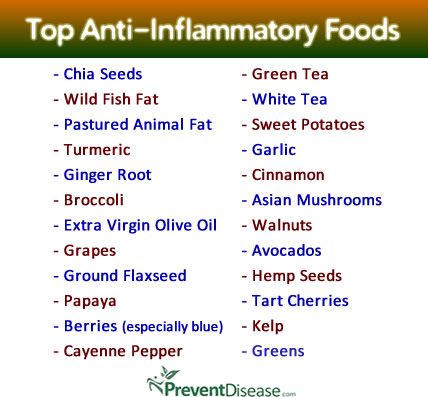
 photo top-antiinflammatoryfoods22s_zpsfbf8e82a.jpg


While each plan has its own twist, all are based on the general concept that constant or out-of-control inflammation in the body leads to ill health, and that eating to avoid constant inflammation promotes better health and can ward off disease, says Russell Greenfield, MD, a clinical assistant professor of medicine at the University of North Carolina at Chapel Hill.
"It's very clear that inflammation plays a role much more than we thought with respect to certain maladies," Greenfield stated.
"We always thought anything with an "itis" at the end involved inflammation," he says, such as arthritis or appendicitis. But even the illnesses without an "itis" at the end, such as cardiovascular disease, certain cancers, even Alzheimer's disease, may be triggered in part by inflammation, he says.
It is becoming increasingly clear that chronic inflammation may be at the root cause of many serious illnesses.
When inflammation persists or serves no purpose, it damages the body and causes illness. Stress, lack of exercise, genetic predisposition, and exposure to toxins can all contribute to such chronic inflammation, but dietary choices play a big role as well.
Learning how specific foods influence the inflammatory process is the best strategy for containing it and reducing long-term disease risks.
Some of the foods highest on anti-inflammatory nutrients include chia seeds, wild fish, turmeric, ginger, garlic, broccoli, olive oil, grapes, ground flaxseed, papaya, apple peel, blueberries, tea (especially green, white and oolong), sweet potatoes, sage, cinnamon, greens, celery, acai juice, asian mushrooms, walnuts, avocados, hemp seeds, cayenne pepper, kelp and tart cherries.
According to new research from Oregon Health & Science University presented at the American College of Sports Medicine Conference (ACSM) in San Francisco, tart cherries have the "highest anti-inflammatory content of any food" and can help people with arthritis manage their disease long-term without pain medications.
Compounds extracted from apple peel may also influence expression of key anti-inflammatory properties within the body, suggests data from Germany.
Barry Sears, MD, from The Zone diet fame, calls inflammation a silent epidemic that triggers chronic diseases over the years. "You could feel fine but have high levels of inflammation," he warns.
The average American diet, Greenfield says, includes far too many foods rich in omega-6 fatty acids, found in processed and fast foods, and far too few rich in omega-3 fatty acids, such as those found in cold-water fish or supplements. When that balance is out of whack, inflammation can set in, Sears explains.
Natural melatonin levels slowly drop with age. Some older adults make very small amounts of it or none at all.

The Anti-Inflammatory Diet is not a diet in the popular sense - it is not intended as a weight-loss program (although people can and do lose weight on it), nor is it an eating plan to stay on for a limited period of time. Rather, it is way of selecting and preparing foods based on scientific knowledge of how they can help your body maintain optimum health. Along with influencing inflammation, this diet will provide steady energy and ample vitamins, minerals, essential fatty acids dietary fiber, and protective phytonutrients.
Phytonutrients
  • To get maximum natural protection against age-related diseases (including cardiovascular disease, cancer, and neurodegenerative disease) as well as against environmental toxicity, eat a variety of fruits, vegetables and mushrooms.
  • Choose fruits and vegetables from all parts of the color spectrum, especially berries, tomatoes, orange and yellow fruits, and dark leafy greens.
  • Choose organic produce whenever possible. Learn which conventionally grown crops are most likely to carry pesticide residues and avoid them.
  • Eat cruciferous (cabbage-family) vegetables regularly.
  • Drink tea instead of coffee, especially good quality white, green or oolong tea.
  • If you drink alcohol, use red wine preferentially.
  • Enjoy plain dark chocolate in moderation (with a minimum cocoa content of 70 percent).
Overall, incorporating the foods listed above into your dietary strategy can help you overcome many health obstacles. Don't focus so much on how many of each you eat, but rather eat them all in moderation. Let your body be your teacher and you'll find yourself being drawn to these foods as you learn to enjoy them while satisfying your daily energy requirements.
Mae Chan holds degrees in both physiology and nutritional sciences. She is also blogger and and technology enthusiast with a passion for disseminating information about health.
Enhanced by Zemanta